

Rental Property Security: Protecting Your Investment (and Your Tenants)
Your rental property is more than a line item on a balance sheet. Real people sleep there. Raise families there. Expect to feel safe there. When a break-in happens, the damage runs deeper than the repair bill. Tenants lose trust. Vacancies climb. Insurance premiums follow. And in some jurisdictions, landlords who failed to provide adequate security end up in court. The uncomfortable truth? The most common and costly point of forced entry — the front door — is also the easiest to fix. Often for under $200 per unit.
This guide is written for landlords managing one property or a growing portfolio. You’ll get direct, practical guidance on where rental properties are most vulnerable, what door reinforcement actually accomplishes, how to handle tenant relationships around security upgrades, and which products deliver real protection without a contractor or a renovation budget.
🚨 Why Rental Properties Are Disproportionately Targeted
Rental units experience forced entry at higher rates than owner-occupied homes. The reasons are structural, not random. Tenant turnover means door hardware gets used and abused by multiple occupants over the years. Locks get changed without upgrading the surrounding frame. Strike plates — the small metal piece that actually holds a locked door closed — are often original builder-grade hardware installed decades ago with half-inch screws that pull clean out of soft wood in a single kick.
Beyond hardware wear, rental properties frequently have multiple entry points that landlords never regularly inspect: back doors tenants use for convenience, sliding glass doors to patios, side entrances with decorative glass panels. Each represents a different vulnerability. A determined intruder only needs one.
There’s also the key control problem. When a tenancy ends, you can’t always verify every key came back. Rekeying is standard practice — but it does nothing about the structural weakness of the door frame itself. That’s where the majority of kick-in forced entries actually succeed.
🔹 Understanding the Real Weak Point: It’s Not the Lock
Most landlords install a quality deadbolt and consider the job done. Understandable — but it misses where doors actually fail. In a typical kick-in, the lock doesn’t break. The frame does. Specifically, the thin strip of wood surrounding the strike plate splinters under impact, and the door swings open regardless of how expensive the lock is.
Standard residential door frames are built with construction-grade lumber and secured with short screws that only penetrate the door casing — not the structural framing behind it. That’s a building convention optimized for speed and cost, not security. The result: a solid-core door with a quality deadbolt can still fail to a single forceful kick because the frame was never designed to resist that kind of lateral stress.
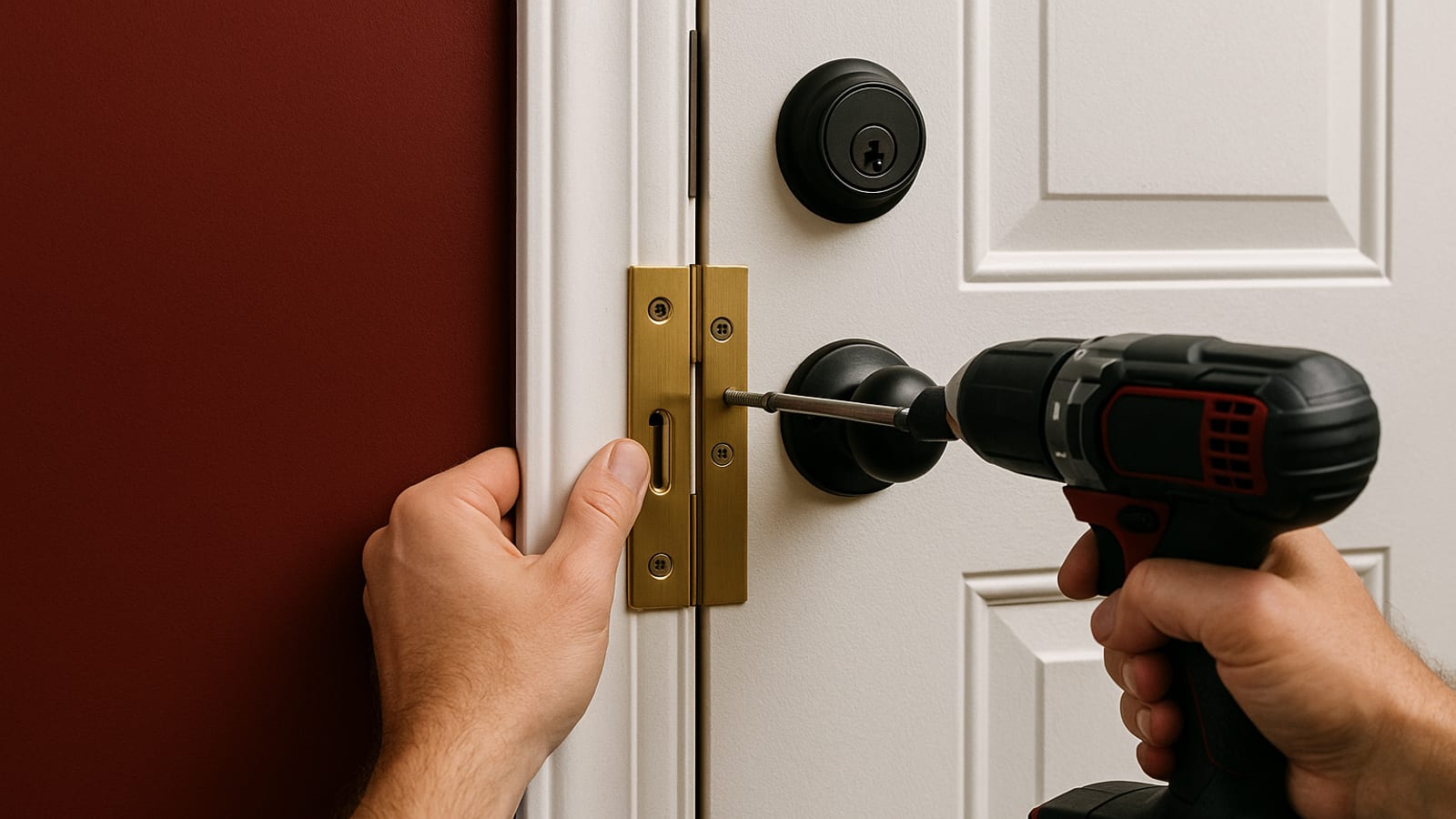
This is precisely what door reinforcement products are built to address. Rather than replacing the door or the lock, reinforcement kits wrap and anchor the most vulnerable sections of the frame — the strike plate area, the hinge side, the door edge — using heavy-gauge steel and long screws that reach the structural framing. The door becomes the path of least resistance only for someone with significant time and noise. That’s exactly the deterrent most opportunistic intruders will walk away from.
For a closer look at how door reinforcement works across different entry point types, browse the full range of door security solutions to match the right product to each door configuration in your rental.
✅ A Property-by-Property Security Audit: What to Check at Every Unit
Before you buy anything, walk each unit with a security-focused eye. No professional assessment required — just know what you’re looking for.
Front and Back Doors
Start with the strike plate. If it’s held by screws shorter than 3 inches, it will not hold under force. Press firmly near the latch — any flex or give means the frame is under-reinforced. Check the door itself: hollow-core doors offer almost no resistance and should be replaced with solid-core alternatives before any hardware upgrade is worth the investment.
Double and French Doors
Double doors present a unique problem. The two panels meet in the middle without a fixed frame on one side. The inactive panel is typically held by flush bolts at the top and bottom — and tenants frequently leave them unlatched. That turns a “locked” door into one secured by two small bolts in soft wood. A Double Door Security Kit reinforces both the meeting edge and the frame contact points, significantly increasing resistance to forced entry on this notoriously vulnerable door type.
Sliding Glass Doors
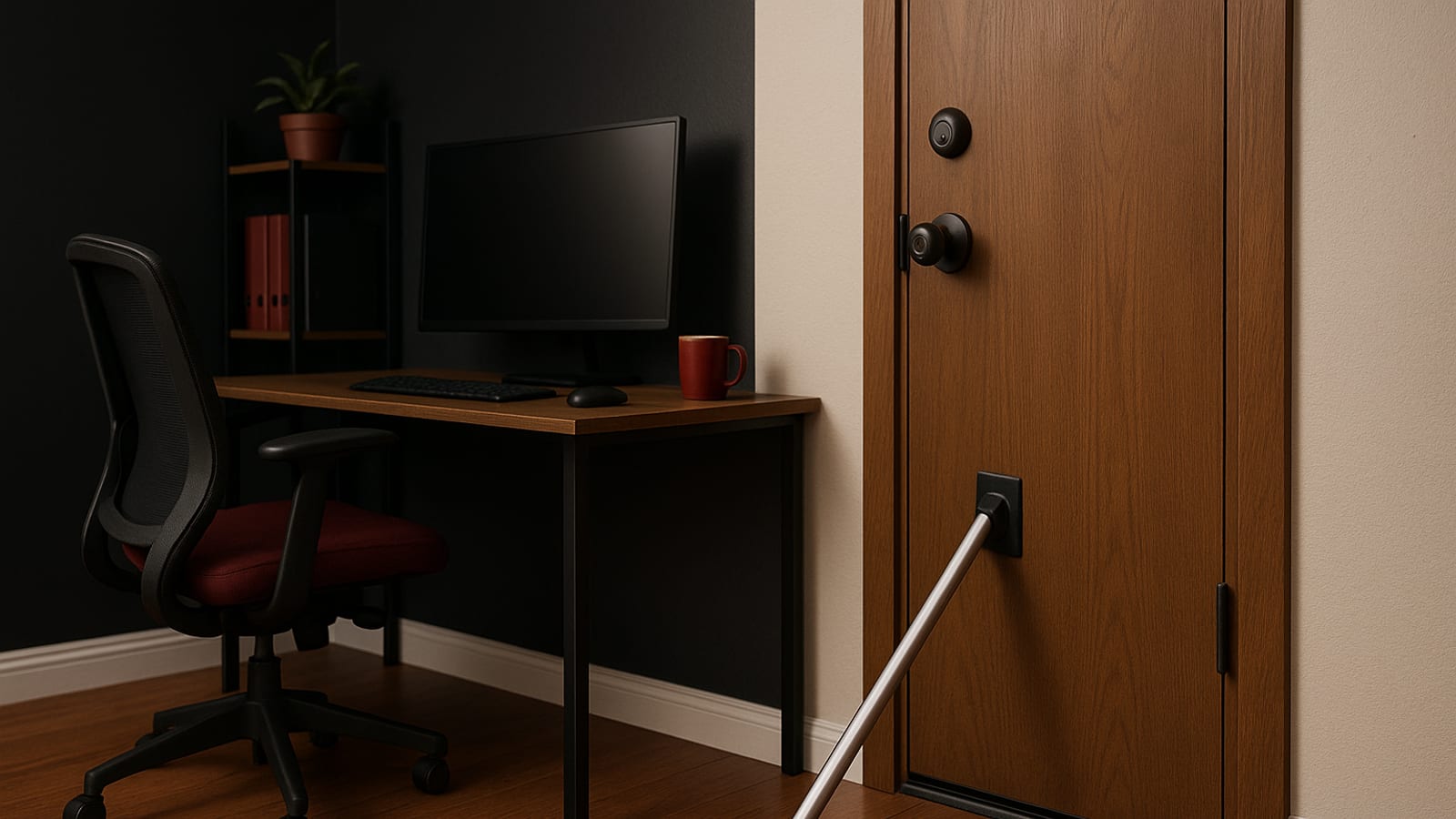
Sliding doors can be lifted off their tracks from the outside, bypassing the latch entirely. A bar in the track channel is a basic precaution — but it doesn’t address the lift-and-pry vulnerability at the frame. Purpose-built sliding door security hardware anchors the panel against both lateral movement and vertical lift. A meaningful upgrade for any rental with patio access.
Doors with Side Glass Panels
Decorative glass panels flanking a front door look elegant. They also create a direct path to the interior deadbolt. Break the glass, reach through, turn the lock — no kick required. For these configurations, a Side Light Door Security Kit reinforces the door itself so that even if the glass is compromised, the door cannot be forced open. That’s an important distinction standard reinforcement kits don’t address.
🔹 Navigating Tenant Relationships: Security as a Lease Asset
One of the most underused moves in rental property management is positioning security upgrades as a competitive differentiator — not a maintenance obligation. Tenants in most markets are actively comparing properties. Documented security features — reinforced doors, quality locks, window security measures — are tangible selling points that justify premium rents and attract longer-term, quality tenants.
When you communicate upgrades to current tenants, frame them as improvements to their living experience, not responses to a problem. A brief note explaining you’ve installed door reinforcement hardware across all units — no action required from them — builds goodwill and signals that you take your responsibilities seriously as a property owner.
From a lease perspective, note explicitly that tenants should not remove or modify door hardware, and that any security equipment installed by the landlord stays with the property. That protects your investment in the hardware and ensures continuity between tenancies.
✅ Step-by-Step: Installing Door Reinforcement in a Rental Unit
The practical appeal of door reinforcement kits for landlords is that they are genuinely DIY-friendly. No contractor needed. Most installations take under an hour per door with basic tools. Here’s how to approach it systematically across a rental property:
- Audit all entry points during a unit turnover or scheduled inspection. Document door types, frame conditions, and hardware at each opening.
- Prioritize by risk. Front doors and back doors used as primary exits are highest priority. Sliding glass doors and side-light configurations are often overlooked but represent real vulnerabilities.
- Select the right kit for each door type. A standard single entry door takes a different product than a French door or a door flanked by glass panels. The wrong kit reduces effectiveness and wastes money.
- Install during turnover when the unit is vacant. No disruption to current tenants. Unobstructed access to the door frame.
- Document the installation with photos for your property records. Useful for insurance purposes and demonstrates due diligence if a security incident ever raises a liability question.
- Add a secondary layer where warranted. For ground-floor units or higher-risk areas, pairing door reinforcement with window security film addresses the common objection that an intruder will simply break a window instead. Security film holds glass in place under impact, significantly slowing forced entry through glazing.
For a single standard entry door, the Single Door Security Kit is the practical starting point — purpose-built for the most common door configuration in residential rentals, and priced to make sense even when you’re outfitting multiple units.
🔹 The Insurance and Liability Angle Landlords Often Overlook
Beyond the direct cost of a break-in, you face downstream financial exposure that doesn’t always show up in the initial damage assessment. If a tenant’s belongings are stolen because a door failed under forced entry — and it can be demonstrated that the hardware was inadequate — you may face questions about your duty of care as a property owner. Laws vary by jurisdiction, but the trend in tenant protection legislation has moved toward holding landlords to higher standards of habitability. Security is increasingly part of that conversation.
Proactively reinforcing entry doors creates a documented record that you took reasonable steps to secure the property. It’s not a guarantee against every outcome. But it is a meaningful demonstration of responsible property management — one that matters in insurance claims and, if it ever comes to it, legal proceedings.
Some landlord insurance providers also offer premium adjustments for documented security improvements. Have a direct conversation with your insurer about what qualifies. Door reinforcement hardware with documented installation may count toward a safer property classification.
✅ Final Thoughts: Security as Property Management Strategy
Rental property security doesn’t require an alarm subscription, a smart home overhaul, or a significant renovation budget. The single highest-impact improvement most rental properties can make is reinforcing the door frame and strike plate on every exterior entry point. Straightforward. Affordable. Addresses the root cause of the majority of residential break-ins.
Approached systematically, door reinforcement is a one-time investment per unit. It pays back in tenant retention, reduced liability exposure, and the straightforward knowledge that the people living in your property have a door that actually holds when it needs to. That’s not a small thing — for your tenants or for the long-term value of your portfolio.
Start with your highest-risk entry points. Match the right product to each door configuration. Build security upgrades into your standard turnover process. For a full overview of available door security solutions organized by door type, visit Home Door Security’s resource hub to find the right fit for every entry point in your rental portfolio.
Disclosure: this article may contain affiliate links. If you buy through them, we may earn a small commission at no extra cost to you.
Leave a Reply