
Most doors are one solid kick away from failing. The frame splinters, the lock plate tears free, and an intruder is inside in under ten seconds. Door Armor exists to change that equation. This review breaks down exactly what the product does, what it costs, and whether it earns a place in a serious home security setup.
Understanding the Threat: Why Door Armor?
Doors are the primary entry point for forced intrusions. Not windows. Not garages. Doors. And the weakest spots are predictable every time: the jamb, the hinges, and the area around the lock. A standard residential door frame offers almost no resistance to a determined kick. That is not opinion — that is physics.
Door Armor targets those exact failure points. It reinforces the jamb, the hinges, and the lock zone with hardened steel components designed to absorb and redistribute impact force. The result is a door that does not give way on the first attempt, or the fifth. For homeowners, renters, and landlords who want a real answer to forced entry — not a sticker or a sign — this is the category worth understanding.
Features of Door Armor
The Single Door Security Kit is the core product. Priced at approximately $79, it includes:
- A door jamb shield to reinforce the door frame
- Hinge shields to protect against forced entry at hinge points
- Door shields to protect the area around the locks
For French and double entry doors, the Double Door Security Kit runs around $149. Same protection philosophy, built for a wider configuration. An installation video is included. You will not need to guess.
Installation: A Step-by-Step Guide
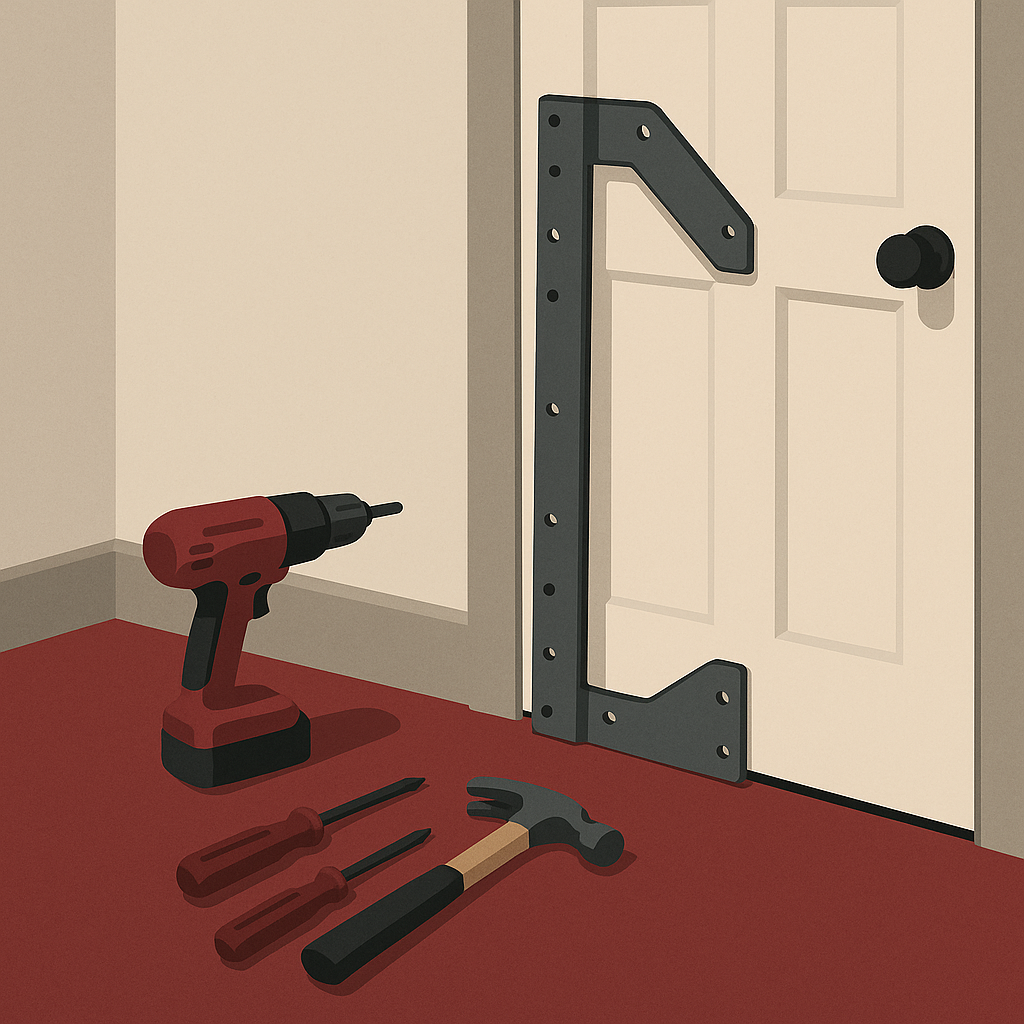
You do not need to be a contractor. The installation process is straightforward, and most people finish in under an hour. Here is the sequence:
- Gather Your Tools: A drill, drill bits, a screwdriver, and the kit components.
- Prepare the Door: Remove any existing hardware that could interfere with placement.
- Install the Jamb Shield: Align it with the door frame and drive in the provided screws.
- Add the Hinge Shields: Attach one at each hinge point, flush with the door edge.
- Secure the Door Shields: Position them around the lock area and fasten with screws.
No special skills required. This is a viable DIY project for most homeowners on a weekend afternoon.
Real-World Effectiveness
User reports are consistent. After installation, doors withstand significantly higher levels of force. That matters because most forced entries are opportunistic — an intruder who cannot breach a door in a few seconds typically moves on. Door Armor changes the risk calculation for anyone testing your entry points.
In higher-crime areas, the reinforcement is not just a comfort measure. It is a functional barrier that buys time, deters attempts, and shifts the odds in your favor.
Comparing Door Armor to Other Solutions
Most door reinforcement alternatives require invasive installation, professional labor, or deliver only partial coverage. Door Armor addresses the jamb, hinges, and lock zone together — a complete system rather than a single-point fix.
For doors with adjacent glass panels, the Side Light Door Security Kit fills the gap at around $129. Decorative glass panels are a known vulnerability. This kit is built specifically for that configuration.
Additional Security Considerations
Door Armor handles the door. A complete security setup goes further. Consider layering in:
- Window Security Film to address glass entry points
- High-quality deadbolts for additional lock integrity
- Smart home security systems for real-time monitoring and alerts
Each layer compounds the difficulty for an intruder. That compounding effect is the point.
Conclusion: Is Door Armor Worth It?
At $79 for a standard door, Door Armor is not a luxury purchase. It is a practical, data-backed decision. The installation is fast, the protection is real, and the product addresses the actual failure points that most residential doors share.
If you have a standard door, start with the Single Door Security Kit. If you have French or double doors, the Double Door Security Kit is the right fit. Each kit is built for a specific configuration — pick the one that matches your entry points.
For the full product range, the Door Armor shop covers every door type and security scenario.
Evaluating Door Armor in Different Home Settings
The product is versatile, but context shapes how you deploy it. Here is what changes depending on where you live.
Urban Homes
Higher foot traffic means more exposure. In dense urban environments, visible reinforcement works as a deterrent before anyone even tries the door. Pair Door Armor with exterior security cameras and you are signaling clearly: this property is not the easy target. Intruders read those signals.
Rural Homes
Isolation cuts both ways. Emergency response times are longer, which means your door needs to hold longer. Door Armor provides that buffer. Add motion-activated lighting to the perimeter and you extend your detection window before a threat ever reaches the door.
Rental Properties
For landlords, Door Armor is a low-friction upgrade. Installation is non-invasive and reversible — no permanent modifications to the property. It increases tenant confidence and reduces liability exposure. Pair it with smart locks and basic window security guidance for tenants and you have a defensible security posture across the unit.
FAQs About Door Armor
- Does Door Armor affect the door’s appearance? Components install on the interior side. The exterior profile stays clean. Most installations are nearly invisible from outside.
- Can Door Armor be installed on any door type? It fits most standard and double doors. Non-standard door materials or unusual thicknesses may require a specific kit or minor customization.
- Is professional installation required? No. Most homeowners complete it without help. Professional installation is available for complex configurations if you prefer it.
- What maintenance does Door Armor require? Minimal. Check that screws and shields remain secure periodically — especially after severe weather or any attempted entry.
Key Performance Indicators (KPIs) for Assessing Door Armor Efficiency
If you want to measure what you installed, track these:
- Reduction in Forced Entry Attempts: Any decrease in attempted break-ins after installation is a direct signal that the deterrent effect is working.
- Response Time Improvement: Door Armor buys time. Measure how that buffer changes your ability to alert authorities or respond to a threat.
- User Satisfaction Ratings: Survey household members or tenants. Perceived security is a real metric — it affects behavior and decision-making.
- Durability Over Time: Inspect components at regular intervals. The hardware should maintain structural integrity without visible wear under normal conditions.
Case Study: A Suburban Family’s Experience with Door Armor
The Johnson family installed Door Armor after a string of break-ins hit their neighborhood. Before installation, leaving for vacation meant leaving with anxiety. After installing the Single Door Security Kit, that changed immediately.
Six months later, the results were clear. Suspicious activity around the property dropped. No attempted entries. The family credited the visible reinforcement as a deterrent — and noted the installation took less than an hour from unboxing to done. The design was unobtrusive enough that it did not alter the look of their entryway.
One suburban family, one afternoon of work, and a measurable shift in their security posture. That is the case for Door Armor in plain terms.
Disclosure: this article may contain affiliate links. If you buy through them, we may earn a small commission at no extra cost to you.
Leave a Reply