
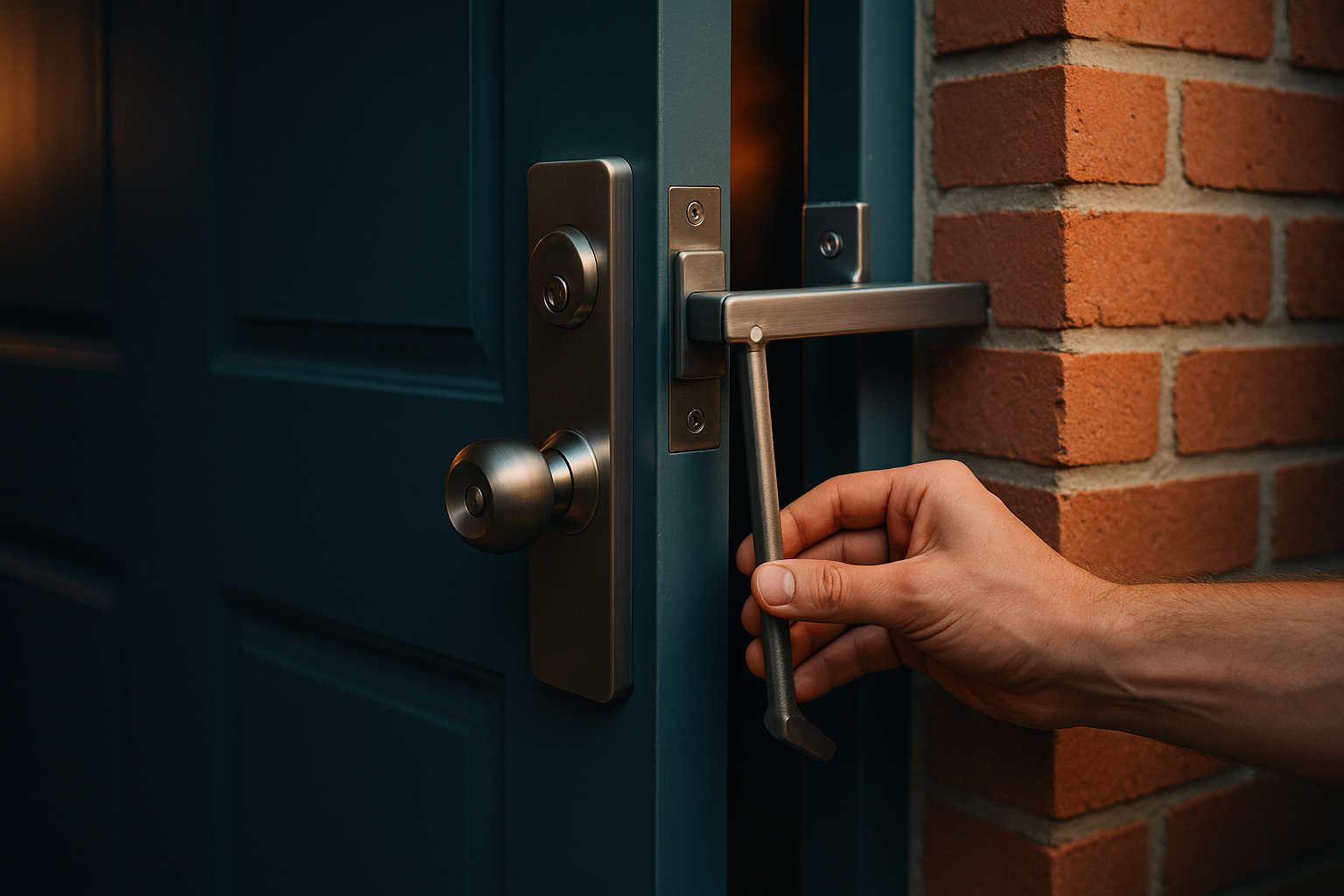
Most home security advice assumes your door swings inward. If your front door, back door, or garage entry opens outward, you are dealing with a different set of vulnerabilities — and a different set of solutions. Here is what you need to know: out-swing door security is absolutely achievable, and in some ways these doors carry a structural advantage you can build on. This guide tells you exactly what makes them vulnerable, what does not work, and what genuinely does.
Why Out-Swing Doors Are a Different Security Challenge
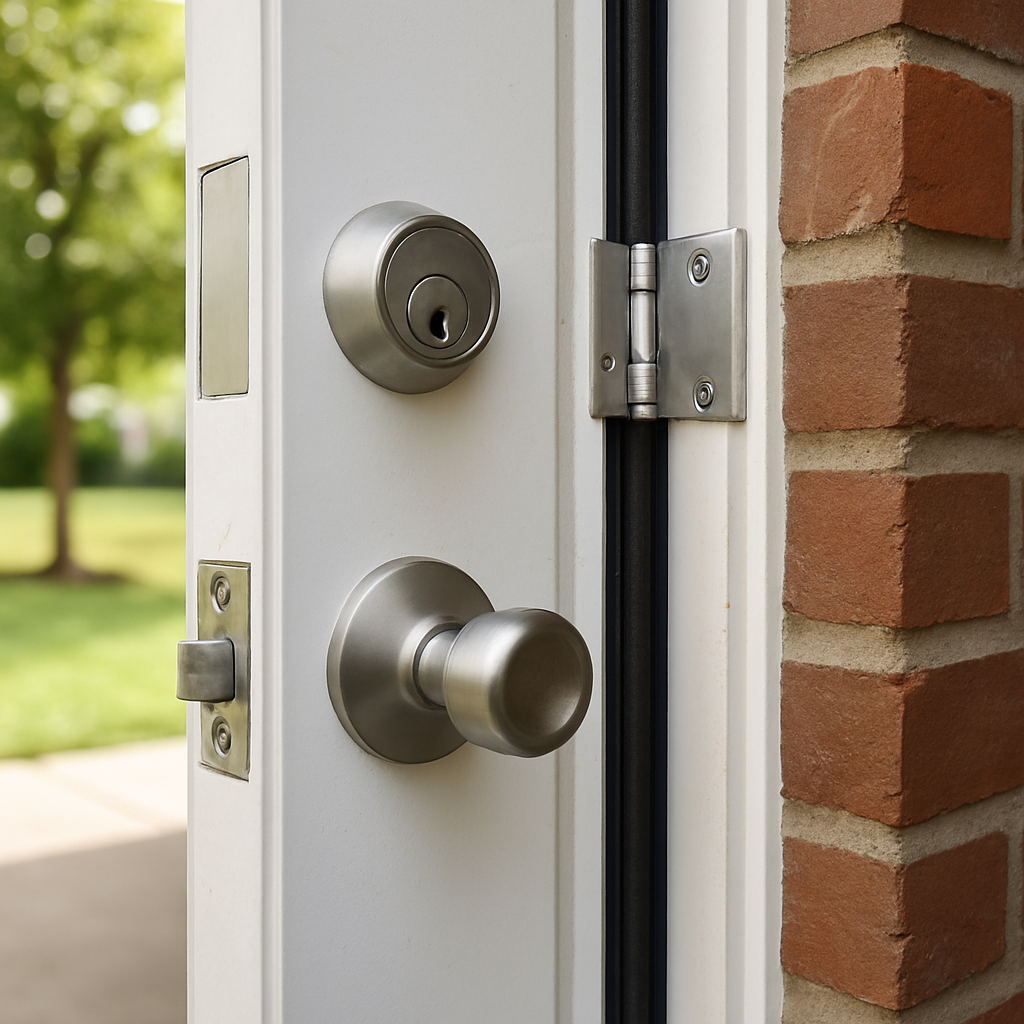
When a door opens outward, the hinges are exposed on the exterior side of the frame. That is the headline vulnerability. On an inward-swinging door, hinges are hidden inside the home. On an out-swing door, anyone standing on your porch can see — and potentially access — those hinge pins.
A determined intruder who knows what they are doing can drive out the hinge pins and lift the door completely off its frame, bypassing the lock entirely. It is not the most common attack method. But it is a real one, and you need to understand it before you spend a dollar on reinforcement.
The second distinction matters just as much: out-swing doors cannot be kicked in the same way inward doors can. A standard kick-in works by driving the door into the frame until the strike plate gives way. With an outward-opening door, that force works against the attacker — the door already resists in the direction it is being pushed. This is a meaningful security advantage. It is exactly why many commercial and institutional buildings use out-swing doors by design.
So the threat profile is different. You are not primarily worried about kick-ins. You are focused on hinge security, lock cylinder attacks, and frame integrity around the latch and deadbolt.
Step 1 — Assess Your Hinge Situation First
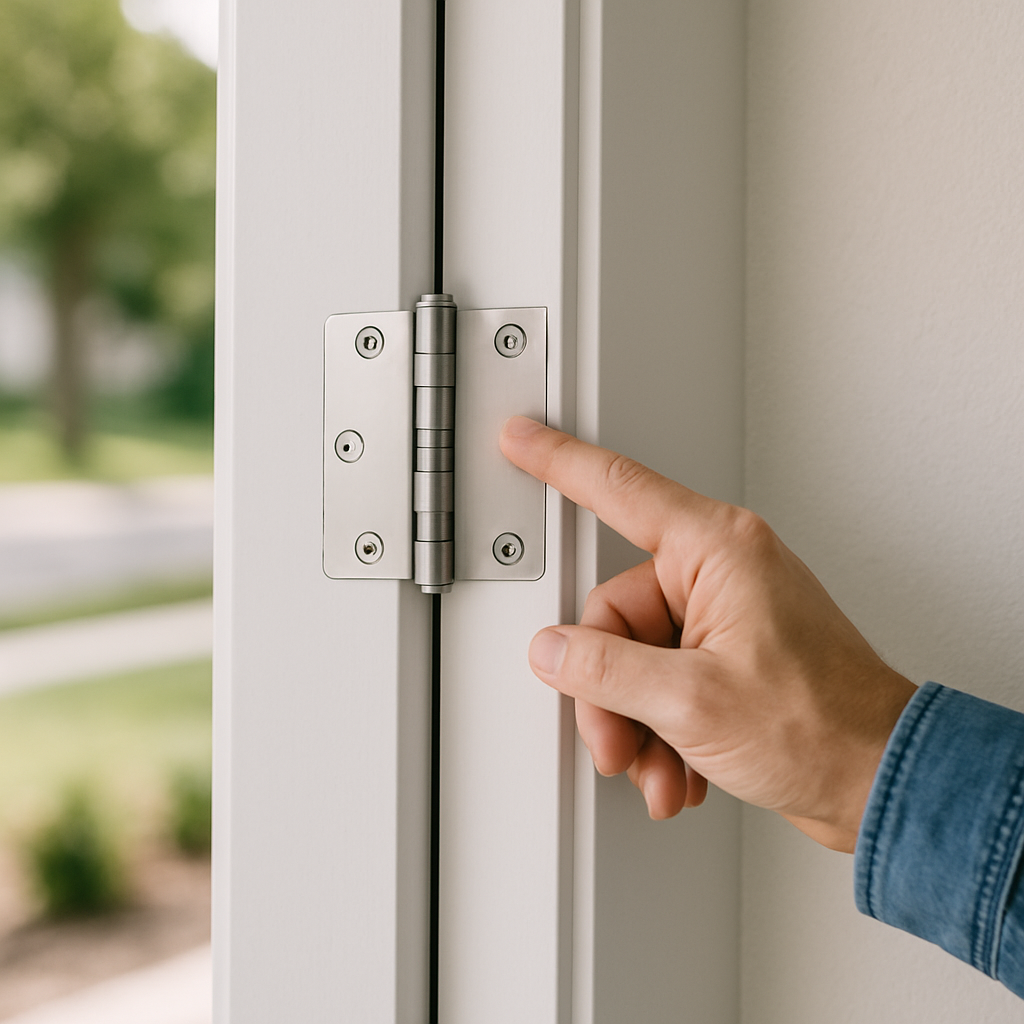
Before you buy anything, go outside and look at your hinges. Ask yourself three questions:
- Are the hinge pins removable from the outside?
- Are the hinges attached with short screws — under 1.5 inches — that only reach the door casing, not the structural framing?
- Is there visible wear or gap between the door and the frame at the hinge side?
If you answered yes to any of these, your hinges are your first priority. Not your lock.
How to Fix Exposed Hinge Pins
The most reliable fix is replacing standard hinges with security hinges that have a non-removable pin design — sometimes called NRP hinges. Available at most hardware stores for roughly $15–$30 per hinge. A standard door uses three.
If you want a faster solution without replacing the hinges entirely, install hinge bolts — also called dog bolts or hinge protectors. These are small steel bolts that seat into the hinge-side edge of the door. When the door closes, the bolt drops into a corresponding hole in the frame. Even if the hinge pins are removed, the door cannot be lifted free. Effective, low-cost, and about 20 minutes of work per hinge location.
Upgrade Your Hinge Screws
Regardless of which hinge type you have, the screws holding them in place matter enormously. Most factory-installed hinges use screws that are only 3/4 inch to 1 inch long — just enough to grip the door casing, not the structural stud behind it. Replace every hinge screw with 3-inch screws that drive past the casing and into the framing. This single upgrade dramatically increases resistance to any prying or leverage attack on the hinge side.
Step 2 — Reinforce the Lock Side of the Frame
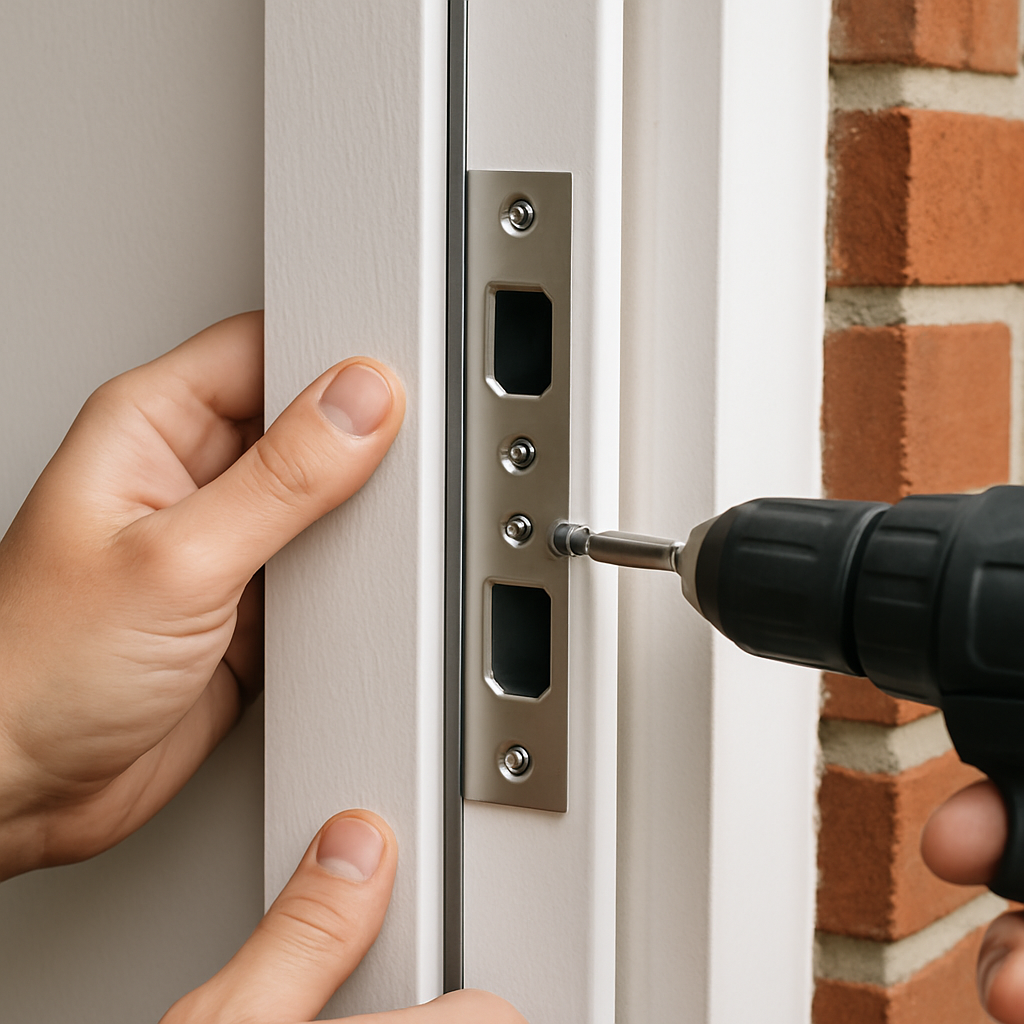
Out-swing doors resist kick-ins. That does not mean the area around your deadbolt strike plate is safe. A crowbar applied to the gap between the door and frame can split a standard wooden door casing in seconds. The strike plate itself, held by short screws, offers almost no resistance to that kind of attack.
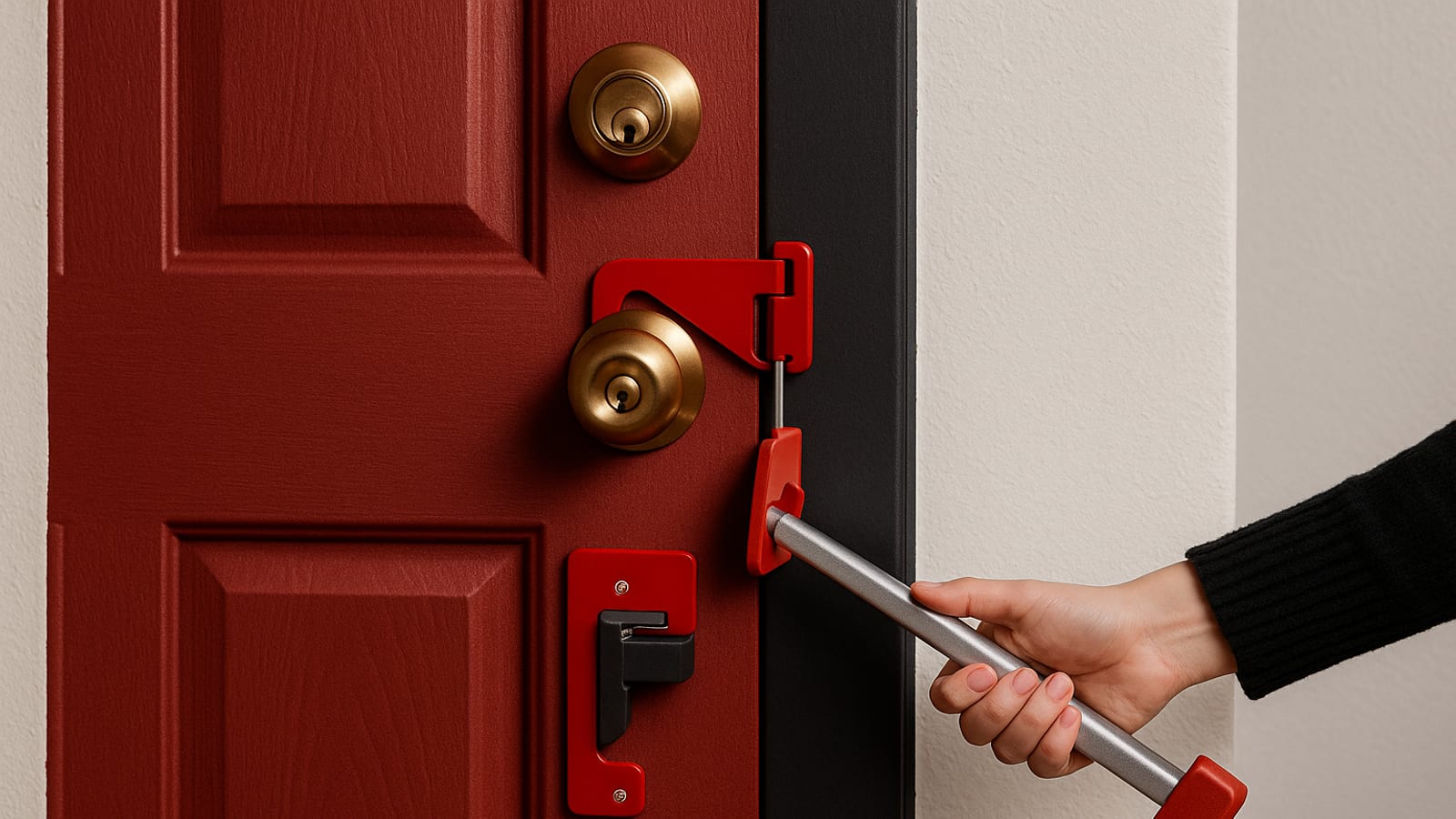
This is where a quality door reinforcement kit earns its place. A proper kit wraps steel reinforcement around the strike plate area, the lock cylinder, and often the door edge itself. The goal is to distribute force across a wider section of the frame rather than concentrating it on a single point that can splinter.
For a standard single outward-opening door, the Single Door Security Kit addresses the strike plate, the door edge, and the frame simultaneously — the three points that matter most for this door type. At around $79, it costs a fraction of what a single break-in runs in property damage and replacement hardware alone.
If your out-swing door is a double-door configuration — common for rear patios or formal entryways — the weak point shifts to the center astragal, the vertical strip between the two doors. Double doors that open outward can be pried apart at the center even when locked. The Double Door Security Kit is built specifically for this configuration, reinforcing both the center meeting point and the individual strike zones. This is the right tool for French doors and double entry doors that open outward.
Step 3 — Choose the Right Deadbolt for an Out-Swing Door
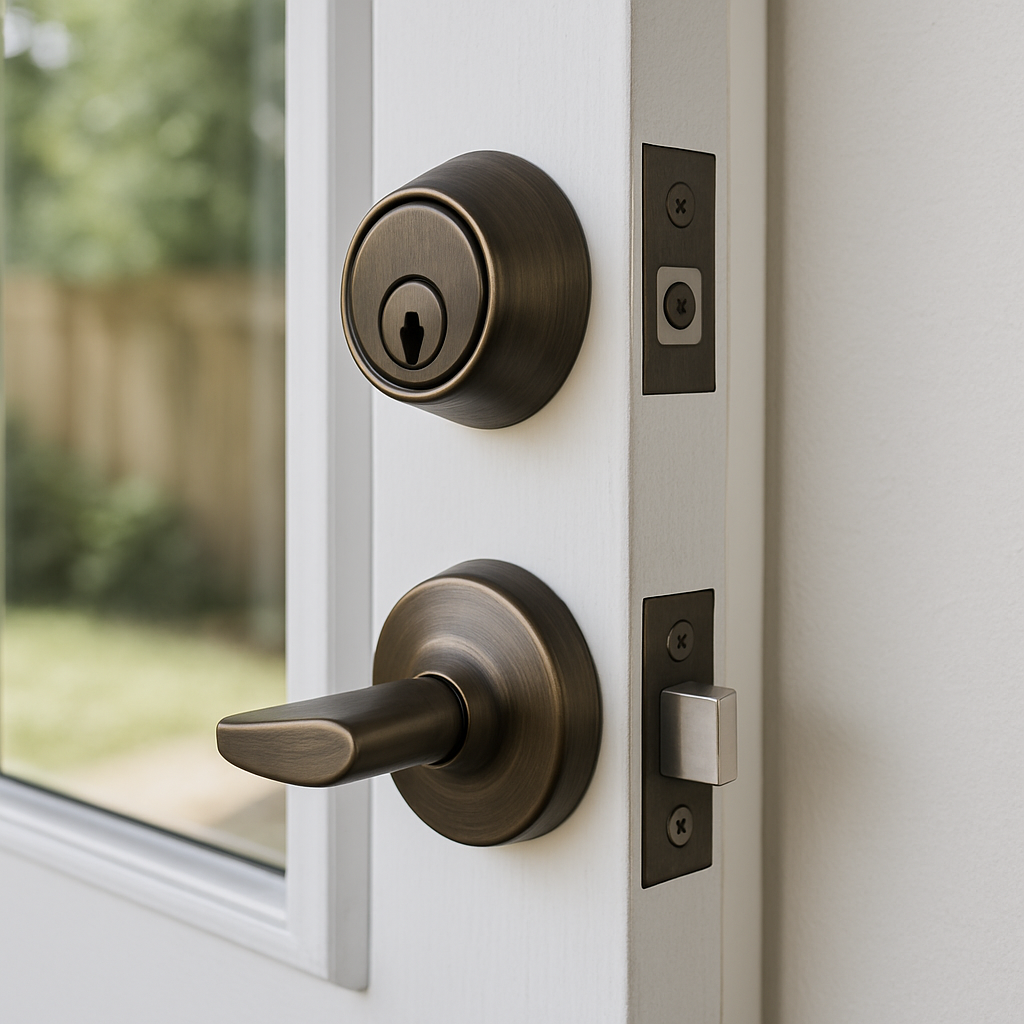
Not every deadbolt is appropriate for an outward-opening door. On an inward door, the deadbolt bolt extends into the frame — hidden and protected. On an out-swing door, the bolt extends into the frame from the exterior side, which means the bolt mechanism itself is more exposed to tampering.
Look for these features when selecting or upgrading your deadbolt:
- ANSI Grade 1 rating — the highest residential security rating, indicating resistance to both physical attack and picking
- Anti-drill protection — hardened steel inserts in the cylinder that resist drill attacks
- Anti-pick pins — security pins in the cylinder that resist lock picking
- Minimum 1-inch throw — the bolt should extend at least one inch into the strike plate when locked
Brands like Schlage and Medeco produce Grade 1 deadbolts with these features at price points ranging from $60 to $200+. Cylinder quality matters more than finish or brand name.
One additional consideration for out-swing doors: look for a deadbolt with a hardened steel collar around the cylinder on the exterior face. This resists the wrench-and-snap attack, where an intruder uses a pipe wrench to shear off the exposed cylinder.
Step 4 — Address the Door Itself, Not Just the Hardware
Reinforcement hardware can only do so much if the door itself is hollow-core or made from thin, low-grade materials. Out-swing doors are often used for back entrances, side entries, and garage access points — locations where builders sometimes cut costs on door quality.
Knock on your door with your knuckles. A hollow sound means a hollow-core door, which offers minimal resistance to any forced entry method. A solid-core or solid wood door produces a dull, dense thud. If you have a hollow-core exterior door, replacing it with a solid-core door is a foundational upgrade that no amount of hardware can fully compensate for.
For renters or those not ready to replace the door, reinforcing the interior with a steel door barricade bar — positioned at the floor and angled against the door — adds meaningful resistance. Floor-mounted security bars designed for outward-opening configurations do exist and are worth researching for high-risk entry points.
Step 5 — Don’t Overlook the Glass
Many out-swing doors include decorative glass panels, sidelights, or full glass inserts. These are a common workaround for intruders who find the door itself well-secured — break the glass, reach in, and turn the deadbolt thumb-turn from the inside.
Two practical responses. First, if your deadbolt has a thumb-turn on the interior, consider replacing it with a double-cylinder deadbolt that requires a key on both sides. This stops the reach-through attack, but it requires keeping a key accessible for emergency egress — a genuine trade-off worth thinking through carefully.
Second, apply security window film to any glass in or adjacent to the door. Standard glass shatters instantly. Security film holds the glass together even after impact, requiring repeated strikes and creating noise and delay — both of which work against an intruder. You can explore window security film options as a practical complement to door reinforcement, especially if your out-swing door has sidelights or a glass insert.
Putting It All Together: A Practical Priority Order
Working with a real-world budget and limited time? Here is the sequence that delivers the most security improvement per dollar spent:
- Replace short hinge screws with 3-inch screws — low cost, high impact, 30 minutes of work
- Install hinge bolts or NRP hinges — addresses the primary vulnerability unique to out-swing doors
- Upgrade your strike plate and frame reinforcement — a door reinforcement kit handles this comprehensively
- Upgrade to a Grade 1 deadbolt with anti-drill and anti-pick features
- Add security film to any glass panels
- Replace hollow-core doors with solid-core if budget allows
You do not have to do everything at once. Steps one and two alone represent a meaningful improvement over a factory-standard out-swing door installation.
Final Thoughts: Out-Swing Doors Can Be Very Secure
The goal here is not to make you anxious about your doors. It is to show you exactly where the real vulnerabilities are so you can address them efficiently. Out-swing doors, properly reinforced, are actually quite resistant to the most common forced entry methods. The hinge exposure is a real issue — but it has clear, affordable solutions.
You can find a curated range of door security solutions for exterior doors designed specifically for DIY installation — no locksmith required, no contractor needed. A locked door should actually keep people out. With the right reinforcement in place, yours will.
Disclosure: this article may contain affiliate links. If you buy through them, we may earn a small commission at no extra cost to you.

Leave a Reply