
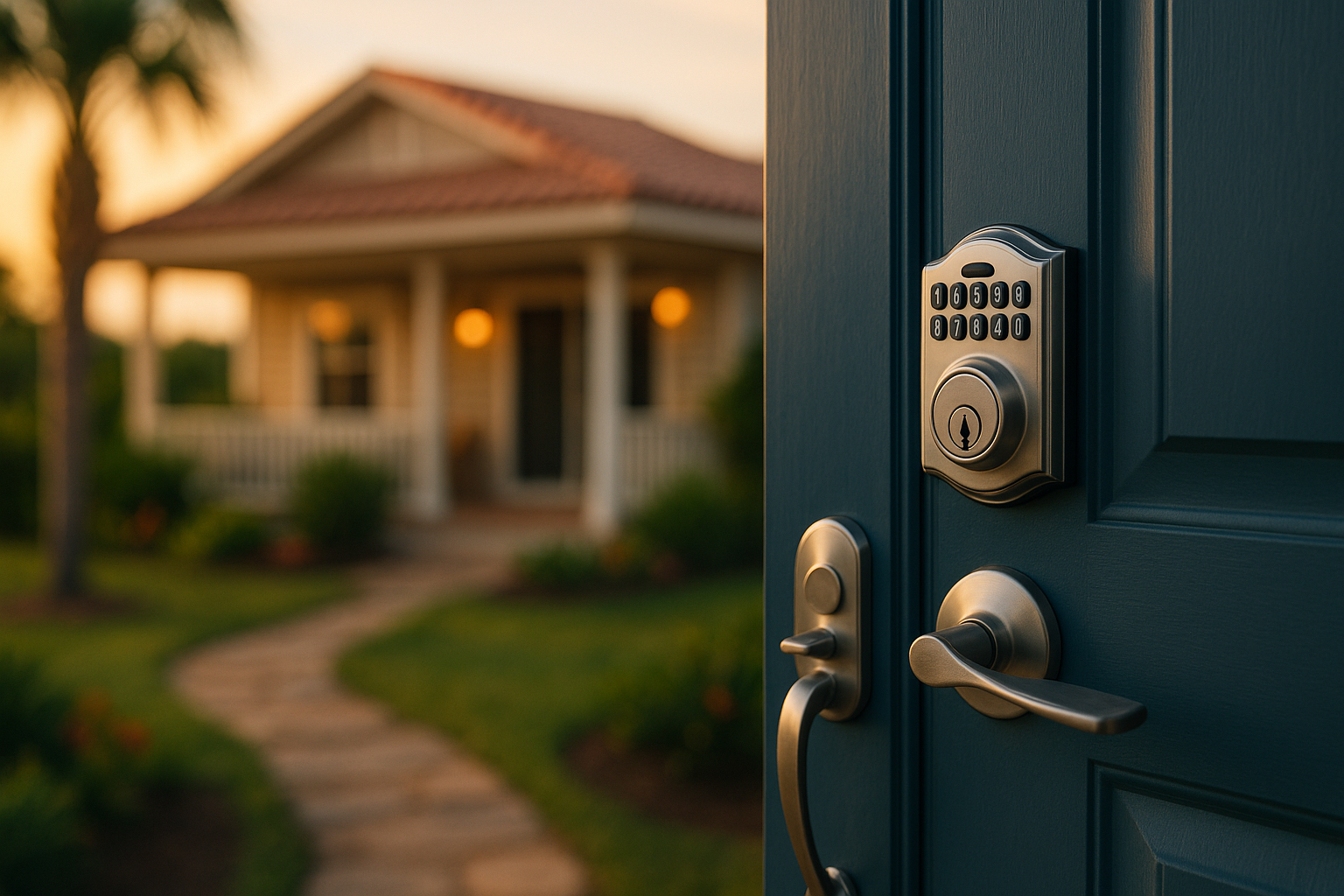
You lock the door, check the handle twice, and make it halfway to the airport before it hits you: Is the house actually secure? That feeling is more common than most people admit — and it deserves a straight answer. A locked door and a reinforced door are two entirely different things. Most standard residential doors, even with a deadbolt engaged, can be kicked open in a single blow. When you’re away for a week or two, that vulnerability doesn’t disappear. It just goes unmonitored.
This guide has one goal: help you leave home with real confidence, not the illusion of it. We’ll walk through the specific weak points that get exploited, the physical reinforcement steps that actually stop forced entry, and the layered habits that make your home a poor target while you travel. No scare tactics. Just clear, actionable steps you can complete before your next trip.
🔹 Why Vacation Periods Are High-Risk for Door Kick-Ins
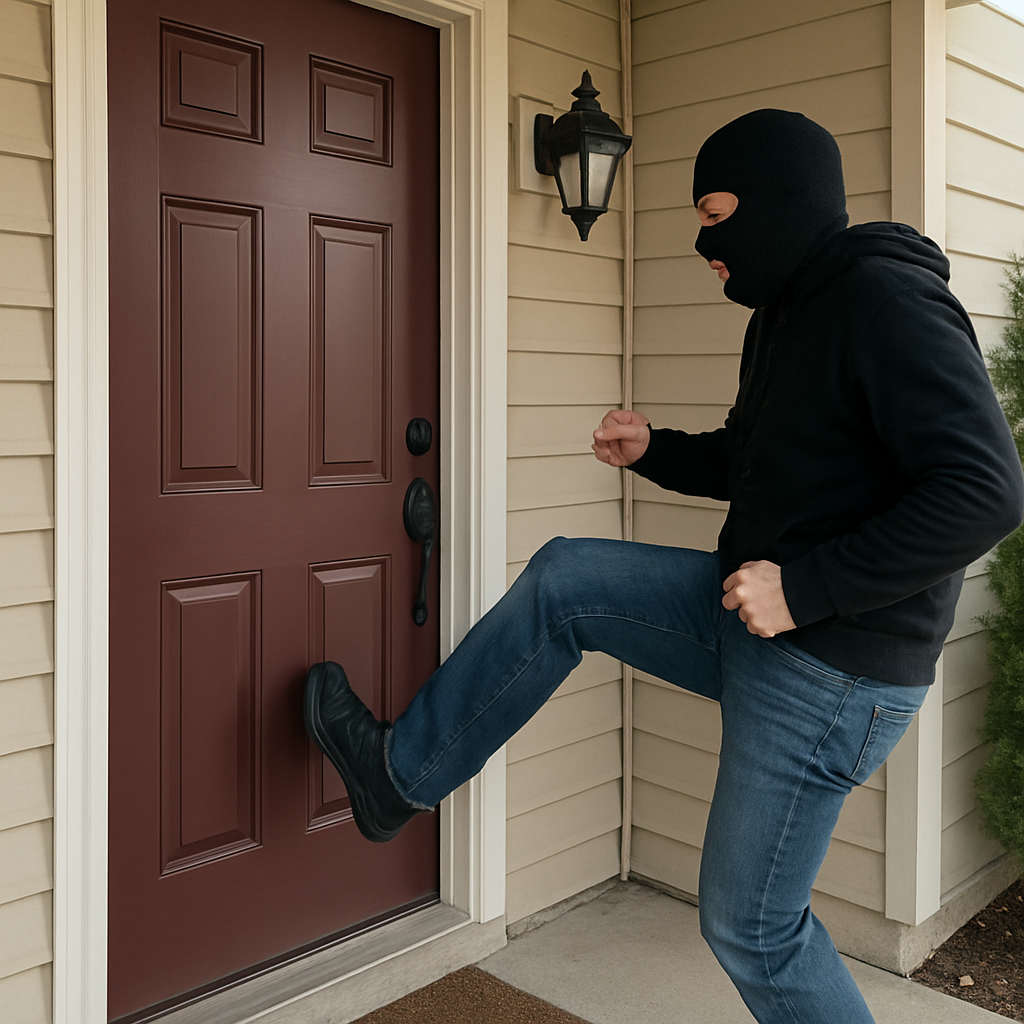
Opportunistic burglars are not running elaborate heists. The vast majority of residential break-ins are impulsive, fast, and loud — and the front or back door is the entry point of choice in a large proportion of cases. The reason is simple: kicking a door open takes seconds, requires no tools, and works on most standard door frames.
When a home sits vacant for days or weeks, signals accumulate. Mail piling up. No interior lights cycling on and off. The same car parked in the same spot. Blinds that never move. Burglars who operate in residential neighborhoods often run a quick reconnaissance pass before acting. A house that looks consistently empty is a lower-risk target than one showing signs of regular activity.
The door itself is usually the weakest link — not because of the lock, but because of the door frame. Standard frames use short screws, often just half an inch to three-quarters of an inch, anchored into soft wood. One kick transfers enough force to split that wood and pop the door open regardless of whether the deadbolt is engaged. This is the core vulnerability that vacation home door security planning must address first.
🔹 The Anatomy of a Vulnerable Door: What to Inspect Before You Leave
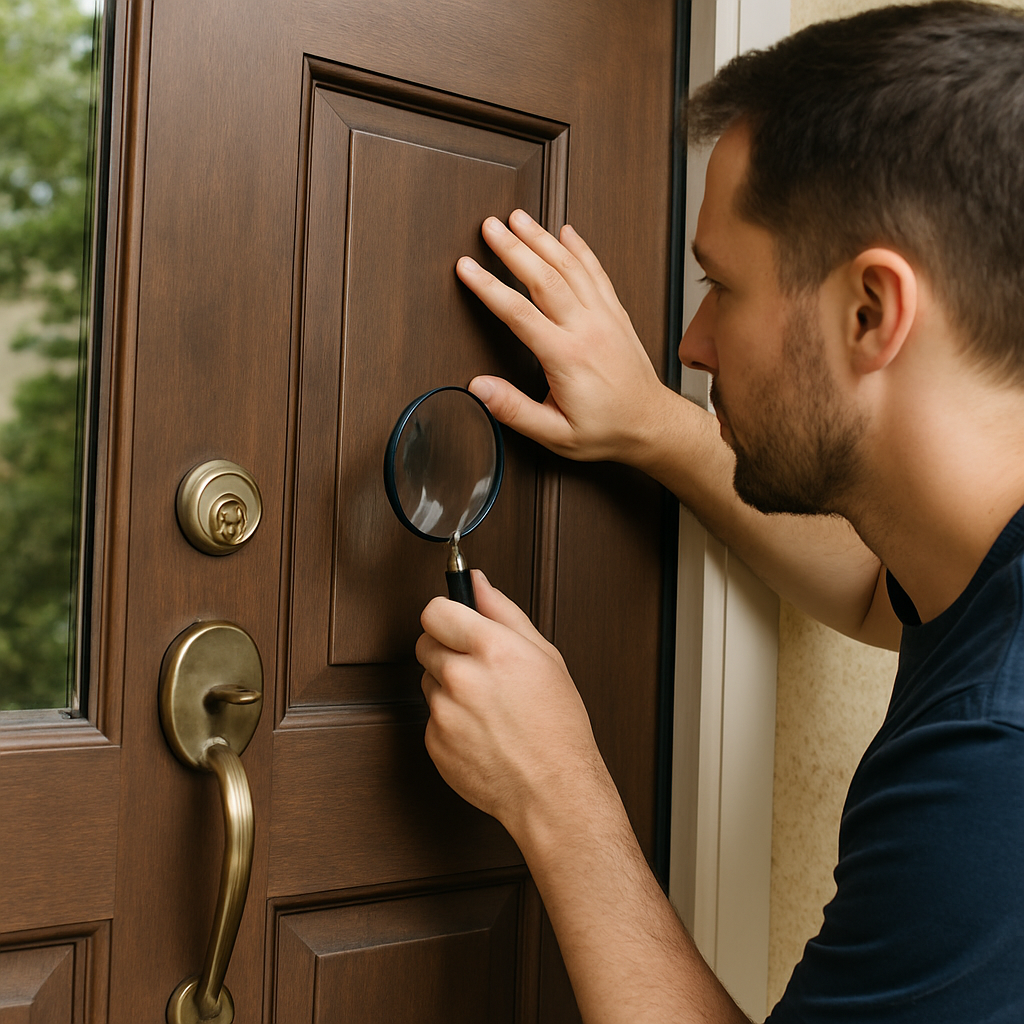
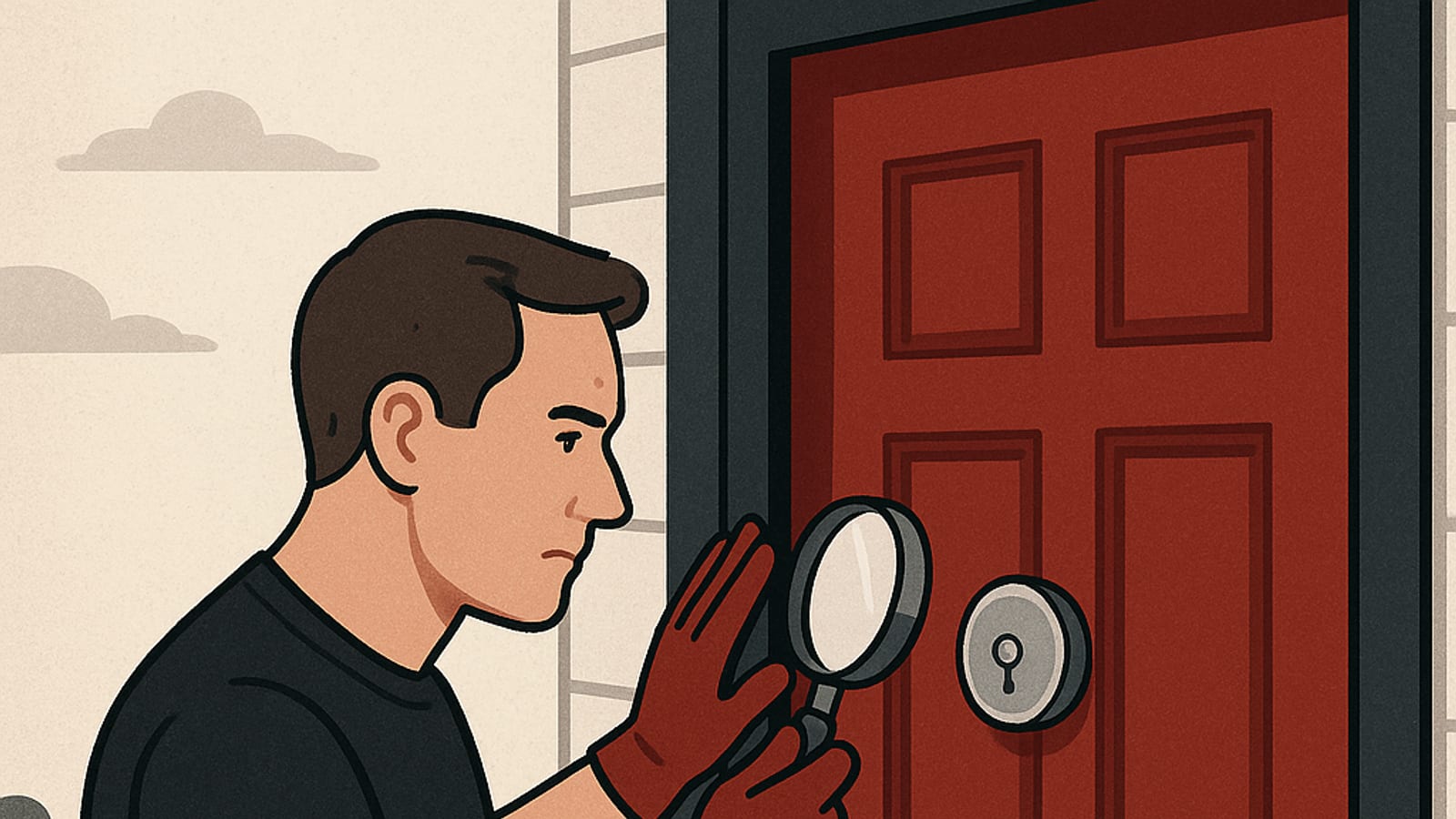
Before layering on smart devices or alarm systems, walk every exterior door and assess it physically. This takes about fifteen minutes and gives you a clear picture of where you actually stand.
Check the Strike Plate
The strike plate is the metal plate on the door frame where the deadbolt and latch engage. Most builder-grade strike plates are held in place with screws only three-quarters of an inch long — far too short to reach the structural framing behind the door casing. If you can wiggle the plate or see gaps around it, it will not hold under a kick. Replacing it with a heavy-gauge reinforced strike plate anchored with three-inch screws is one of the highest-impact upgrades you can make for under twenty dollars.
Inspect the Door Frame and Hinge Side
Run your hand along the interior door frame. Soft wood, old paint cracks, or visible splits near the latch area mean the frame is already compromised. The hinge side matters equally — exposed exterior hinges can be removed with a screwdriver if the door swings outward, giving an intruder a completely different entry vector that bypasses the lock entirely.
Assess the Door Material and Core
Hollow-core doors — common in interior applications but sometimes used on back doors or garage entry doors — offer almost no resistance to forced entry. If your door sounds hollow when you knock on it, it needs to be replaced or supplemented with a security bar before you travel.
✅ Physical Door Reinforcement: The Most Important Step You Can Take
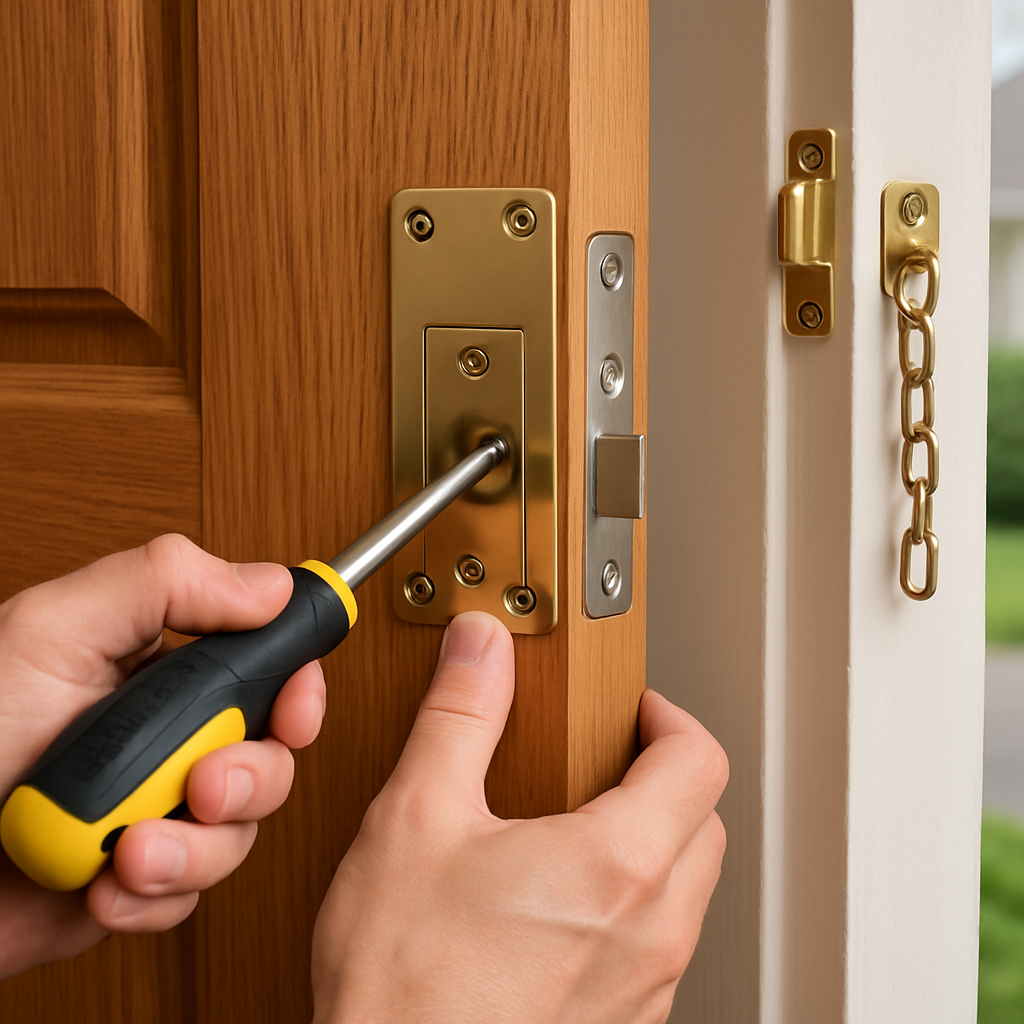
Smart locks and cameras are valuable. They do not stop a door from being kicked in. Physical reinforcement does. This is the layer of vacation home door security most homeowners skip — and it’s the one that matters most when no one is home to respond.
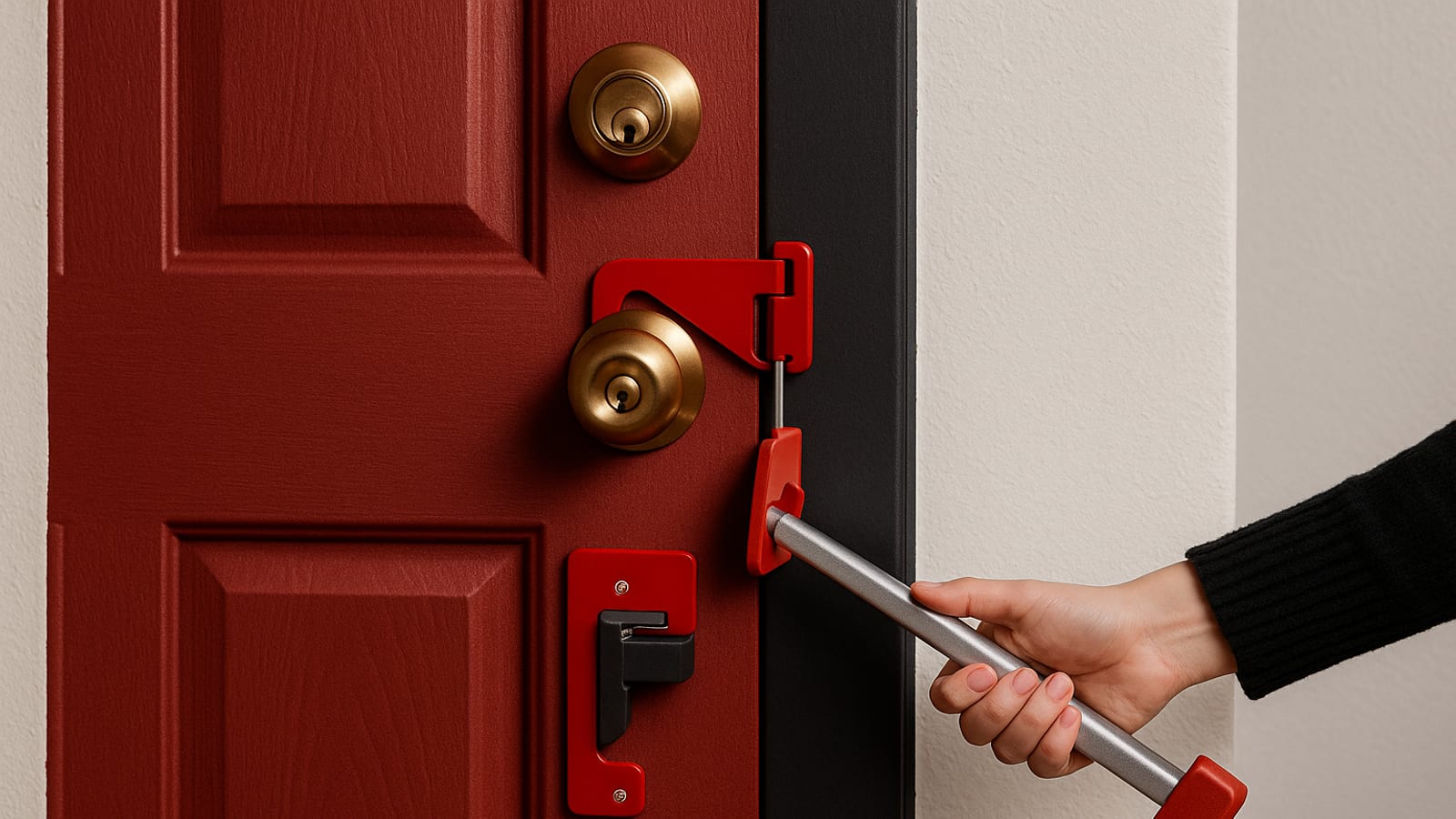
A quality door reinforcement kit addresses three structural failure points at once: the strike plate area, the door frame itself, and the hinge reinforcement. These kits use heavy-gauge steel components anchored with long screws that reach past the door casing and into the structural framing of the wall. The result is a door assembly that can withstand repeated kicks without failing — exactly what you need when you’re two time zones away.
For a standard front or back door, the Single Door Security Kit is a well-regarded option that covers all three reinforcement points in one package. It’s designed for DIY installation with standard tools and doesn’t require modifying the door itself — only the frame hardware. At around $79, it’s one of the most cost-effective physical security upgrades available for a single entry point.
If your home has French doors or a double entry door — a configuration that is particularly vulnerable because the two doors meet at a center point with no structural wall behind them — the Double Door Security Kit addresses that specific weakness directly. Double doors are a known target precisely because standard locks on them provide minimal resistance to lateral force. Reinforcing them before a trip is a straightforward, one-afternoon project.
For homes with doors flanked by decorative glass side panels, those panels represent a separate entry point. A burglar can break the glass, reach through, and unlock the door from the inside in seconds. The Side Light Door Security Kit is built specifically for this configuration and is worth considering if your front entry has this design.
You can browse the full range of door security solutions for exterior doors to match the right kit to each entry point in your home.
🔹 Sliding Glass Doors and Windows: Closing the Secondary Entry Points
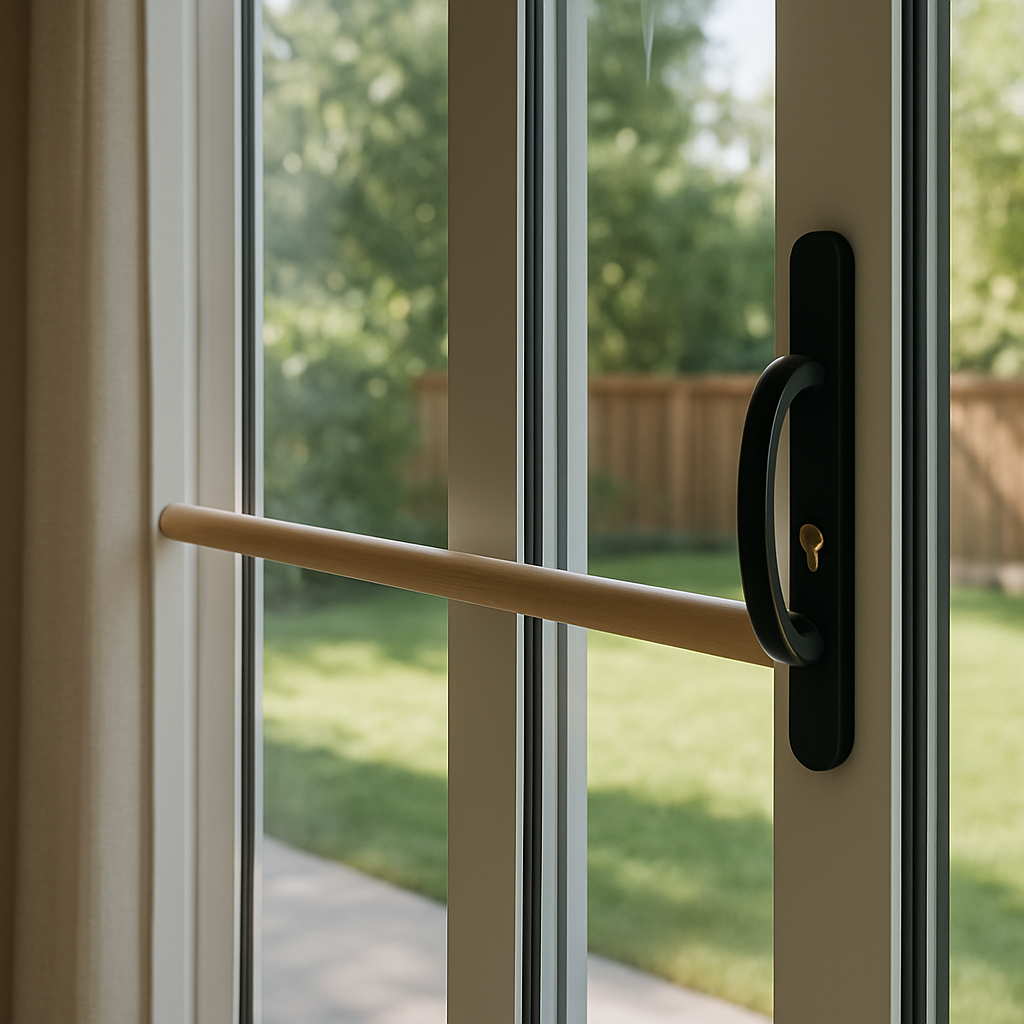
A common objection to door reinforcement goes like this: “If a burglar really wants in, they’ll just break a window.” Worth addressing directly. Yes, a determined intruder could break glass. But most residential burglars are not determined — they’re opportunistic. Noise, time, and visibility are their enemies. Breaking glass is loud and draws attention. Kicking a door open is fast and relatively quiet. When the easy door entry is eliminated, most opportunistic intruders move on rather than escalate.
That said, sliding glass doors deserve specific attention. They carry a known structural weakness: the lift-and-pry technique, where the door can be lifted off its track and pulled outward even when locked. A cut-down wooden dowel or metal security bar in the track prevents this. For a more robust solution, dedicated sliding door security hardware addresses both the lift vulnerability and the lock bypass issue.
For windows, security film is a practical upgrade that doesn’t change the appearance of the glass but significantly increases the time and effort required to break through it. It won’t make glass unbreakable. It turns a quick smash into a prolonged, noisy effort — which is often enough to end the attempt.
✅ Smart Habits That Reduce Vacation Risk Without Technology
Physical reinforcement handles the structural vulnerability. These behavioral steps handle the visibility problem — the signals that tell a passing burglar the house is empty.
- Hold your mail and packages. The postal service offers a free mail hold service. Use it. A pile of packages on a porch is one of the clearest vacancy signals available.
- Use plug-in light timers on interior lamps. Set them to mimic realistic patterns — not just on at 6pm and off at midnight, but varied across different rooms at different times.
- Ask a neighbor to park in your driveway occasionally. A driveway that sits empty for two weeks reads as vacant. A car that appears and disappears creates uncertainty.
- Don’t announce your trip on social media until after you return. This is straightforward but frequently ignored. Public posts about upcoming vacations are visible to far more people than most users realize.
- Leave one set of blinds or curtains in a non-uniform position. Perfectly uniform, closed blinds across every window signals an empty house. A slight variation looks more like someone is home.
🔹 Technology That Adds Meaningful Layers — Without Replacing Physical Security
Once the physical foundation is solid, technology adds genuine value. A video doorbell lets you see and speak to anyone who approaches your front door in real time — which can deter an intruder who isn’t sure whether anyone is home. Most models send motion alerts to your phone, giving you awareness without requiring you to monitor a live feed constantly.
A monitored alarm system adds a response layer: if a sensor is triggered, a monitoring center can dispatch local authorities even if you’re unreachable. This matters most during vacation periods when you may be in a different time zone or in areas with limited cell service.
Smart locks with activity logs let you confirm the door was locked when you left — and lock it remotely if you realize you forgot. Some models also allow you to grant temporary access to a house sitter or neighbor without handing over a physical key.
The sequencing matters. Technology alerts you to a problem. Physical reinforcement prevents that problem from becoming a successful break-in. Both matter. In that order.
✅ Your Pre-Vacation Door Security Checklist
Run through this list the day before you leave, not the morning of. Rushed security checks miss things.
- ✅ Strike plates on all exterior doors checked and upgraded if needed
- ✅ Door frame integrity confirmed — no soft wood, no visible splits
- ✅ Door reinforcement kit installed on front and back doors
- ✅ Double or French doors reinforced if applicable
- ✅ Sliding glass door secured with track bar or dedicated hardware
- ✅ Mail hold requested through postal service
- ✅ Interior light timers set and tested
- ✅ Neighbor briefed and asked to vary driveway use if possible
- ✅ Smart lock confirmed locked via app after departure
- ✅ Social media vacation announcement saved for after return
Final Thoughts: A Locked Door Should Actually Keep People Out
The goal of vacation home door security isn’t to build a fortress. It’s to close the gap between what most people assume a locked door does and what it actually does. That gap is real. It’s exploitable. And it’s fixable with straightforward, affordable steps any homeowner can complete in a single afternoon.
Start with the physical layer. Reinforce the doors that matter most. Then add the behavioral habits and technology that reduce your home’s visibility as a vacant target. Do both, and you leave for your trip knowing your door will hold — not just because it’s locked, but because it’s built to resist the kind of force most break-ins rely on.
For a deeper look at how to stop a door being kicked in and the full range of anti kick-in door security options available for different door types, visit Home Door Security’s resource hub — a practical starting point for homeowners who want straightforward answers without the sales pressure.
Your family’s sense of safety at home is worth protecting. And protecting it doesn’t have to be complicated.
Disclosure: this article may contain affiliate links. If you buy through them, we may earn a small commission at no extra cost to you.

Leave a Reply