
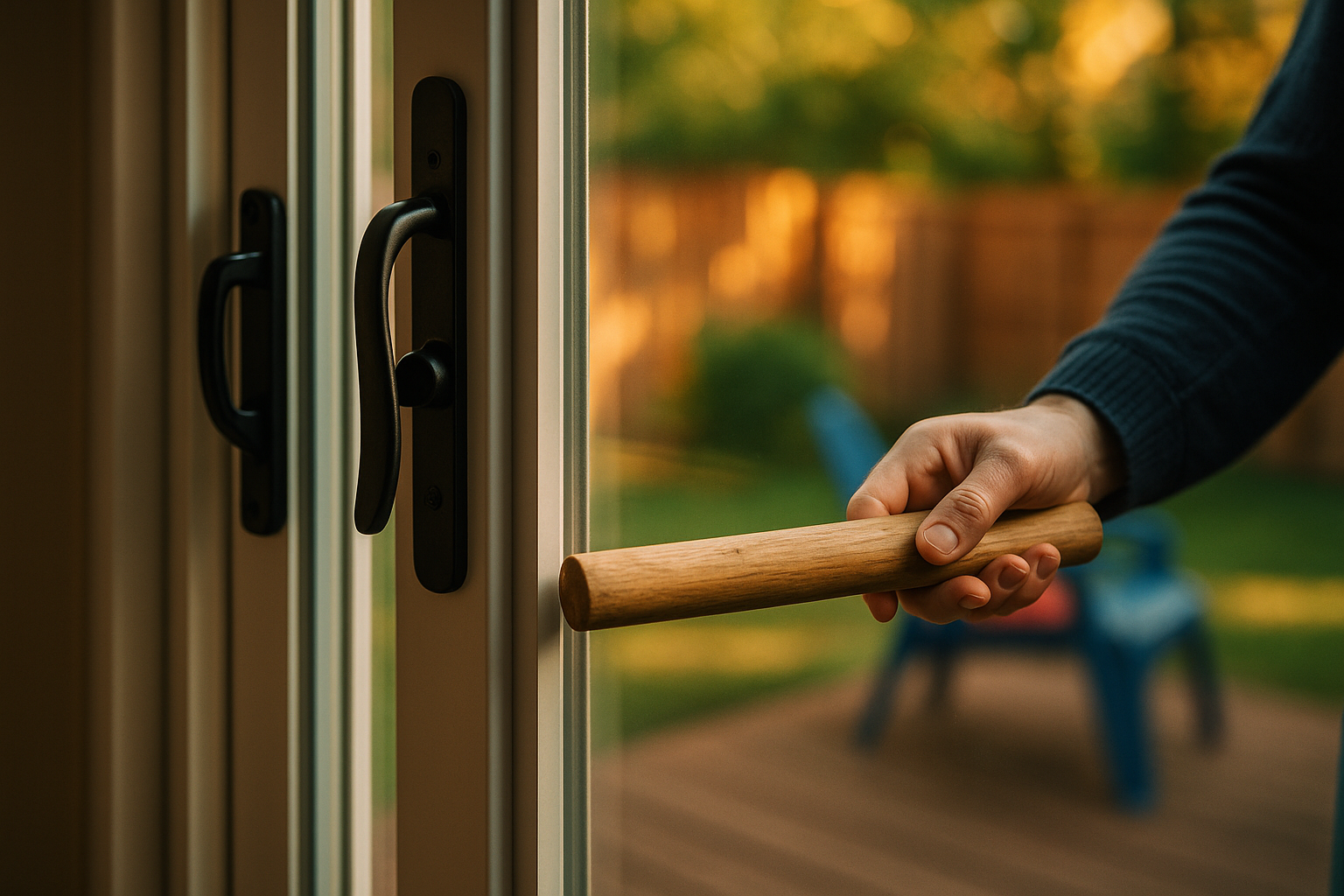
Sliding glass doors are one of the most attractive features in a home — and one of the most exploited. That floor-to-ceiling view of your backyard comes with a structural reality most homeowners never confront until it is too late: standard sliding glass doors are surprisingly easy to defeat. The factory latch is often the only thing standing between your living room and the outside world, and experienced intruders know exactly how to bypass it in seconds.
The good news is that securing a sliding glass door requires no contractor, no large budget, and no special skills. The right combination of physical reinforcements turns that vulnerable entry point into one of the most hardened spots on your property. This guide walks you through exactly how to do that — step by step, with specific products and practical techniques that actually work.
🔍 Why Sliding Glass Doors Are Targeted by Intruders
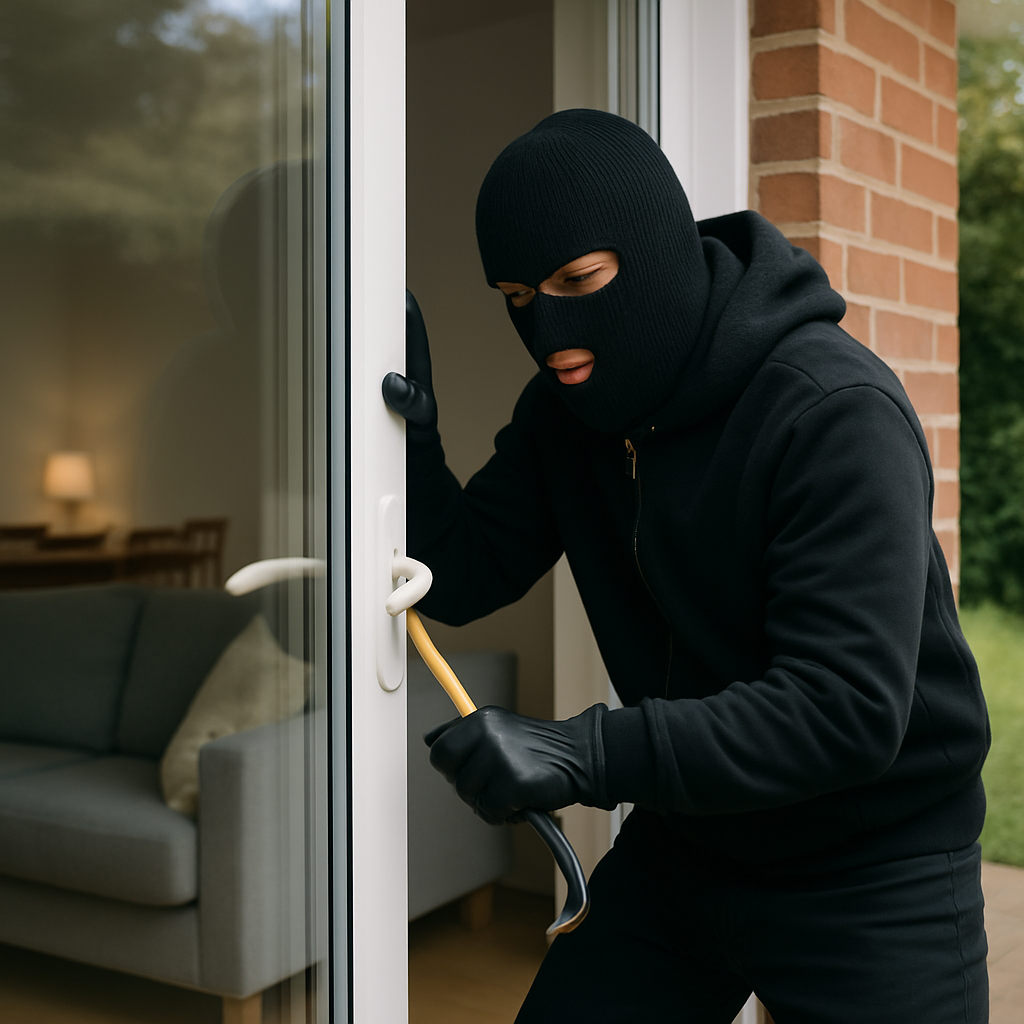
Before you fix the problem, understand it clearly. Sliding glass doors have three distinct weaknesses that make them attractive to opportunistic intruders:
- The latch is not a lock. Most factory-installed sliding door latches are hook-style mechanisms that engage a strike plate with minimal force. They are designed for convenience, not security. A firm lift-and-pull motion — or even a credit card — can disengage many of them.
- The door can be lifted off its track. Sliding doors sit in a channel and roll on wheels. If the top and bottom clearance is sufficient, the door can be physically lifted up and out of the frame, bypassing the latch entirely.
- The glass itself is a vulnerability. Even a well-reinforced door frame means little if the glass pane can be shattered quietly with the right tool. Standard tempered glass breaks into small, relatively harmless pieces — but it does break.
These three attack vectors are the foundation of a smart security strategy. You do not need expensive solutions for each one — but you do need to address all three in some way.
✅ Step 1 — Reinforce the Door Track to Prevent Lifting
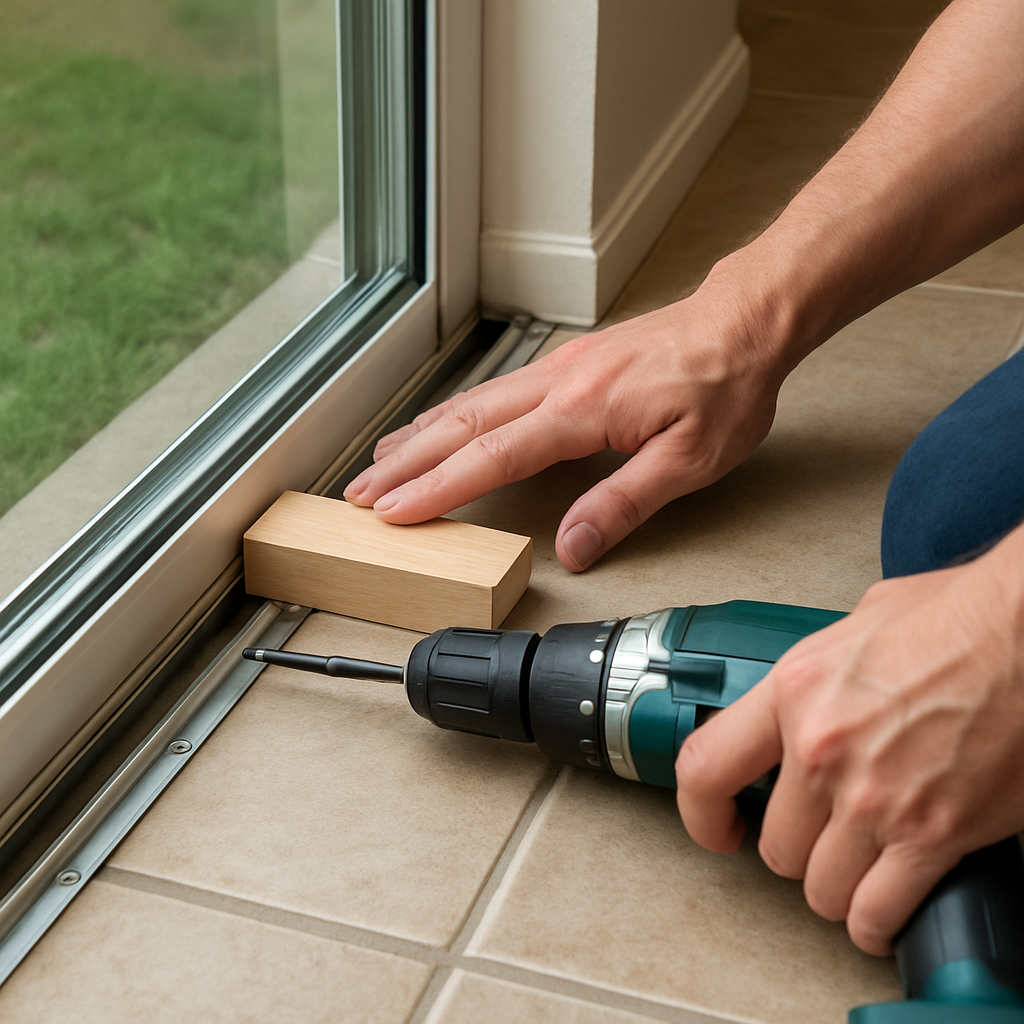
The lift-off vulnerability is the easiest to fix and the most commonly ignored. When a sliding door sits in its track, there is often enough vertical clearance for someone to lift the door panel up and tilt it outward, freeing it from the frame entirely.
The fix is direct: reduce the overhead clearance so the door cannot be lifted high enough to clear the bottom track.
- Open the sliding door fully and examine the top channel. You will see a gap between the top of the door and the channel ceiling.
- Purchase self-adhesive anti-lift blocks or adjustable security pins — available at most hardware stores for under $15.
- Insert the blocks or drive screws into the upper track above the door panel. Leave just enough clearance for smooth operation, but not enough for the door to be lifted free.
- Test by attempting to lift the door firmly. If it moves more than a quarter inch vertically, add more material until the gap is tighter.
This single step eliminates one of the most common forced-entry methods used on sliding doors. It takes less than 20 minutes to complete.
✅ Step 2 — Add a Secondary Bar or Rod Lock
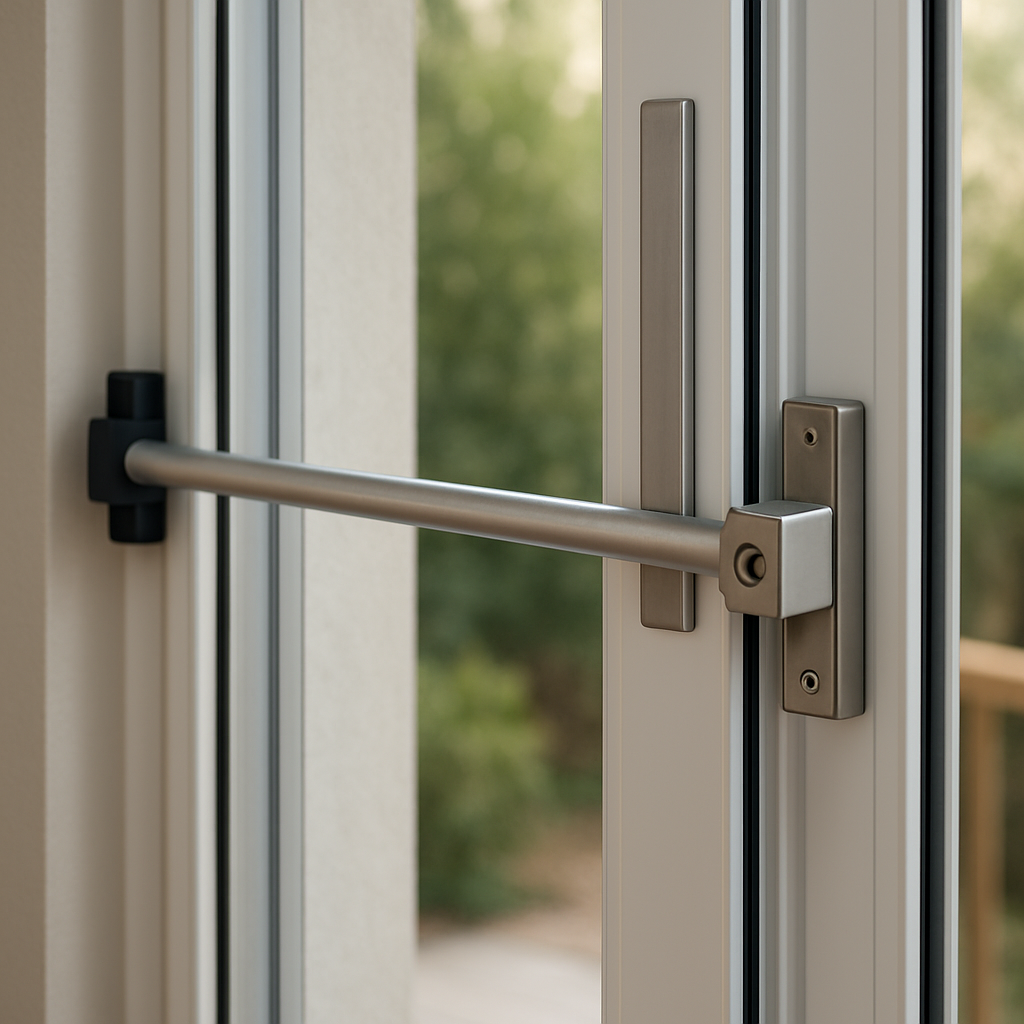
The factory latch on your sliding door should never be your only line of defense. A secondary blocking device in the lower track creates a physical barrier that cannot be picked, shimmed, or bypassed without making significant noise.
The proven solution is a security bar — a length of hardened steel or solid wood cut to fit snugly in the bottom track when the door is closed. When the bar is in place, the door panel physically cannot slide open, regardless of what happens to the latch.
For a more refined approach, adjustable steel security bars with rubber end caps — such as the Charley Bar or similar products — mount to the door frame and drop into a bracket, giving you quick one-handed operation while maintaining a strong physical barrier. These typically cost between $20 and $40 and install with just a few screws.
If you want a purpose-built solution that addresses the full range of sliding door vulnerabilities — including the lift-off issue and the latch weakness simultaneously — a dedicated sliding glass door security reinforcement system provides integrated protection designed specifically for this door type.
✅ Step 3 — Upgrade or Replace the Latch
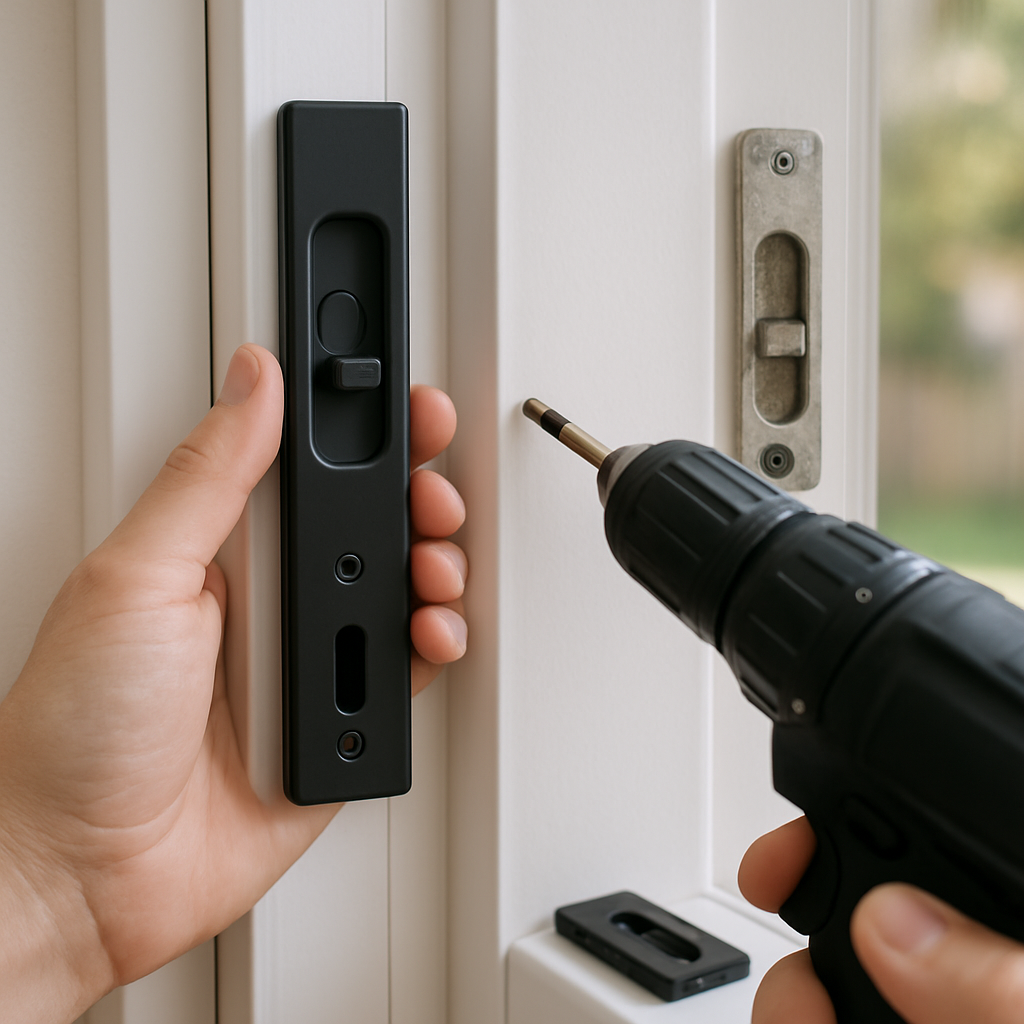
Many homeowners assume their sliding door lock is adequate because it came with the door. In most cases, it is not. Factory latches on sliding doors are typically rated for weather sealing — not forced-entry resistance.
Look for a replacement lock with a keyed cylinder rather than a simple thumb-turn. Keyed sliding door locks require a key to open from both sides, which eliminates the possibility of an intruder reaching through broken glass to turn the latch from inside. They are available at most hardware stores and online for $25 to $60, and in most cases they install using the same screw holes as your existing latch.
If your door is older, also inspect the strike plate — the metal piece on the door frame that the latch hooks into. If it is thin stamped metal secured with short screws, replace it with a reinforced strike plate using 3-inch screws that reach the structural framing behind the door jamb. This is the same principle behind door reinforcement solutions used on standard entry doors, and it applies equally here.
✅ Step 4 — Address the Glass Itself With Security Film
This is the step most guides skip. It matters. A determined intruder who cannot defeat the lock may simply break the glass. Standard tempered glass, while it shatters safely, does not put up meaningful resistance.
Window security film is a thick polyester laminate applied directly to the glass surface. It does not make glass unbreakable — but it holds shattered pieces together, turning a quick smash-and-reach into a slow, noisy, frustrating process that most opportunistic intruders will not push through.
Quality security film is rated by thickness, measured in mils. For sliding glass doors, look for film in the 8-mil to 14-mil range. Thinner decorative films will not provide meaningful resistance. A window security film product designed specifically for forced-entry resistance is worth the investment, particularly if your sliding door faces a secluded area of your yard.
Application is straightforward: clean the glass thoroughly, cut the film to size with a sharp utility knife, apply with a soapy water solution, and squeegee out bubbles. Most homeowners complete a standard sliding door panel in under an hour.
✅ Step 5 — Add a Door Sensor and Lighting
Physical reinforcement is your primary defense. Electronic deterrents are your secondary layer — and they work best when stacked on top of the physical measures above, not substituted for them.
A door and window sensor — part of most smart home security systems — will trigger an alarm the moment the door is opened or the glass is broken. Even a standalone battery-powered sensor with a loud local alarm is a meaningful deterrent. Intruders rely on speed and silence. Anything that introduces noise changes the risk calculation immediately.
Motion-activated lighting on the exterior of the sliding door is equally important. A well-lit backyard removes the cover of darkness that makes sliding doors attractive targets. Position lights so they illuminate the full approach to the door, not just the immediate threshold. Solar-powered motion lights are inexpensive and require no wiring.
🔹 Putting It All Together: A Layered Security Approach
The most effective sliding door security strategy uses multiple layers that work together. No single product or technique is foolproof on its own — but when you combine physical reinforcement, a secondary blocking device, upgraded hardware, glass protection, and electronic detection, you build a door that is genuinely difficult to defeat quickly and quietly.
Here is a practical priority order if you are working with a limited budget:
- First: Install anti-lift screws or blocks in the upper track (under $15, 20 minutes).
- Second: Add a security bar in the lower track ($20–$40, 10 minutes).
- Third: Apply window security film to the glass panel ($30–$80 depending on door size).
- Fourth: Upgrade the latch to a keyed lock with a reinforced strike plate ($25–$60).
- Fifth: Add a door sensor and motion-activated exterior lighting ($20–$100).
You can complete all five steps for well under $300 in most cases. The first two steps alone make a dramatic difference in the time and effort required to force entry.
🚨 A Note on Renters and Temporary Solutions
If you are renting, you may not be able to install screws or modify the door frame. The most impactful measures — the security bar in the track and window security film — require no permanent modifications. Both are fully reversible and appropriate for rental situations. Check your lease before installing any adhesive film, but most landlords have no objection to non-damaging security improvements.
For renters who want comprehensive guidance on protecting entry points without permanent modifications, the resources at Home Door Security cover a range of renter-friendly approaches to door and window protection.
Final Thoughts: A Locked Door Should Actually Keep People Out
Knowing how to secure a sliding glass door is one of the most practical things you can do for your home’s safety — and it is far simpler than most people expect. The factory hardware on most sliding doors was never designed to stop a determined intruder. A few targeted upgrades change that reality without spending a fortune or calling a contractor.
Start with the track reinforcement and a security bar today. Add the remaining layers as your budget allows. Each step makes your home measurably harder to breach — and that is exactly the kind of calm, methodical security that builds genuine peace of mind.
Ready to take the next step? Explore purpose-built sliding glass door security reinforcement options designed to address every vulnerability covered in this guide — no tools beyond a screwdriver required.
Disclosure: this article may contain affiliate links. If you buy through them, we may earn a small commission at no extra cost to you.

Leave a Reply