

Your apartment door is the single biggest barrier between your home and the outside world — and in most rentals, it’s nowhere near as strong as it looks. The deadbolt feels solid, the handle turns smoothly, the door clicks shut reassuringly. But the frame holding all that hardware? In most apartments, it’s little more than softwood trim and a handful of short screws. A determined intruder rarely bothers picking locks — they kick doors in, and a standard apartment door can fail in seconds.
This checklist isn’t about fear. It’s about giving you an honest picture of where your door is vulnerable and exactly what you can do about it — even as a renter who can’t make permanent modifications. Whether you just moved in, recently dealt with a break-in, or simply want peace of mind at night, these steps are practical, affordable, and renter-friendly.
🔹 Step 1: Assess Your Current Door Setup Honestly
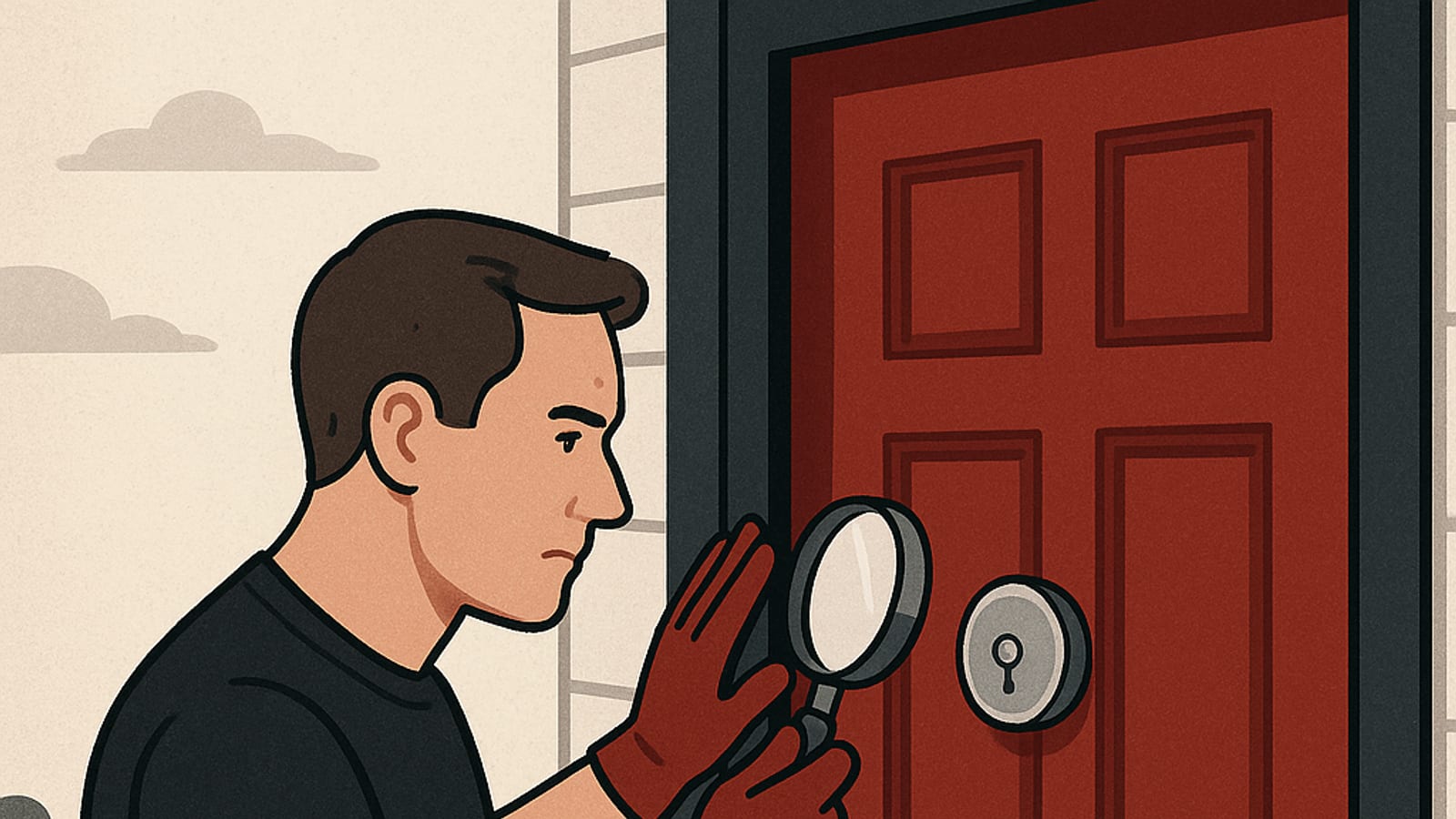
Before you buy anything, spend five minutes doing a hands-on inspection. This is the step most renters skip — and it costs them. Open your door and look at the strike plate, the metal piece on the frame where the deadbolt slides in. If it’s held by screws shorter than 3 inches, it offers almost no resistance to a kick, because short screws only anchor into the door trim, not the structural framing behind it.
Next, check the door itself. Hollow-core doors — common inside apartments — have a cardboard or foam honeycomb center and can be breached with a single strong kick or even a fist. Solid-core and solid-wood doors are far more resistant. Knock on your door: a hollow sound means hollow construction.
Finally, check your hinges. Are they on the interior side? Good. Exterior-facing hinges can be defeated by removing the hinge pins, so confirm yours are protected.
What to note during your inspection:
- ✅ Strike plate screw length (under 3 inches = a weak point)
- ✅ Door core type (hollow vs. solid)
- ✅ Number of lock points (a single deadbolt only offers limited protection)
- ✅ Door frame condition (cracks, gaps, or soft wood near the latch area)
- ✅ Gap between door and frame (an excessive gap reduces resistance)
🔹 Step 2: Understand What “Kick-In Proof” Actually Means
No door security product makes a door completely impenetrable, and any brand claiming otherwise isn’t being straight with you. What good reinforcement does is dramatically increase the time and effort required to force entry. Most opportunistic break-ins are abandoned the moment they meet real resistance — noise, time, and effort are an intruder’s enemies.
The weakest point in almost every door system isn’t the lock — it’s the frame. When a door is kicked in, the frame splits around the strike plate, the deadbolt bolt punches through, and the door swings open. Reinforcing the frame and the strike plate connection is the highest-impact upgrade you can make.
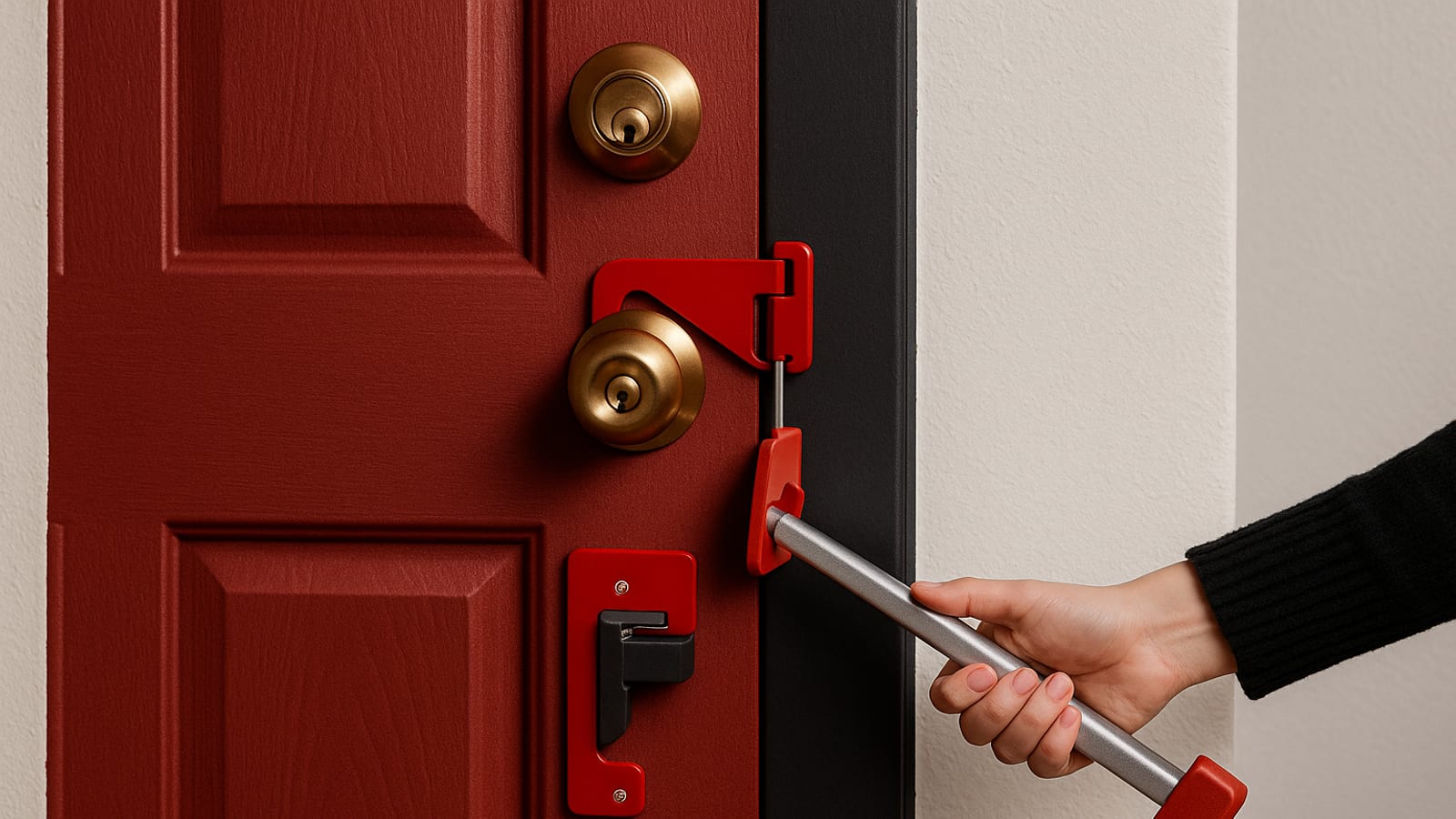
The good news for renters: frame reinforcement doesn’t require drilling new holes or making irreversible changes. Products like a Single Door Security Kit are built to work with your existing hardware, using longer screws that reach the structural stud behind the trim. They reinforce the strike plate area, the hinge side, and the door edge — the three points that fail during forced entry — without altering the door itself.
Understanding this principle helps you spend money where it actually matters, rather than on security theater that looks good and does nothing.
🔹 Step 3: The Renter-Friendly Reinforcement Checklist
Here’s a prioritized list of upgrades you can make without voiding your lease or losing your deposit. Work through these in order of impact.
1. Upgrade Your Strike Plate with 3-Inch Screws
This is the single most cost-effective security upgrade available. Remove the existing strike plate screws and replace them with 3-inch #10 wood screws that reach into the door frame stud. This one change can dramatically multiply the kick resistance of a standard door. Hardware stores carry these screws for a few dollars. If your strike plate itself is thin or flimsy, swap it for a heavy-gauge steel version at the same time.
2. Install a Door Reinforcement Kit
A quality door reinforcement kit goes beyond the strike plate, wrapping steel reinforcement around the door edge, the latch area, and the hinge side. It’s the most comprehensive renter-friendly upgrade available. Look for kits that use existing screw holes where possible and come with instructions that don’t require professional tools. A standard kit for a single entry door runs around $79 and installs in under an hour with a basic drill.
If your apartment has French doors or a double entry door, the vulnerability compounds — two doors meet in the middle without a structural frame behind them. A Double Door Security Kit addresses this specific configuration directly and is worth the investment if that’s your setup.
3. Add a Door Security Bar or Barricade Bar
For nighttime security when you’re home, a door security bar braced against the floor adds significant resistance with zero modification. These bars work on inward-swinging doors and require no installation at all, making them especially useful for renters who want protection they can take with them when they move.
4. Reinforce Sliding Glass Doors If Applicable
Sliding glass doors are a separate vulnerability category — they can be lifted off their tracks or pried open at the latch point with minimal effort. If your apartment has one, a security bar in the track is a start, but dedicated sliding glass door security hardware addresses the lift-and-pry weakness that a bar alone can’t solve.
5. Address Windows Near the Door
A reinforced door is only as effective as the windows beside it. If your front door has decorative glass panels or sidelights, an intruder can break the glass and reach the interior handle. Window security film won’t stop glass from breaking, but it holds shards together and makes it significantly harder and slower to create a passable opening — which is often enough to end the attempt.
🔹 Step 4: Talk to Your Landlord Before You Install Anything
This step is practical, not optional. Many landlords are receptive to security upgrades, especially when you frame the conversation around protecting their property. Come prepared with specific product names, installation photos, and a clear explanation of what will and won’t be permanently modified.
Key points to cover in that conversation:
- ✅ Confirm whether you can replace strike plate screws (almost always approved)
- ✅ Ask about installing a door reinforcement kit and clarify reversibility
- ✅ Discuss whether the landlord will contribute to the cost — the upgrade benefits the property
- ✅ Get any approvals in writing, even a simple email confirmation
Some landlords will cover the cost of reinforcement hardware outright, particularly in buildings with a history of security incidents. It’s always worth asking directly.
🔹 Step 5: Layer Your Security — Beyond the Door
Door reinforcement is the foundation, but a layered approach gives you the most complete protection. Think of security in concentric rings: the door is the innermost barrier, with useful layers before and after it.
Before the door: A wide-angle peephole or video doorbell lets you see who’s outside before you open anything. Many video doorbells are battery-powered and require no wiring — fully renter-friendly.
At the door: Your reinforced strike plate, deadbolt, and door kit form the primary barrier. Make sure your deadbolt has at least a 1-inch throw and comes from a reputable brand with anti-pick and anti-drill features.
After the door: A door and window alarm sensor adds an audible alert if the door opens unexpectedly. They’re inexpensive, battery-powered, and adhesive-mounted — no installation required.
You can review a full range of door security solutions for exterior doors to find the combination that fits your setup and budget.
🔹 Your Complete Apartment Door Security Checklist at a Glance
- ✅ Inspect strike plate screws — replace with 3-inch screws if needed
- ✅ Identify door core type (hollow vs. solid)
- ✅ Install a door reinforcement kit on your primary entry door
- ✅ Address double or French doors with a dedicated double-door kit
- ✅ Secure sliding glass doors against lift-and-pry attacks
- ✅ Apply window security film to glass panels near door handles
- ✅ Add a door security bar for nighttime use
- ✅ Install a wide-angle peephole or video doorbell
- ✅ Add door and window alarm sensors
- ✅ Confirm deadbolt has a 1-inch throw and anti-pick features
- ✅ Get landlord approval in writing before any installation
Final Thoughts: A Locked Door Should Actually Lock Intruders Out
The goal of apartment door security isn’t to build a fortress. It’s to make forced entry slow, noisy, and difficult enough that the attempt gets abandoned. Most break-ins are crimes of opportunity — a door that fights back, even for thirty extra seconds, is often enough to change the outcome entirely.
The upgrades in this checklist aren’t complicated, and most cost less than a single month of a streaming subscription. Start with the strike plate screws today. Add a reinforcement kit this weekend. Work through the list at whatever pace fits your budget — each step is a genuine improvement in your safety, not just a feeling of security.
For renters who want a reliable starting point, reviewing the options at Home Door Security gives you a clear picture of what professional-grade reinforcement looks like and what it costs. You don’t need to spend a lot to make a real difference — you just need to know where the real vulnerabilities are and address them directly.
Your door should be the thing standing between your family and the outside world. Make sure it’s actually up to the job.
Disclosure: this article may contain affiliate links. If you buy through them, we may earn a small commission at no extra cost to you.

Leave a Reply