
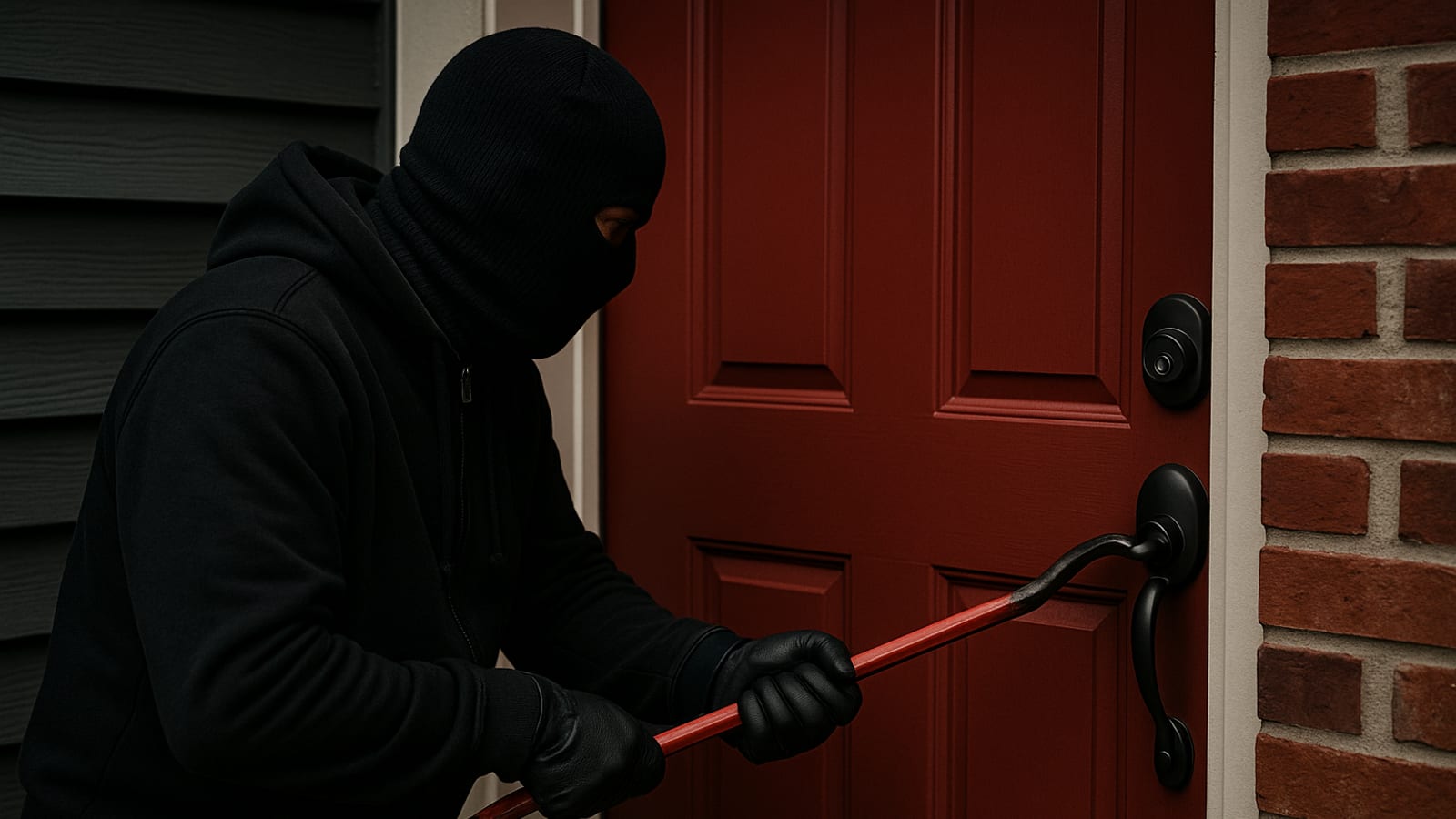
Back Door and Side Door Security: The Entrances Burglars Prefer
Most homeowners lock the front door and call it done. Burglars know this. They walk past the front and head straight for the back or side entrance — out of sight, poorly lit, and built with whatever was cheapest at the time. If you want real protection, that is exactly where you need to start.
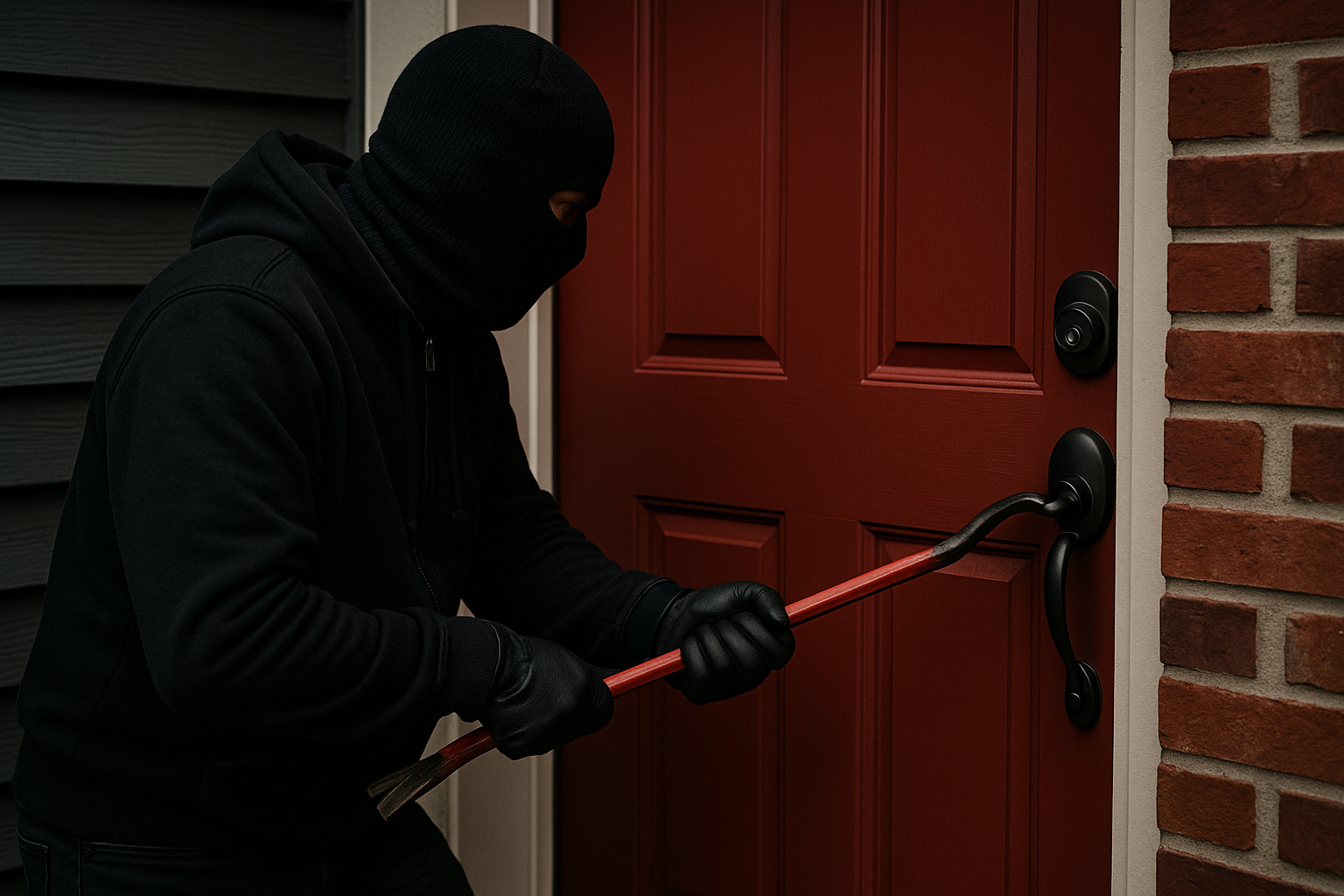

Understanding the Vulnerability of Back and Side Doors
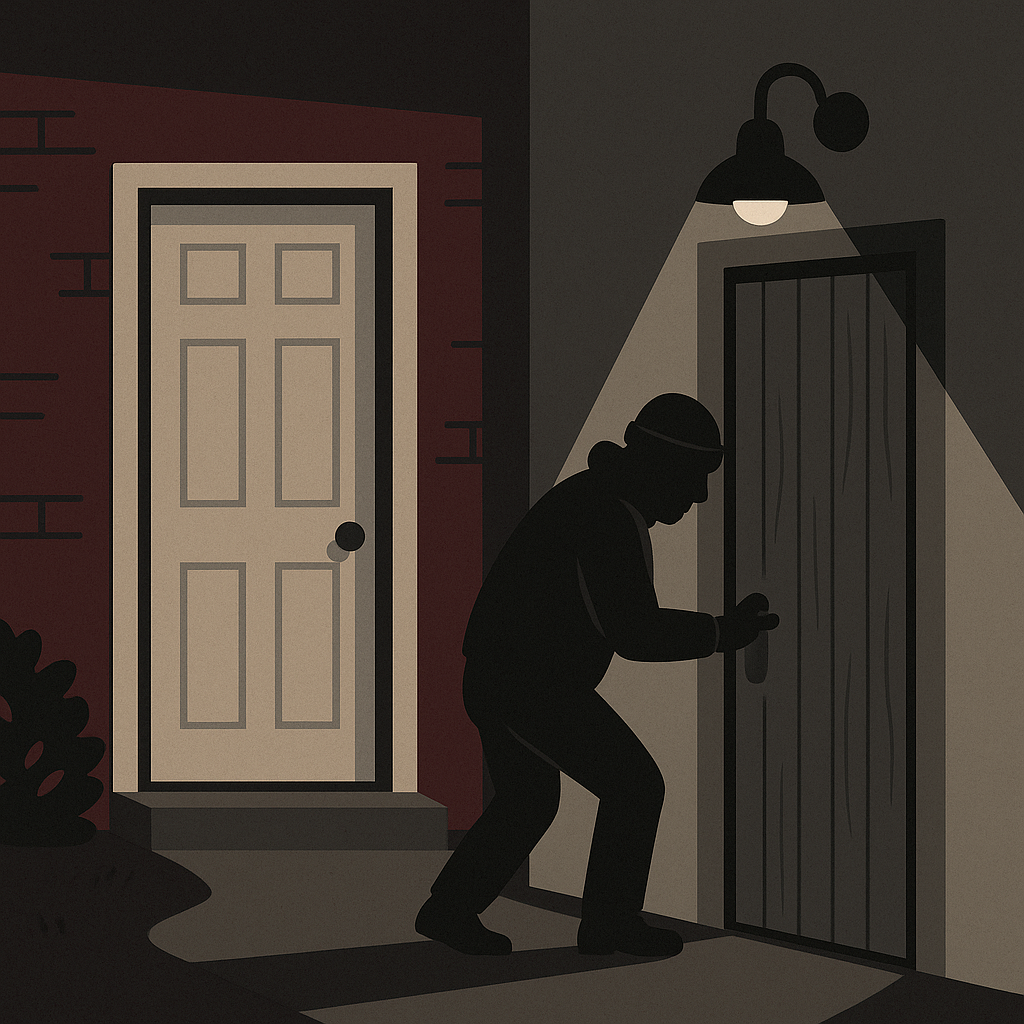
Back and side doors rarely get the same attention as the front. They are hidden from neighbors, starved of light, and often built with hollow-core wood that a determined kick will split in seconds. Before you can fix the problem, you need to see it clearly.

Common Weaknesses in Back and Side Doors
- Visibility: These doors sit out of sight, giving an intruder all the cover they need.
- Lighting: Dark approaches let someone work on your door without anyone noticing.
- Materials: Hollow-core wood and lightweight frames fail fast under force.
- Locks: Standard builder-grade locks are a speed bump, not a barrier.
Effective Strategies for Back Door Security

Solid back door security comes from three directions at once: the door itself, the lock, and the environment around it. Address all three. Skipping one leaves a gap a burglar will find.
Reinforce the Door Structure
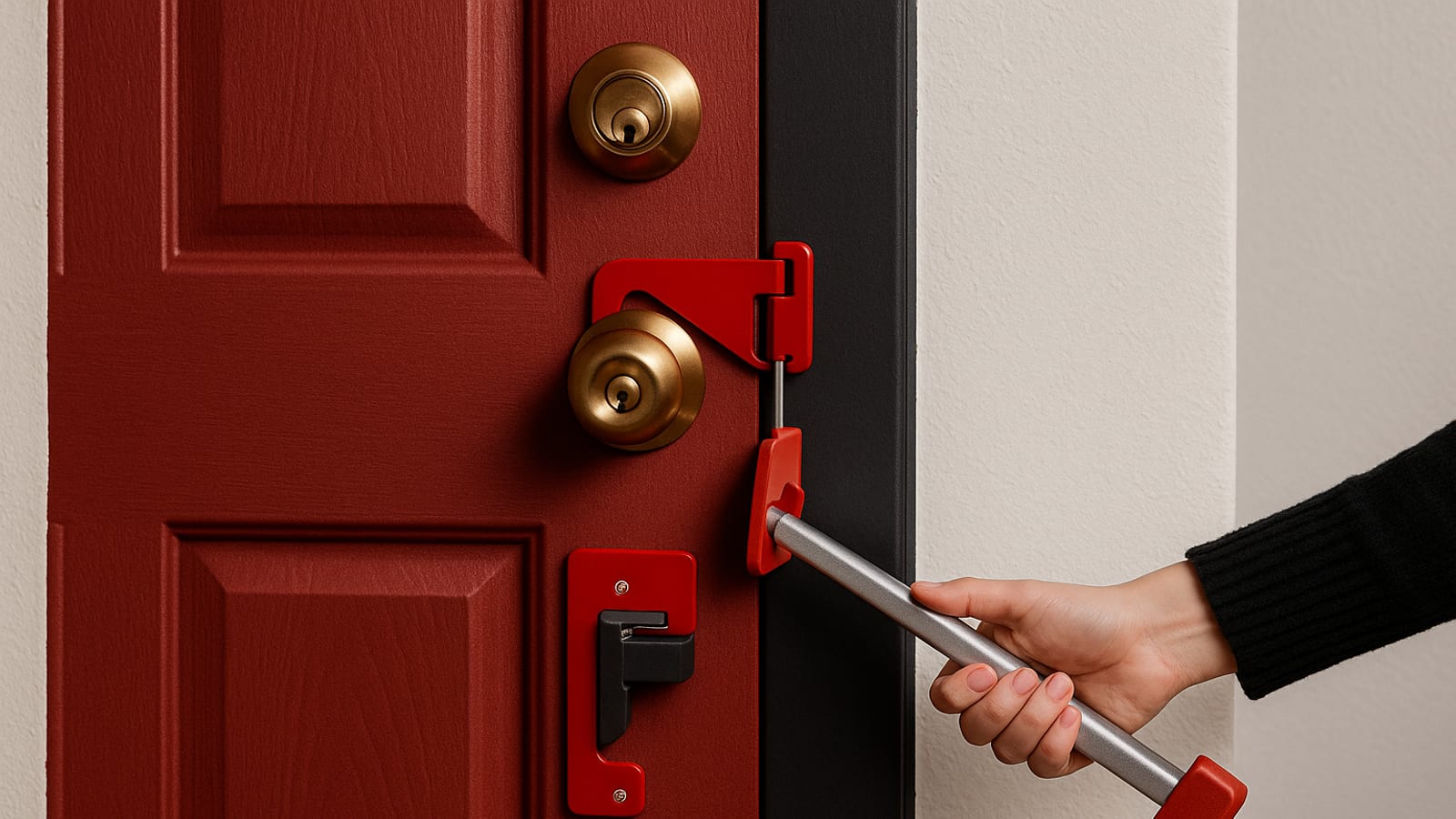
Start with a Single Door Security Kit. Around $79, it includes door jamb shields and hinge shields — the two points that fail first in a kick-in. Install it in four steps:
- Remove the door from its hinges.
- Secure the hinge shields using long screws that reach the wall stud.
- Attach the door jamb shields to reinforce the frame on both sides.
- Rehang the door and confirm it swings and latches cleanly.

Upgrade Locks and Deadbolts
Replace whatever is there with a deadbolt that throws at least one inch. ANSI Grade 1 is the standard you want — it is the highest residential rating available. For doors with glass panels, add a secondary mechanism such as a door chain or a Sliding Glass Door Security bar. One lock is a starting point. Two locks is a system.
Enhancing Side Door Security
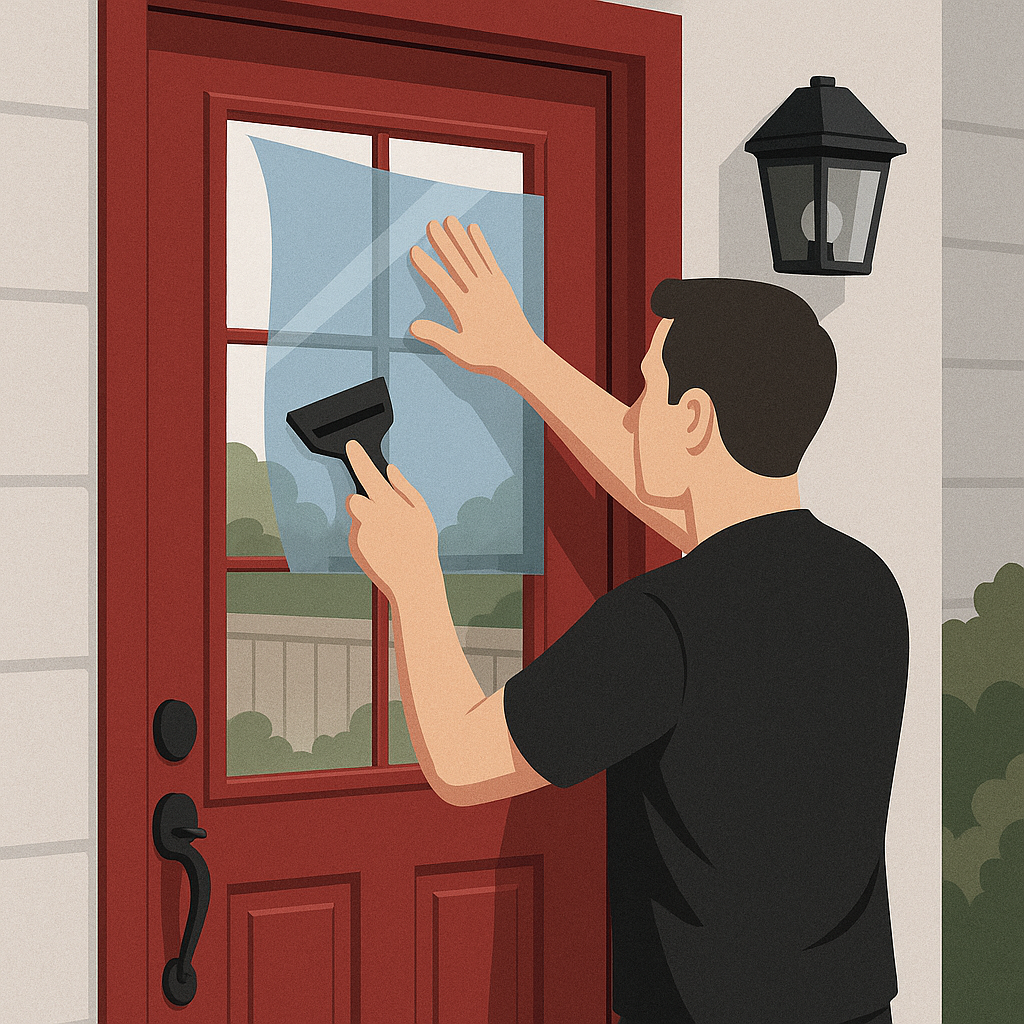
Side doors with glass panels are a specific problem. The glass is not just a window — it is a bypass route. Treat it accordingly.
Protecting Glass Panels
Apply a Window Security Film to every glass panel near a door. The film holds shattered glass in place, turning a quick smash-and-reach into a slow, noisy, visible problem. Installation is straightforward:
- Clean the glass surface thoroughly — any debris will trap under the film.
- Cut the film to match the exact window dimensions.
- Spray the glass with a soapy water solution.
- Apply the film and work out air bubbles with a squeegee from center to edge.

Install Motion-Sensor Lights
Darkness is a burglar’s best tool. Take it away. Motion-sensor lights positioned at your side entrance activate the moment someone approaches, eliminating cover and announcing the presence of activity. Visibility alone stops most opportunists cold.
Additional Security Measures
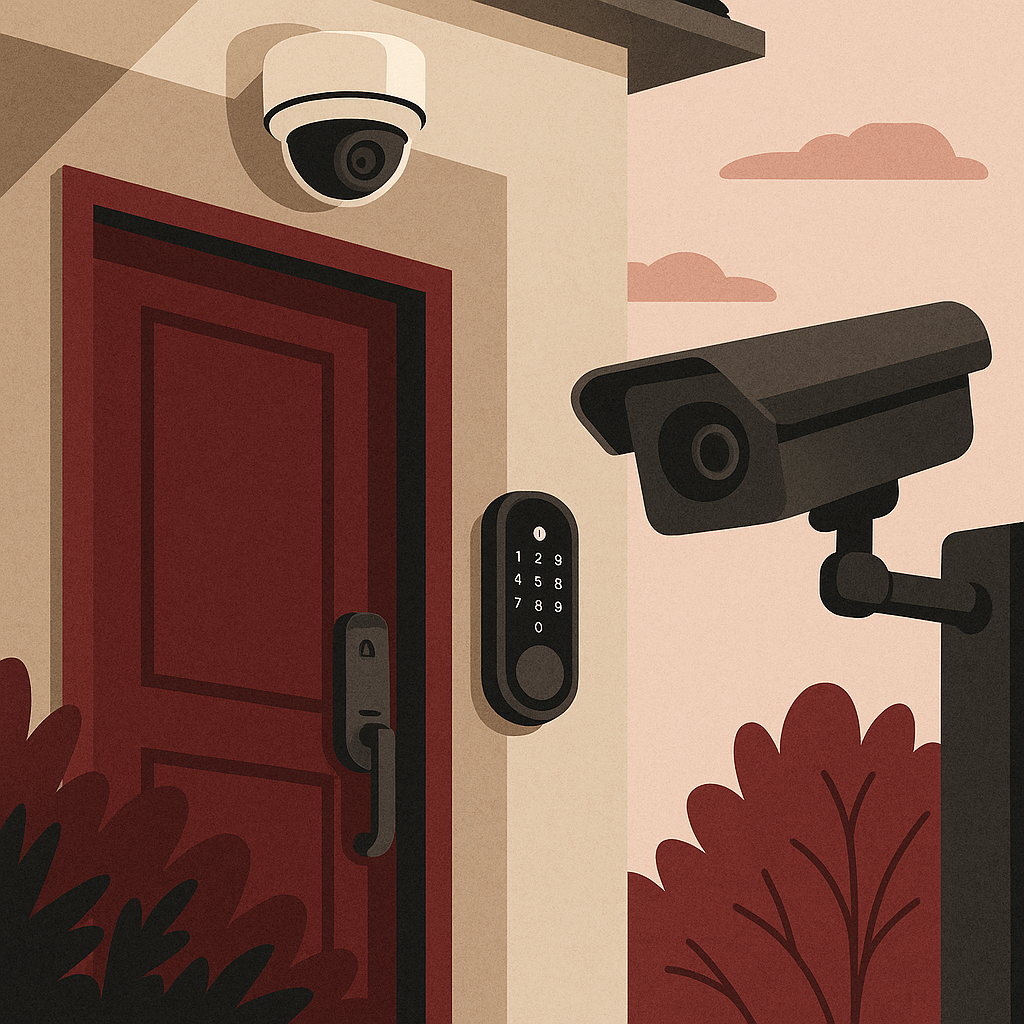
Physical reinforcement is the foundation. These additions build the layers on top of it:
- Security Cameras: Visible cameras at entrances document activity and deter anyone who spots them first.
- Smart Locks: Remote access and real-time monitoring mean you always know the status of every entrance.
- Alarm Systems: A full alarm system ensures that if everything else fails, the response is immediate.
For a complete overview of available options, visit Door Security Solutions.
Conclusion: Taking Action to Secure Your Home
Your back and side doors are the path of least resistance into your home. Closing that gap is not complicated — it is a series of deliberate, practical steps that stack on top of each other. Do the work once, maintain it consistently, and you remove yourself from the easy-target category entirely.
Start with a Single Door Security Kit. One purchase, one afternoon of installation, and your most vulnerable entrance is no longer the weak link it was yesterday.
Step-by-Step Implementation Guide for Enhanced Security
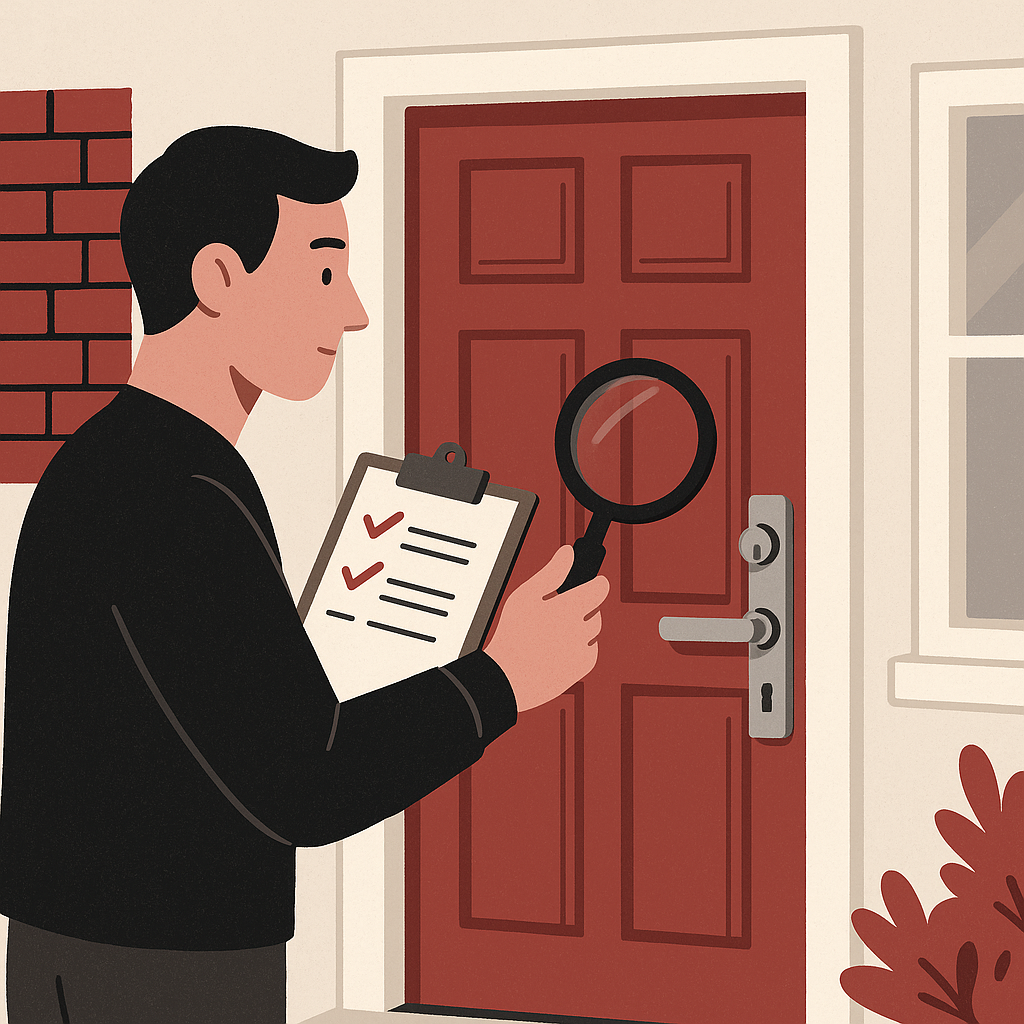
Breaking this down into a clear sequence makes execution straightforward. Work through each step in order and do not skip ahead.
Step 1: Assess Current Door Security
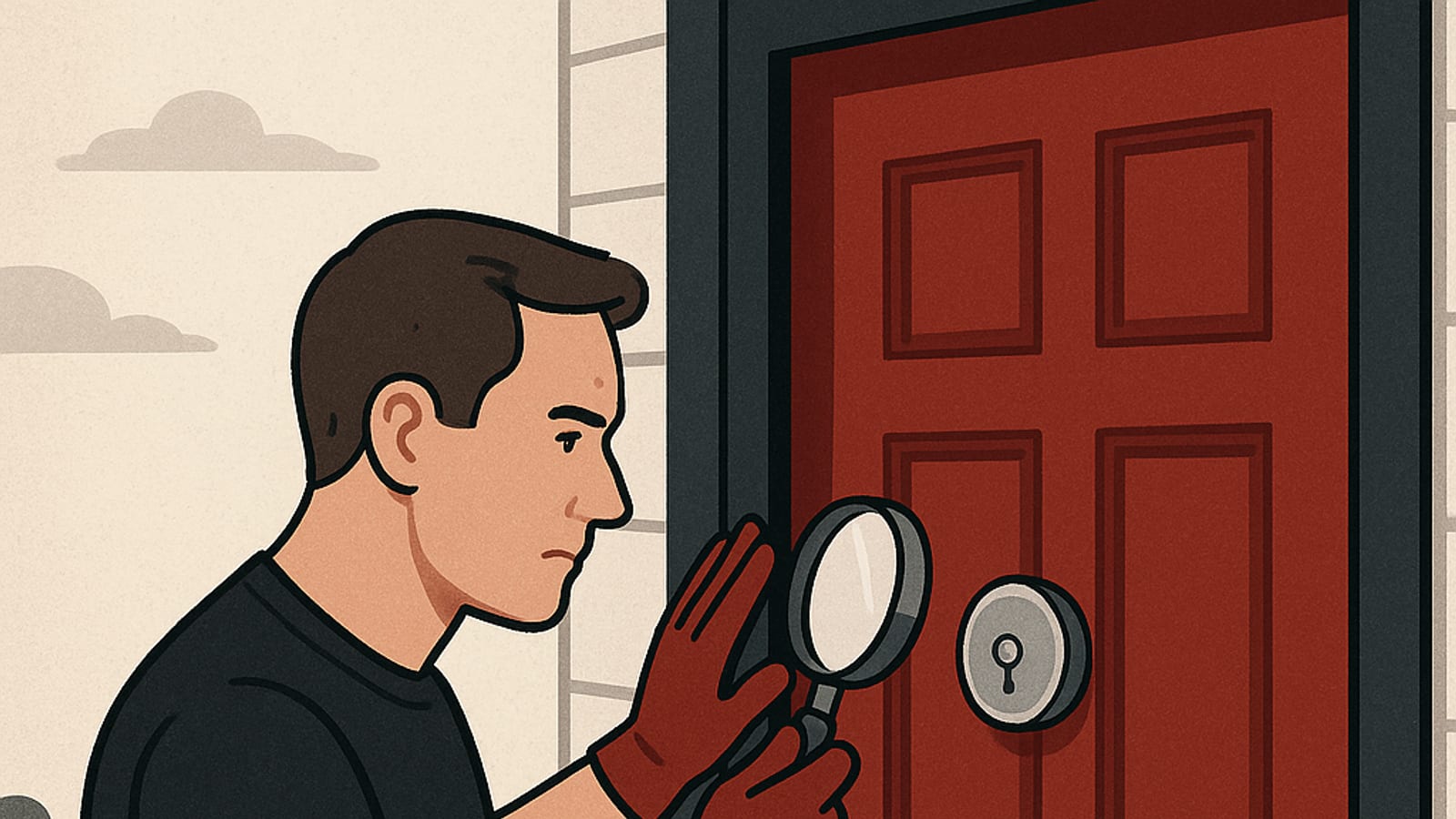
- Inspect your doors: Look for cracks, soft spots, loose hinges, or any sign of previous force.
- Evaluate lock quality: Test the throw length and resistance of every existing lock and deadbolt.
- Check visibility: Walk the perimeter. Identify which doors a neighbor or passerby cannot see from the street.
Step 2: Plan and Prioritize Upgrades
- Identify vulnerabilities: Rank the weaknesses you found — address the most critical first.
- Set a budget: Decide what you are willing to invest before you start shopping.
- Research products: Match products to specific problems — reinforced frames for weak jambs, Grade 1 deadbolts for inadequate locks.
Step 3: Implement Physical Reinforcements
- Install door reinforcement kits: Follow manufacturer instructions precisely — long screws into studs are non-negotiable.
- Upgrade locks: Swap builder-grade hardware for ANSI Grade 1 deadbolts and add a secondary locking mechanism.
- Apply security film: Cover every glass panel adjacent to a door handle or lock.
Step 4: Enhance the Surrounding Area
- Install motion-sensor lights: Cover every approach angle — gaps in lighting are gaps in deterrence.
- Trim landscaping: Overgrown bushes and trees create concealment. Remove it.
- Add security signage: Visible indicators of an alarm system raise the perceived risk for anyone casing the property.
Step 5: Test and Maintain
- Test regularly: Check locks, lights, and alarms on a set schedule — not just when something seems wrong.
- Schedule maintenance: Fix issues immediately. A dead motion light is an open invitation.
- Update as needed: Security technology moves forward. Reassess your setup every few years and close any new gaps.
Tools and Resources Needed for Door Security

You do not need a contractor. You need the right tools and the patience to follow instructions. Here is what the job actually requires:
Essential Tools
- Drill and drill bits: Required for installing reinforcement hardware and new lock sets.
- Screwdriver set: For tightening, adjusting, and securing every piece of hardware.
- Measuring tape: Accurate measurements matter when cutting security film and positioning lights.
- Level: Keeps every installation straight and properly aligned.
Recommended Resources
- Installation guides: Manufacturer manuals and video tutorials walk you through each product step by step.
- Online forums: Communities like Home Security Forum offer real-world experience from people who have done this work themselves.
- Professional consultations: For complex properties or high-risk situations, a security assessment from a professional is money well spent.
Case Studies: Real-World Applications of Door Security
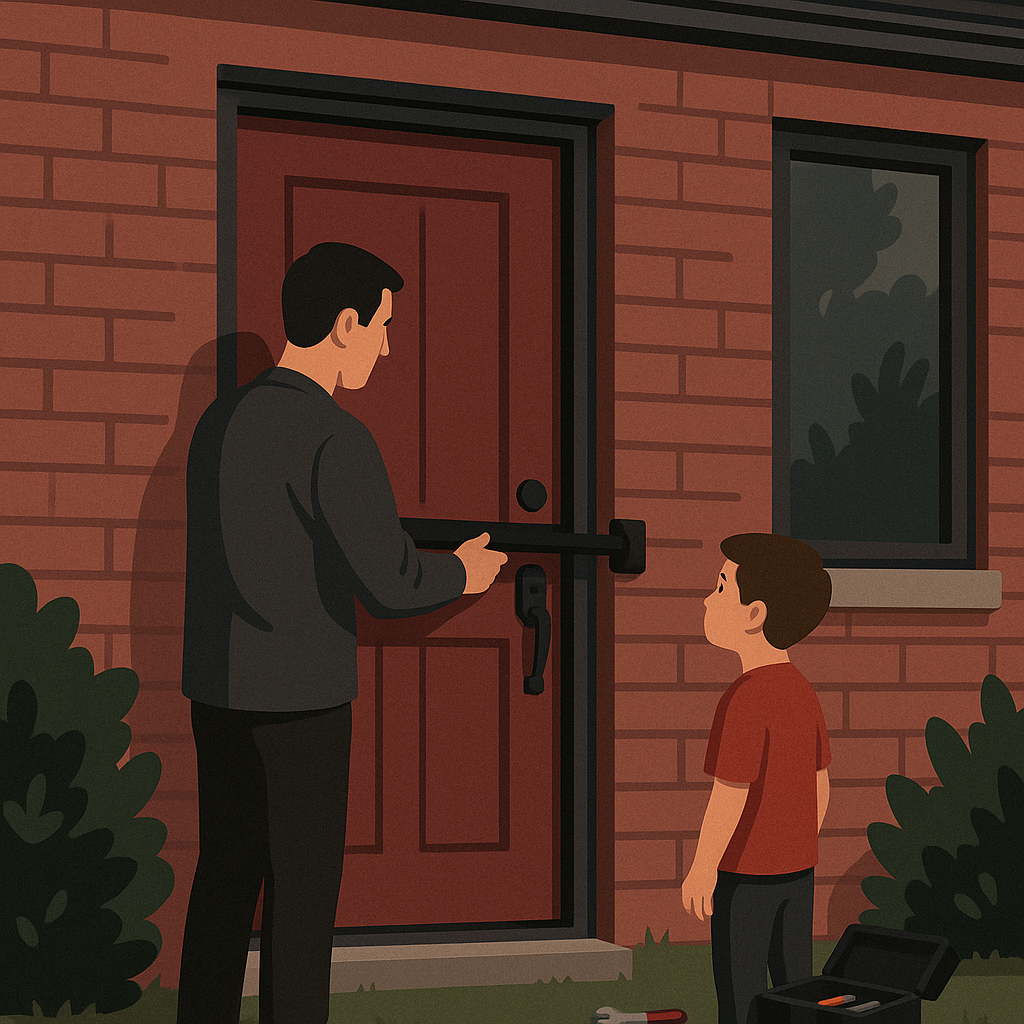
Theory is useful. Results are better. Here is how three different households applied these principles and what happened next.
Case Study 1: Suburban Family Home
A suburban family watched local burglary reports climb and decided to act. They reinforced back and side doors with steel door jambs and replaced standard locks with smart locks. No attempted break-ins since the upgrades. The visible improvements alone appear to have shifted attention elsewhere.
Case Study 2: Urban Apartment
An urban apartment resident targeted their side entrance specifically — the one most exposed and least watched. A security camera and motion-sensor lights went in. Suspicious activity around that entrance dropped noticeably within weeks. Visible deterrents do the work before anyone even tries the door.
Case Study 3: Rural Property
A rural homeowner with limited street visibility and multiple glass-panel doors took a layered approach: security film on every glass surface, a full alarm system, and reinforced frames throughout. The result was a property that would immediately detect and announce any intrusion — and a homeowner who could finally sleep without running through worst-case scenarios.
FAQs: Addressing Common Concerns
How often should I upgrade my door security?
Review your setup every three to five years, or sooner if you notice wear, damage, or a change in the neighborhood threat level. Security technology also advances — what was strong five years ago may have a known workaround today. Stay current.
Are smart locks reliable for back and side doors?
Yes. Smart locks deliver both security and visibility — remote access, activity logs, and real-time alerts. For frequently used side and back entrances, that monitoring capability is exactly what you want. You know who came and went, and when.
What is the most cost-effective way to improve door security?
Start with the physical structure. Reinforce the door frame, upgrade to a Grade 1 deadbolt, and add a secondary lock. That foundation costs relatively little and eliminates the most common attack methods. Motion-sensor lights and cameras are the next layer — add them as your budget allows.
Disclosure: this article may contain affiliate links. If you buy through them, we may earn a small commission at no extra cost to you.

Leave a Reply