
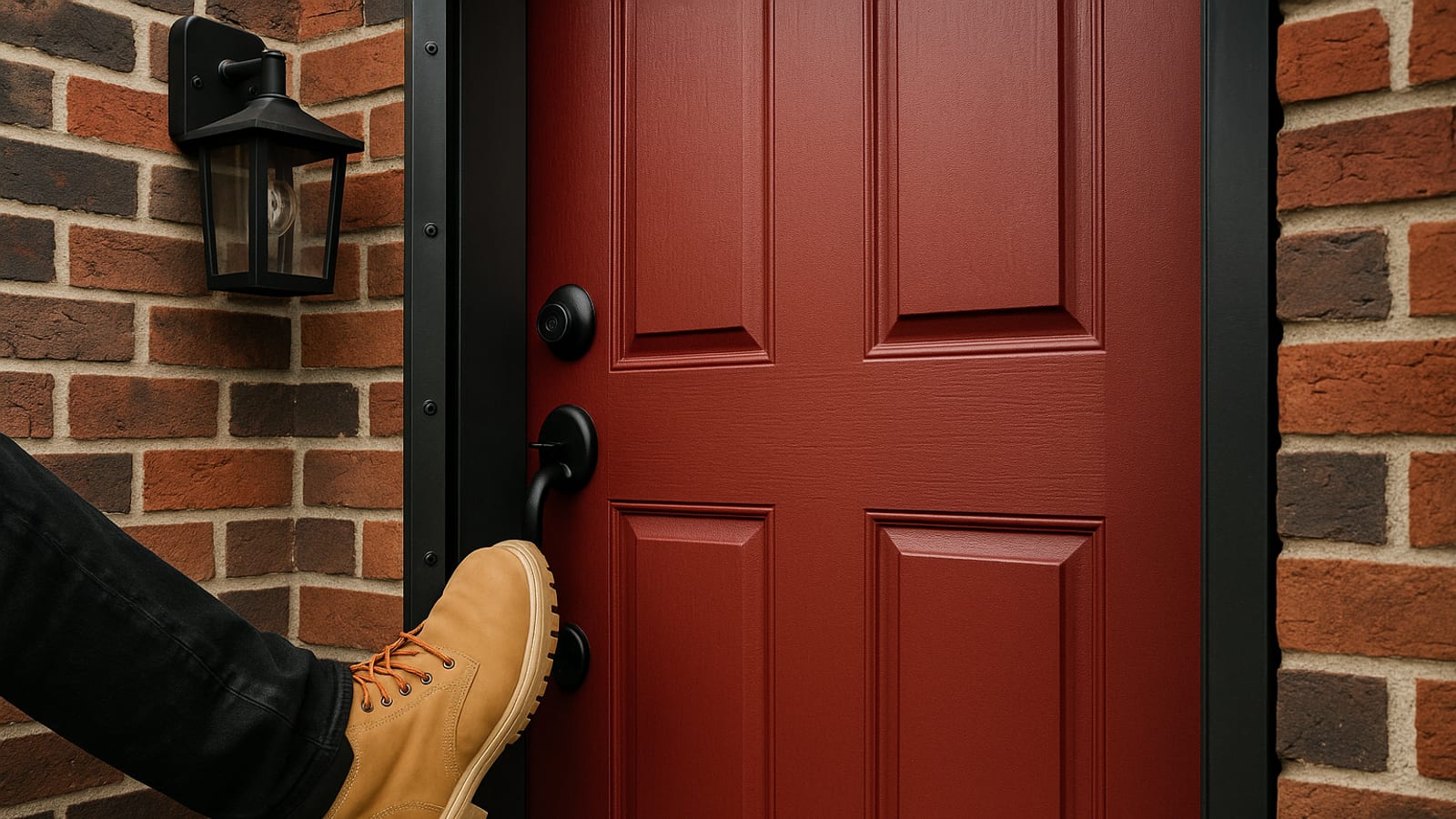
How to Stop Your Front Door From Being Kicked In (Without Replacing It)
Most break-ins take under sixty seconds. The front door is the target. And in the majority of cases, it fails not because the door itself is weak — but because the frame, the lock, and the hinges were never built to absorb real force. You don’t need a new door. You need to understand exactly where yours fails, and fix those points before someone else finds them first.
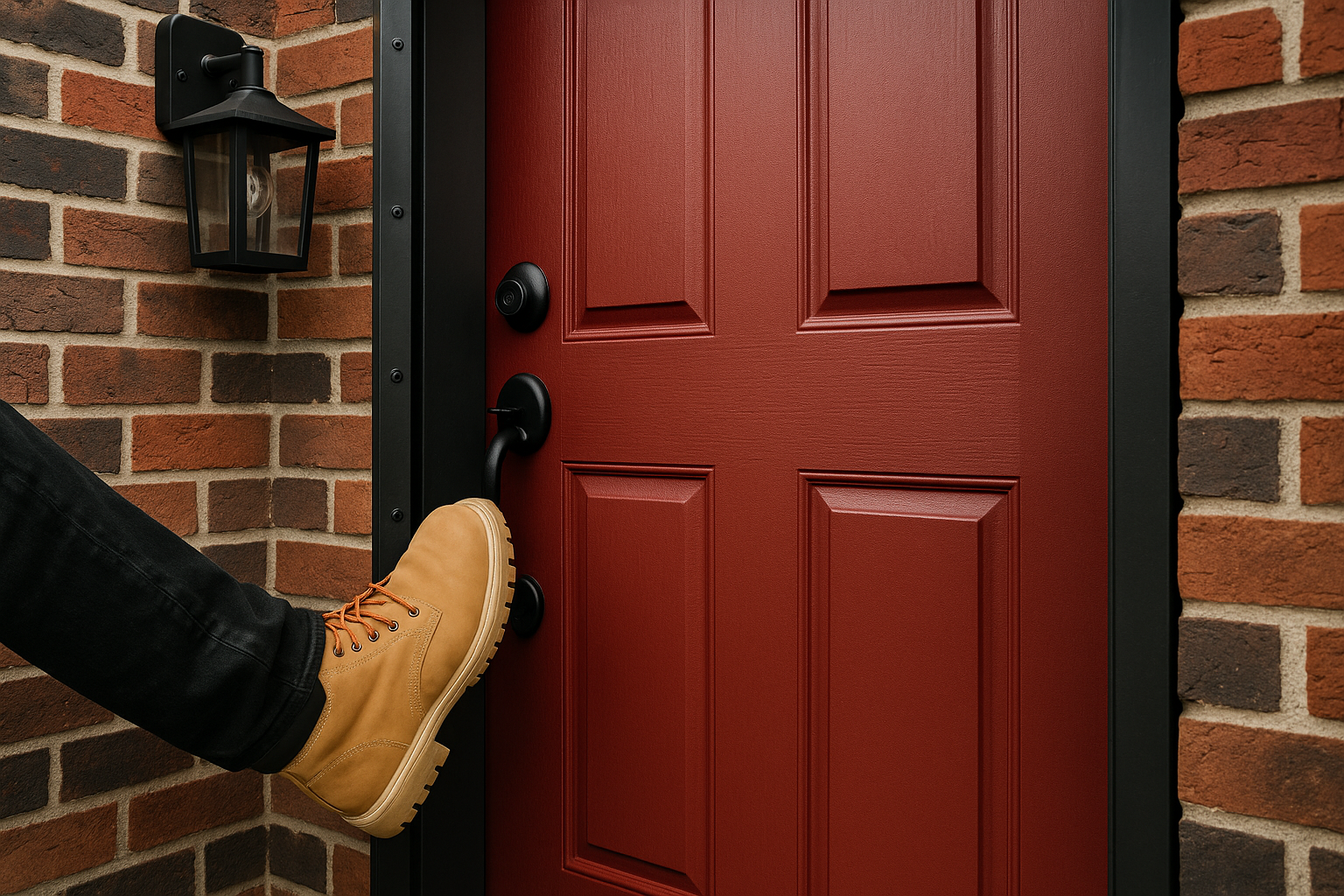
Understanding Door Vulnerabilities
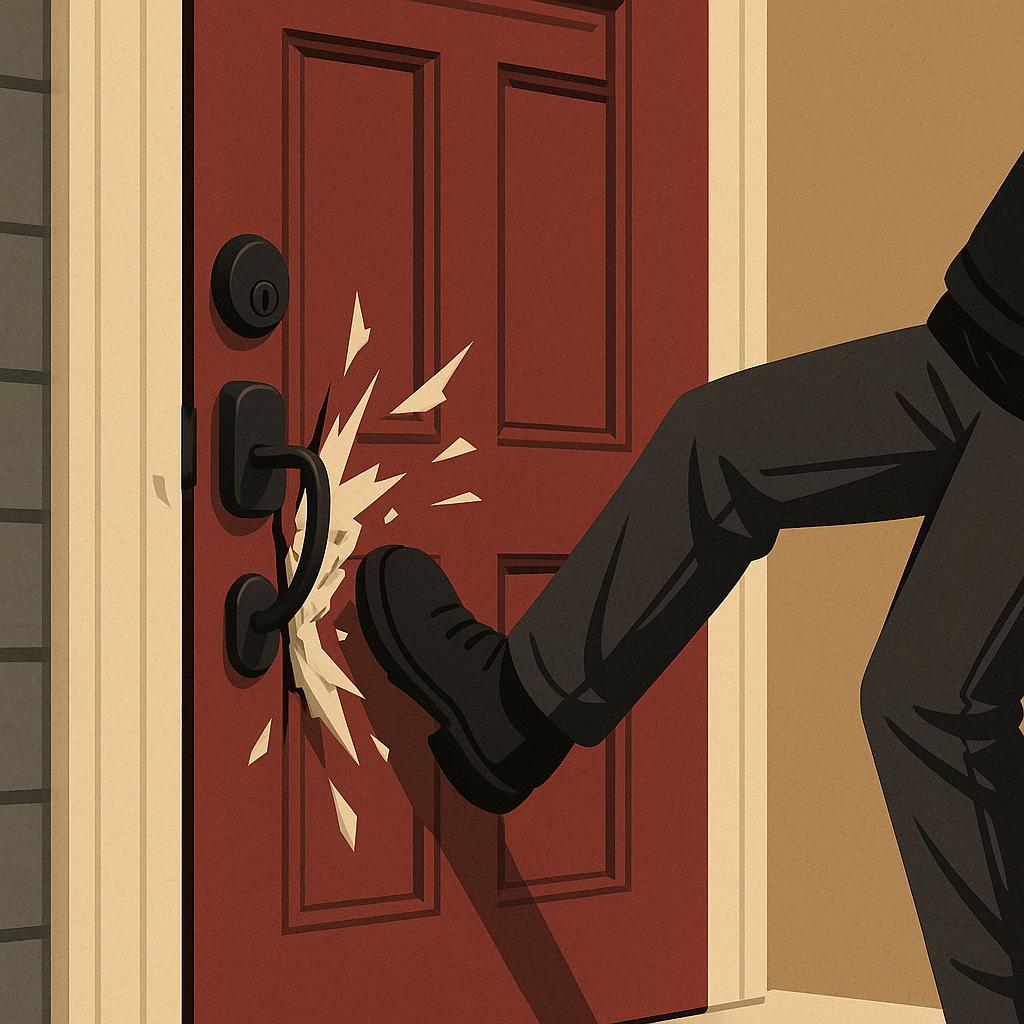
Before you fix anything, know what you’re actually fixing. Intruders don’t pick locks — they kick through the frame around them. Your door has three structural weak points, and every one of them matters:
- The Door Frame: Typically soft wood. One solid kick splinters it at the strike plate.
- The Lock: Standard deadbolts are rated for picking, not impact. Forced entry is a different problem entirely.
- The Hinges: Exposed or under-screwed hinges can be compromised from the exterior in seconds.
Identify which of these applies to your door right now. That’s where you start.
Tools and Equipment for Reinforcement
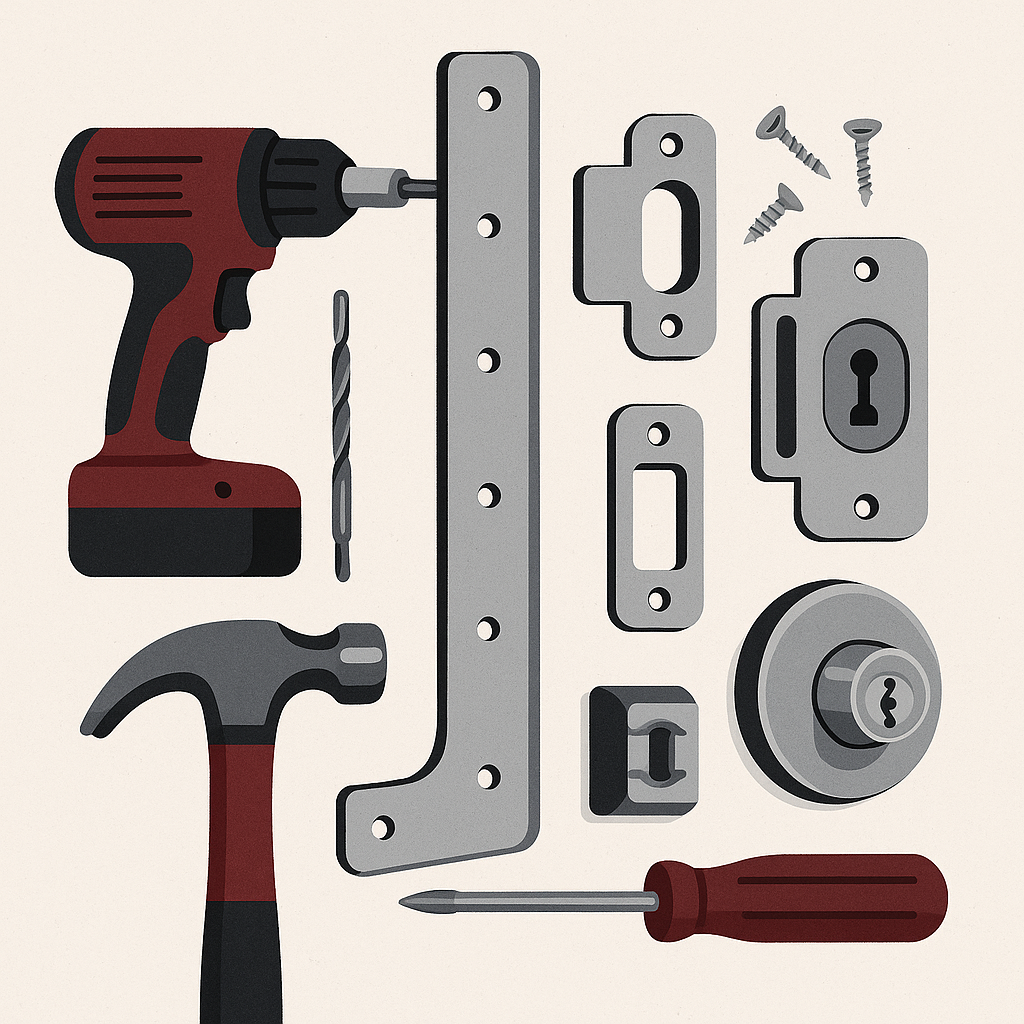
The right hardware does the work. Here’s what you need on hand before you start:
- Door Reinforcement Kits: A complete solution like the Single Door Security Kit covers standard doors end to end, priced around $79.
- Longer Screws: Swap existing hinge and strike plate screws for 3-inch versions. They anchor into the wall studs, not just the trim.
- Strike Plate Reinforcement: A heavy-duty strike plate distributes kick force across a wider section of the frame instead of concentrating it at one point.
None of this requires a contractor. Most homeowners can install all three in an afternoon.
Step-by-Step Guide to Door Reinforcement
1. Reinforce the Door Frame
The frame is where most kick-ins actually succeed. Address it first:
- Pull the existing strike plate and replace it with a reinforced model from a trusted supplier.
- Drive 3-inch screws through the plate and deep into the wall studs behind the frame — not just the door casing.
2. Enhance the Lock System
Your lock is only as strong as what surrounds it. Upgrade it properly:
- Install a deadbolt with a throw of at least one inch.
- Pair it with a door reinforcement kit like the Single Door Security Kit, which bundles durable locks and strike plates into one system.
3. Secure the Hinges
Hinges fail quietly. Don’t let them be the overlooked variable:
- Replace every hinge screw with longer ones that reach into the door frame studs.
- Add hinge bolts to prevent the door from being lifted off its hinges from the outside.
Additional Security Measures
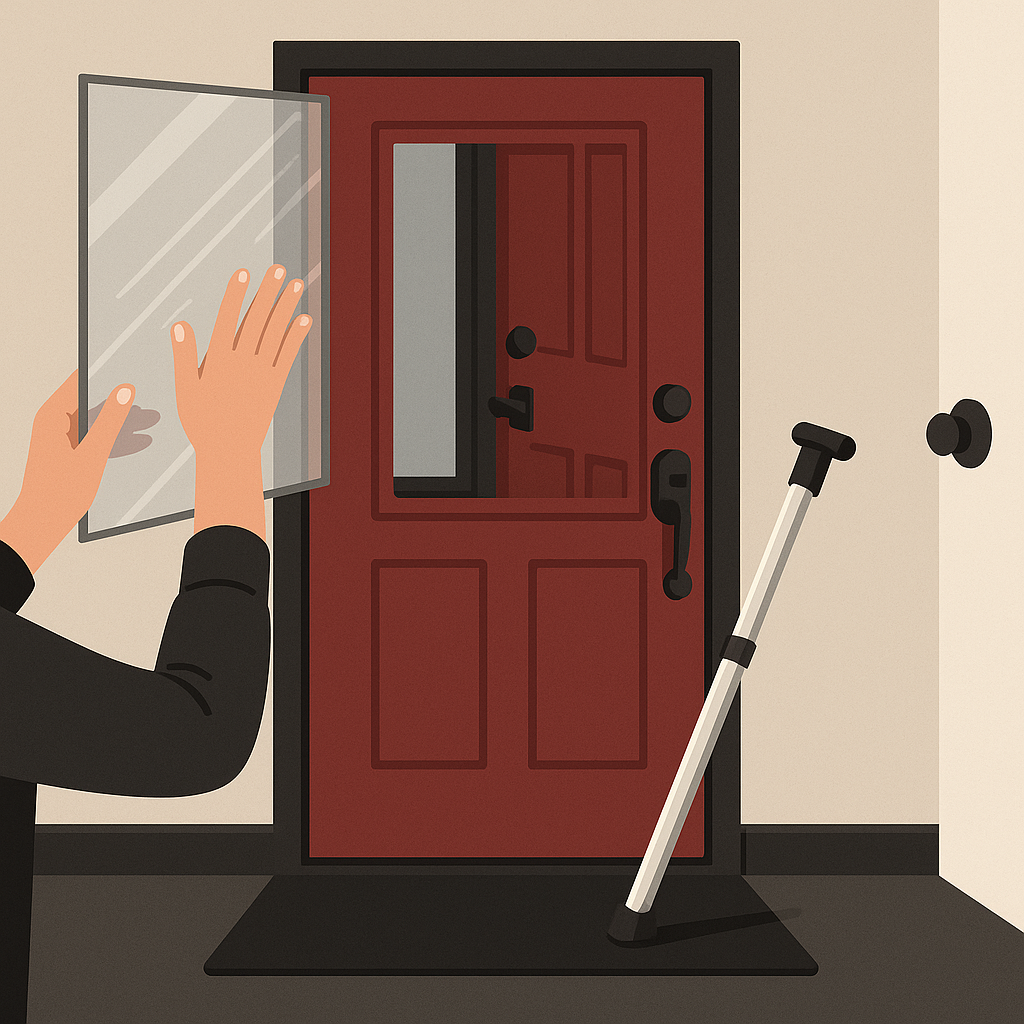
Once the structural work is done, layer in these additions:
- Security Film: Apply window security film to any glass panels near the door. It won’t stop a determined attempt, but it buys critical seconds.
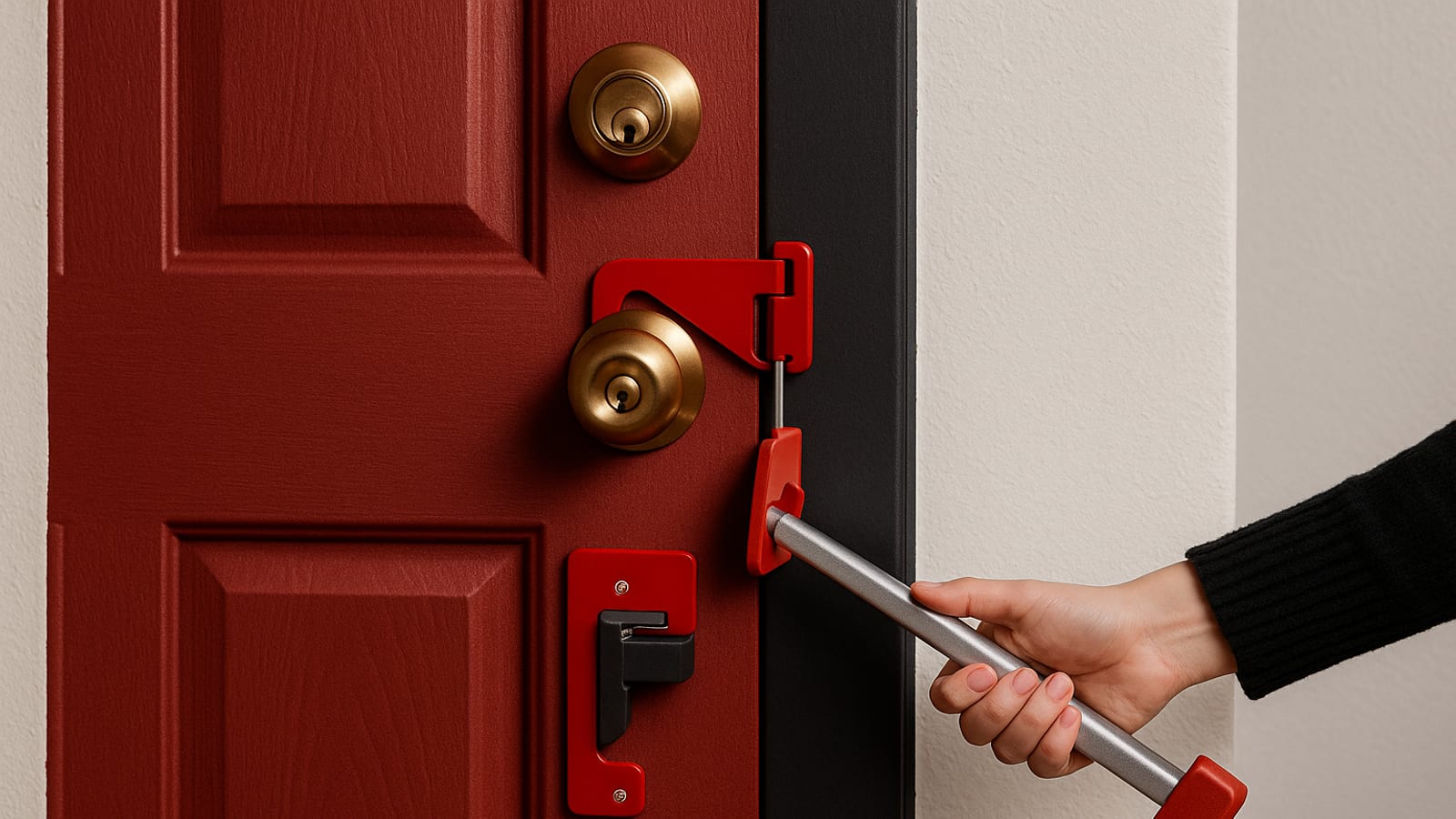
- Door Jammers: A portable door jammer adds a mechanical barrier that works especially well when you’re home.
- Smart Locks: Remote monitoring and access logs give you visibility that a standard deadbolt never will.
If your door has side panels, the Side Light Door Security Kit addresses that specific configuration with purpose-built protection.
Common Mistakes to Avoid
Good intentions don’t close security gaps. These mistakes do:
- Ignoring the Frame: A reinforced door mounted in a weak frame still fails. The frame is the system.
- Using Short Screws: Short screws grip trim, not studs. They pull out under force. Always go longer.
- Neglecting Maintenance: Security hardware degrades. Check it regularly or your upgrades quietly stop working.
Conclusion: Take Action Today
Your door is either a deterrent or an invitation. The gap between those two outcomes is a reinforced frame, a proper deadbolt, and thirty dollars in longer screws. You don’t need to replace the door. You need to stop treating security as something to address later.
Assess your current setup today. Invest in quality reinforcement products. Follow the steps above and implement them this week. For deeper product guidance, explore the full range of solutions at Door Armor. Build the system once. Then earn in peace knowing it holds.
Understanding Different Door Types and Their Security Needs
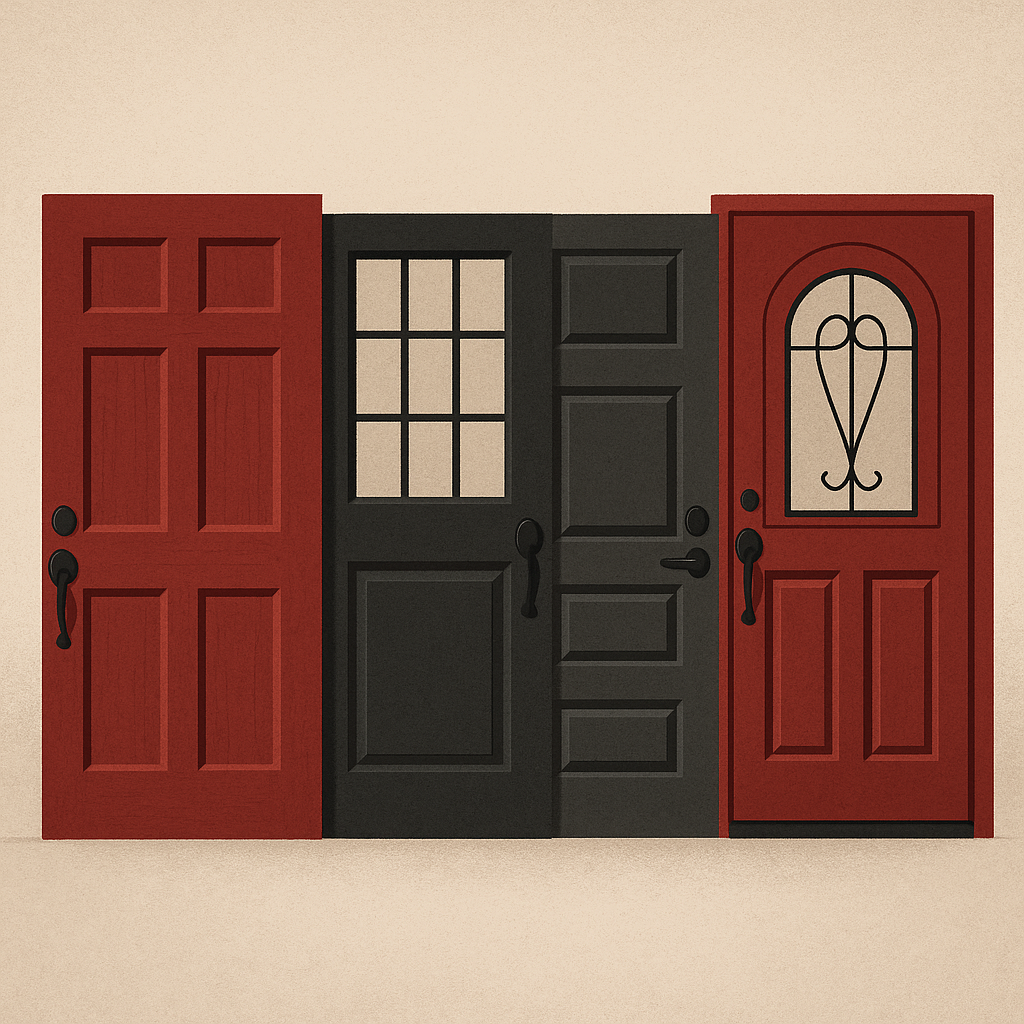
Your door type shapes your reinforcement strategy. The same fix doesn’t apply across the board. Here’s what each material demands:
Solid Wood Doors
Denser than hollow core, but not invincible. Keep them performing:
- Check for Cracks: Inspect edges regularly. Cracks compromise structural integrity fast, especially under impact.
- Weatherproofing: Seal with weatherproof treatments to prevent wood rot — a slow vulnerability that’s easy to miss until it’s too late.
Metal Doors
High baseline security, but maintenance-dependent:
- Rust Prevention: Rust weakens the door structure over time. Inspect and treat it before it spreads.
- Reinforce Locks: Confirm your lock system is rated for metal door installation. Improper fitting creates gaps that undermine the whole setup.
Glass Panel Doors
The aesthetic trade-off comes with real exposure. Manage it deliberately:
- Security Film: Apply it to every glass panel. It holds shattered glass in place and slows forced entry significantly.
- Double Glazing: Upgrading to double-glazed panels adds both security resistance and insulation — two problems solved at once.
Checklist for Routine Door Security Maintenance
Reinforcement isn’t a one-time event. It’s a system you maintain. Run through this checklist on a regular schedule:
- Inspect Door Hardware: Check locks, hinges, and strike plates monthly. Loose hardware is a warning sign, not a minor inconvenience.
- Test Smart Lock Systems: Verify connectivity and battery levels before they fail at the wrong moment.
- Lubricate Moving Parts: Hinges and locks need lubrication every few months to stay functional and rust-free.
- Review Security Footage: If you run a camera system, scan footage periodically. Patterns matter before incidents do.
- Update Security Codes: Rotate access codes on smart locks and keypads on a set schedule. Static codes are a liability.
Case Study: Successful Door Reinforcement
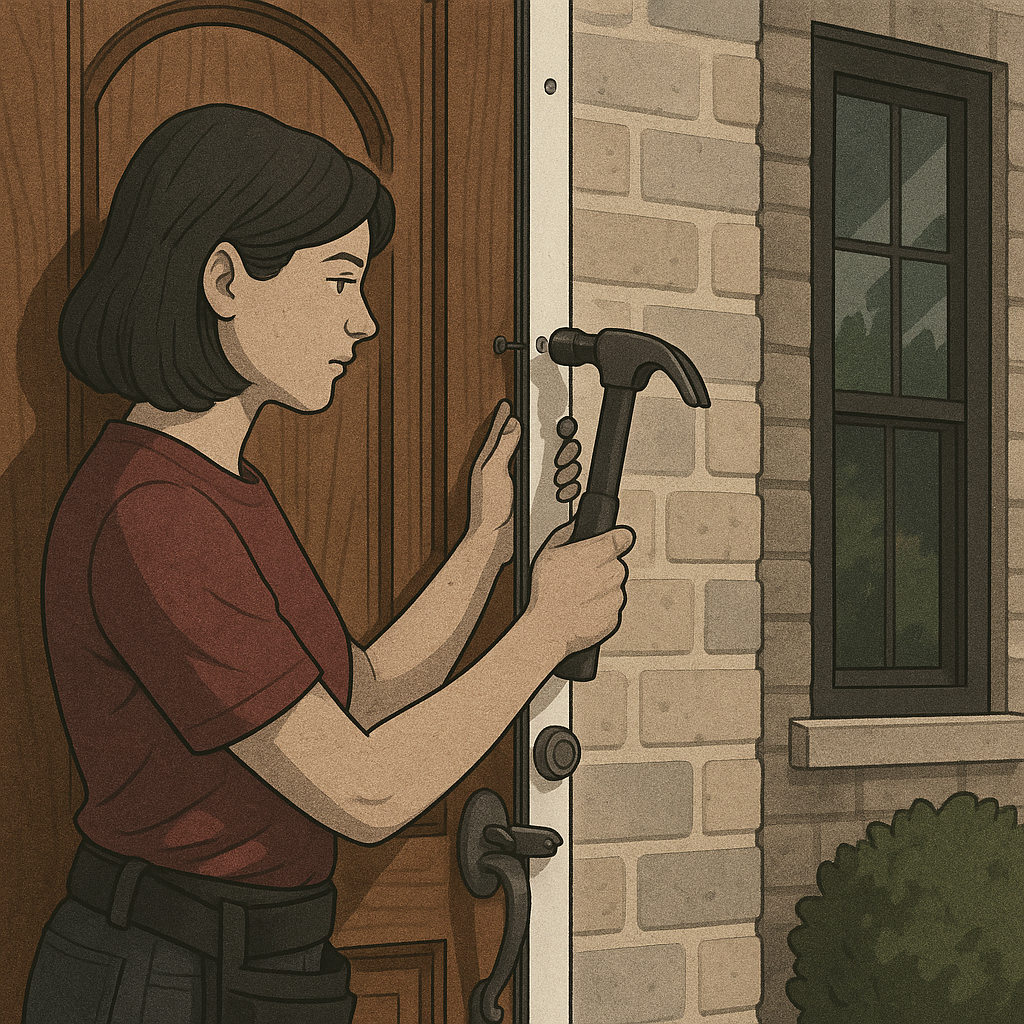
Here’s what this looks like when it actually works.
The Challenge: Sarah, a homeowner in a suburban neighborhood, survived an attempted break-in. The intruders failed — but barely. She knew her front door wouldn’t hold a second attempt.
The Solution: Sarah didn’t replace the door. She reinforced the system around it:
- She installed a heavy-duty strike plate secured with 3-inch screws driven into the wall studs.
- She upgraded to a smart deadbolt system with remote monitoring so she’d know the moment something triggered.
- She added a door jammer for use while she was home — a simple mechanical layer that costs almost nothing.
- She applied security film to the glass panels, eliminating the easiest point of entry.
The Outcome: Three months later, another attempt was made. The reinforced frame held. The upgraded locks held. The intruders moved on. Sarah didn’t replace a single door — she replaced a weak system with a strong one.
Key Performance Indicators (KPIs) for Door Security
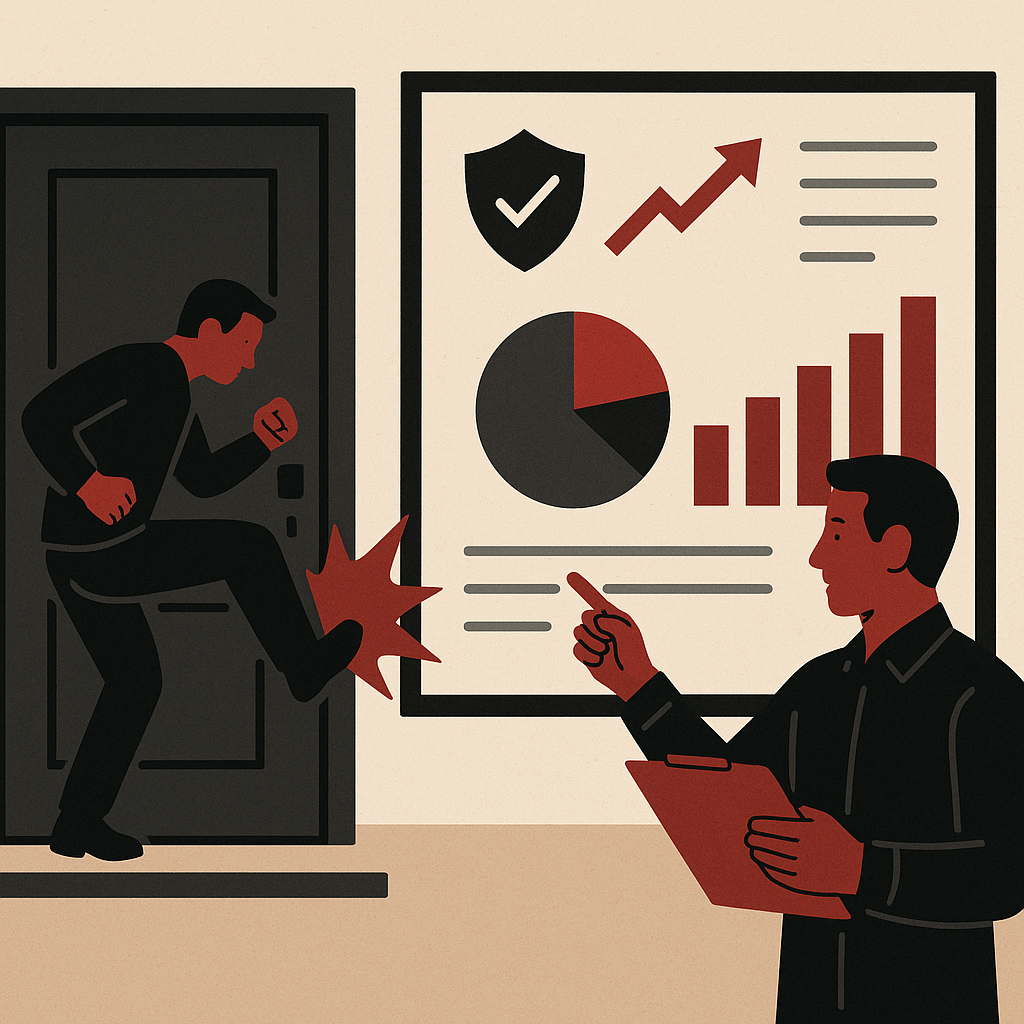
You can’t improve what you don’t measure. Track these indicators to know whether your security setup is actually performing:
- Attempted Break-ins Prevented: The clearest signal. Track any thwarted attempts to confirm your reinforcements are doing their job.
- Response Time: How fast does your system alert you to a threat? Seconds matter in a forced-entry scenario.
- System Downtime: Any period your security system is offline is a window of exposure. Log it and eliminate it.
- Confidence Level: Subjective, but real. If you don’t feel secure in your own home, the system isn’t complete yet.
Innovative Technologies in Door Security
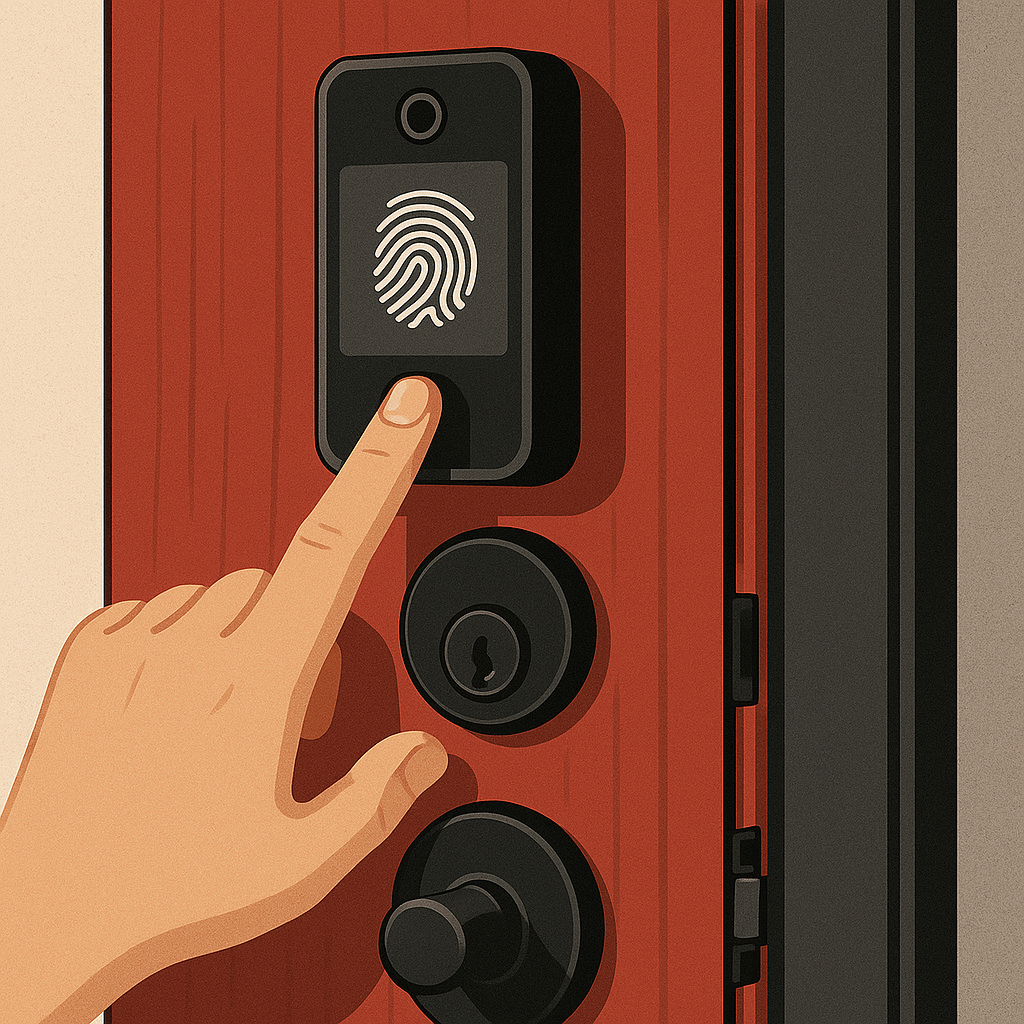
The hardware layer is the foundation. Technology is what sits on top of it. Two innovations worth adding to your setup:
- Biometric Locks: Fingerprint recognition eliminates the key entirely. No key to copy, no code to steal — access is tied to you specifically.
- Smart Doorbell Cameras: See and speak with anyone at your door from anywhere. Real-time visibility is a deterrent before a threat even reaches the frame.
Disclosure: this article may contain affiliate links. If you buy through them, we may earn a small commission at no extra cost to you.

Leave a Reply