
Best Locks and Reinforcements for a Home Office With Valuables
Your home office holds more than a desk and a monitor. It holds a laptop loaded with client data, an external hard drive with years of work, tax documents, maybe a small safe, and equipment worth thousands of dollars. Yet most home offices are secured with nothing more than a standard interior door and a basic passage lock — the kind that offers almost no resistance to a determined intruder.
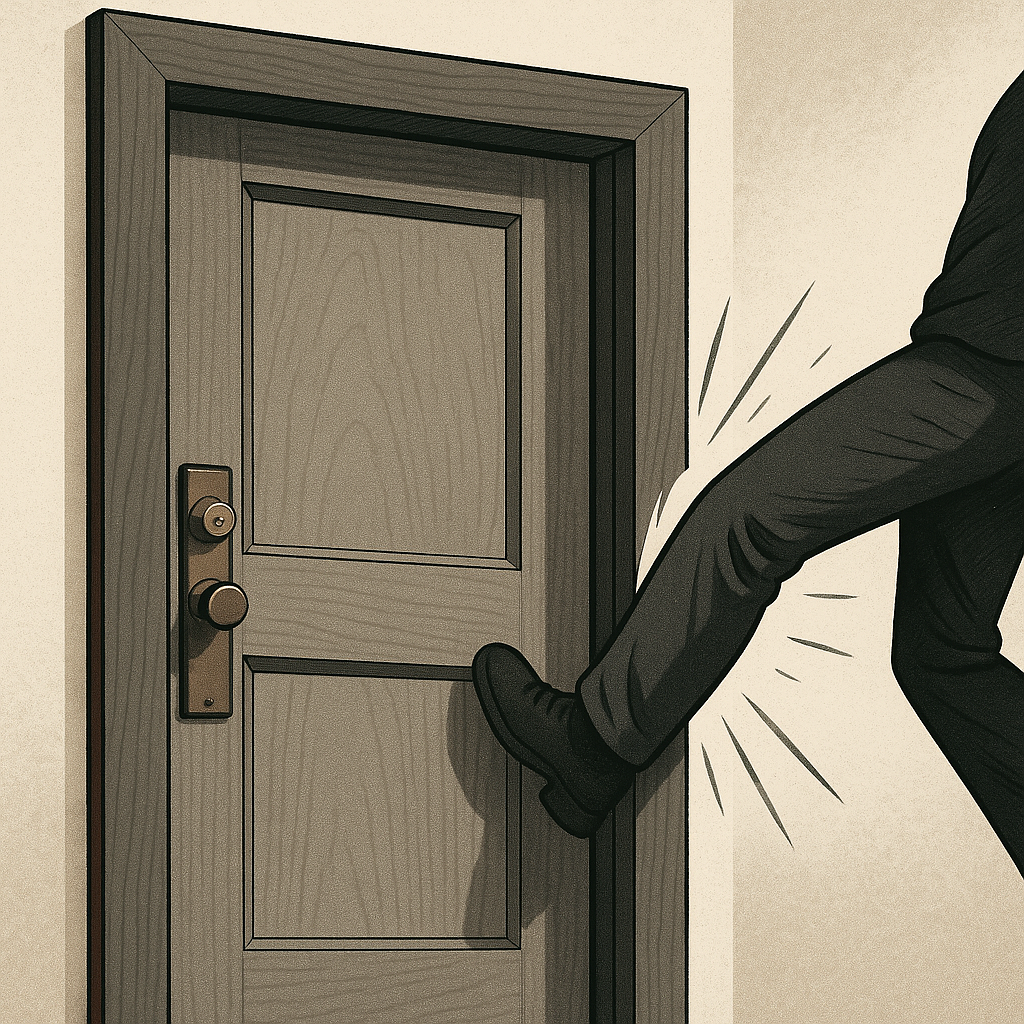
Here is the uncomfortable truth: interior doors are significantly weaker than exterior doors. The hollow-core construction common in most homes means a single kick near the latch opens that door in seconds. If someone has already breached your front door, your home office is not a vault. It is a suggestion.
This guide walks you through the specific locks, reinforcements, and layered strategies that actually protect a home office with valuables. No scare tactics, no overcomplicated systems — just practical home office door security upgrades you can implement yourself, most in under an hour.
🔹 Why Standard Interior Locks Fail (And What That Means for Your Office)
Most interior doors are hung with a basic privacy lock — a small push-button or twist-knob on the inside. These locks are designed to prevent casual entry. Not forced entry. The latch bolt is short, the strike plate is fastened with screws less than an inch long, and the door frame is often soft pine that splinters easily under lateral force.
When a burglar targets a home, speed is the primary goal. Studies of residential break-ins consistently show that most intruders want to be in and out in under five minutes. A standard interior lock adds almost no meaningful delay. A solid deadbolt and a reinforced frame, on the other hand, can add enough resistance to make the effort not worth it.
Upgrading your home office door security does not require a contractor or a major renovation. The right combination of hardware addresses the three real failure points: the lock cylinder, the strike plate, and the door frame itself.
🔹 Step 1 — Upgrade to a Solid-Core Door (If You Haven’t Already)
No lock upgrade fully compensates for a hollow-core door. Knock on your home office door. If it sounds like a drum, that is hollow core. Replacing it with a solid-core door is the single highest-impact structural change you can make.
Solid-core doors are available at most home improvement stores starting around $150–$250 for a pre-hung interior unit. They are heavier, more resistant to impact, and significantly harder to breach. If you store high-value equipment or sensitive documents in that room, this investment pays for itself.
If replacing the door is not currently feasible, the reinforcement steps below still meaningfully improve your security — they just work best when paired with a solid door.
🔹 Step 2 — Install a Proper Deadbolt on Your Home Office Door
Interior doors are not typically pre-drilled for deadbolts, but adding one is a straightforward DIY project. You need a deadbolt installation kit (available at any hardware store for under $20), a hole saw, and about 45 minutes.
When selecting a deadbolt for an interior application, look for these specific features:
- Grade 1 ANSI rating — the highest residential security classification, tested for both physical attack resistance and cycle durability
- 1-inch throw bolt — the bolt should extend a full inch into the strike plate when locked
- Anti-pick, anti-bump pins — look for security pins in the cylinder, which brands like Schlage B60N and Medeco offer at different price points
- Single-cylinder design — keyed on the outside, thumb-turn on the inside, appropriate for most home office applications
The Schlage B60N is a widely trusted entry-level Grade 1 deadbolt available for around $35–$50. For higher security needs, the Medeco Maxum offers pick and drill resistance at a premium price point (~$150+). Either one is a substantial upgrade over a privacy lock.
🔹 Step 3 — Reinforce the Strike Plate and Door Frame
This is where most homeowners leave the biggest security gap. A deadbolt is only as strong as the frame it locks into. The standard strike plate on most interior doors uses two short screws that anchor into the door casing — not the structural framing behind it. Under a kick, those screws pull free almost instantly.
The fix is a heavy-gauge steel strike plate with 3-inch screws that reach past the casing and into the wall stud. Brands like Door Armor go further, wrapping the entire door jamb in steel to prevent the frame from splitting — which is the actual failure mode in most kick-in scenarios.
This is precisely what a quality door reinforcement kit addresses. Rather than just swapping the strike plate, these systems reinforce the entire latch and hinge side of the frame, distributing the force of a kick across a much larger steel surface. You can explore the full range of door security solutions to find the right fit for your specific door setup.
For a standard single home office door, the Single Door Security Kit is the practical starting point — it covers the strike plate zone, the hinge reinforcement, and the door edge, which are the three points that fail under forced entry. Installation requires basic tools and no special skills.
🔹 Step 4 — Add a Secondary Locking Device for High-Value Rooms
For home offices that contain particularly sensitive materials — firearms, large amounts of cash, original documents, or high-value electronics — a secondary locking device adds a meaningful second layer of resistance.
Several options work well here:
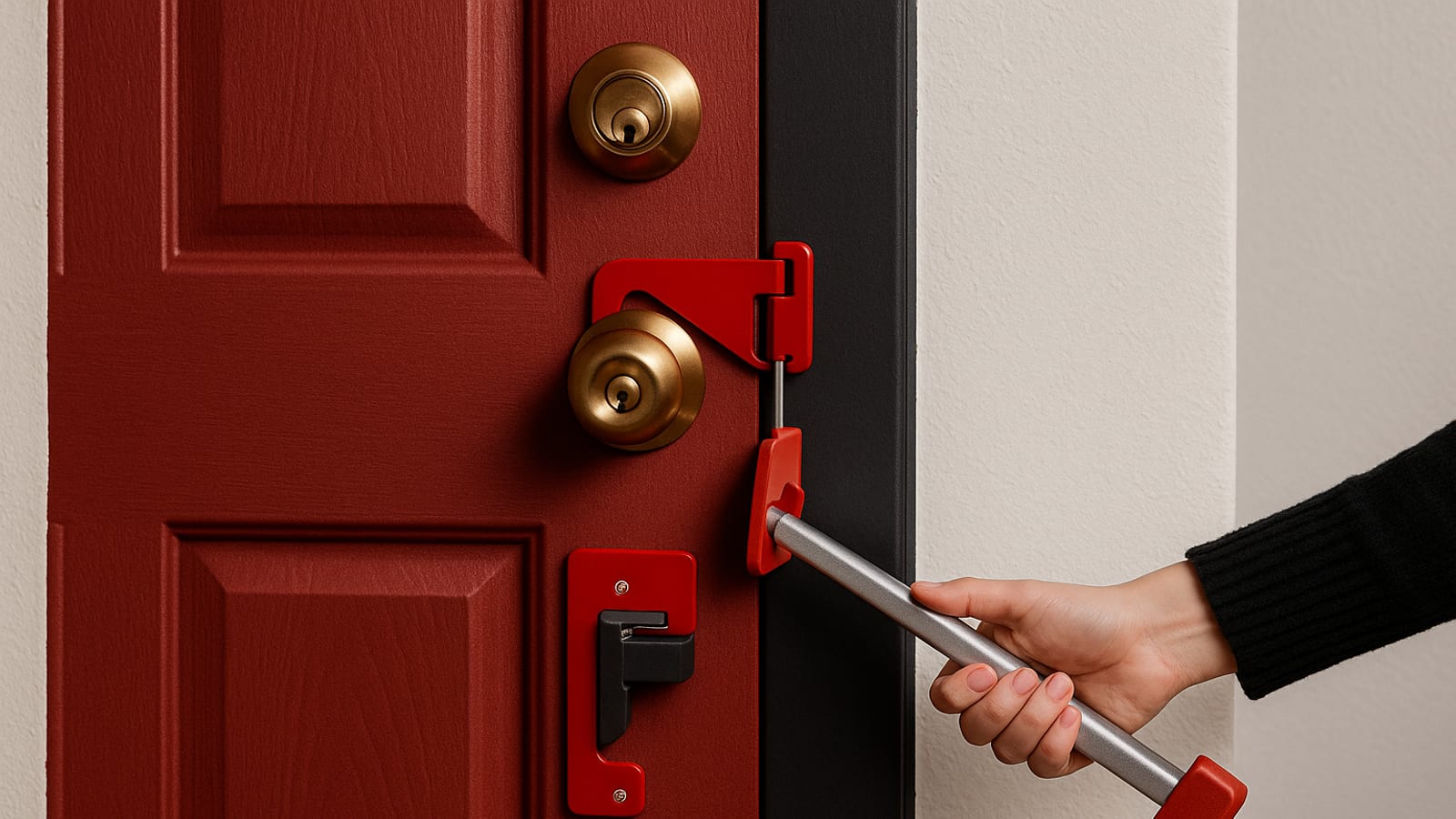
- Door security bar (also called a door barricade bar) — braces against the floor and prevents the door from being pushed inward. Brands like Master Lock and Buddybar offer solid options in the $30–$60 range. Especially effective on doors that open inward.
- Surface-mounted door reinforcement bar — mounts to the door itself and engages the floor when locked. Useful when you want a quick-deploy option that does not require a key.
- Smart lock with alarm integration — adds keyless convenience and an alert when the door is tampered with. The August Smart Lock and similar devices work with existing deadbolts and connect to home automation systems.
None of these replace a reinforced frame. They supplement it. The goal is to make forced entry slow enough and loud enough that it becomes impractical.
🔹 Step 5 — Address the Door Itself: Hinges, Glass, and Gaps
Two often-overlooked vulnerabilities deserve attention in any complete anti kick-in door security plan:
Hinge security: If your home office door opens outward, the hinge pins are exposed and can be removed. Install non-removable hinge pins or hinge bolts that lock the door in place even if the pin is extracted.
Glass panels: Some home offices have doors with decorative glass panels or sidelights. These let an intruder break the glass and reach the interior lock. If your door has glass, consider window security film — 3M and similar brands offer residential grades that hold shattered glass in place — or replace the glass panel with a solid insert. For doors flanked by decorative glass panels, a Side Light Door Security Kit is specifically designed for that configuration, reinforcing the frame even when the door geometry is complicated by adjacent glazing.
Door-to-frame gap: A gap larger than 1/8 inch between the door edge and the frame gives a pry bar purchase. Door edge reinforcement strips close this gap and make it significantly harder to lever the door open.
🔹 The Layered Security Mindset: Why One Upgrade Is Never Enough
Professional security consultants consistently emphasize layered defense — the idea that no single measure is sufficient, but multiple moderate measures together create a system that is genuinely difficult to defeat quickly. For a home office with valuables, that layered approach looks like this:
- ✅ Layer 1: Solid-core door — resists impact
- ✅ Layer 2: Grade 1 deadbolt — resists lock manipulation
- ✅ Layer 3: Reinforced strike plate and frame — resists kick-in
- ✅ Layer 4: Secondary locking device — adds time and noise
- ✅ Layer 5: Small in-room safe — protects highest-value items even if the room is entered
Each layer addresses a different attack method. Together, they create a home office that is meaningfully harder to breach than the average residential room — without turning your workspace into a bunker.
For homeowners who want to extend this thinking beyond the office to the entire home, product bundles that cover multiple doors offer the best value per door — particularly for those protecting a front door, back door, and an interior room simultaneously.
🔹 A Note on Safes: The Last Line of Defense
Even the best door security does not make a room impenetrable given unlimited time. For documents, hard drives, or small valuables, a quality bolted-down safe belongs in your plan. Look for safes rated by Underwriters Laboratories — the UL RSC (Residential Security Container) rating is the baseline for burglary resistance. Bolt the safe to the floor or wall studs. An unanchored safe can simply be carried out.
Your Next Steps: Building Real Home Office Door Security
Protecting a home office with valuables is not about spending a fortune or installing a commercial-grade security system. It is about closing the specific gaps that make residential doors easy targets — the weak frame, the short screws, the hollow core, the basic latch lock.
Start with what you have. If your door is hollow-core, plan to replace it. In the meantime, add a deadbolt and a reinforced strike plate this weekend. Then layer in a secondary device and address any glass vulnerabilities. Each step meaningfully raises the difficulty of forced entry.
The goal is straightforward: make your home office the room in your house that an intruder cannot get into quickly. Because in most cases, quickly is all they have. A door that holds for even a few extra minutes — one that resists a kick, resists a pry, and makes noise doing it — is a door that protects what matters.
You can browse a full range of door reinforcement options to find the right combination for your specific setup, whether you are securing a single interior office door or hardening every entry point in your home.
Disclosure: this article may contain affiliate links. If you buy through them, we may earn a small commission at no extra cost to you.

Leave a Reply