
You collect rent. You fix appliances. You handle the calls nobody wants to make. But there is one responsibility that quietly sits above all of it — the physical safety of the people living inside your units. And the most overlooked vulnerability in any rental property is not the lock on the front door. It is everything around it.
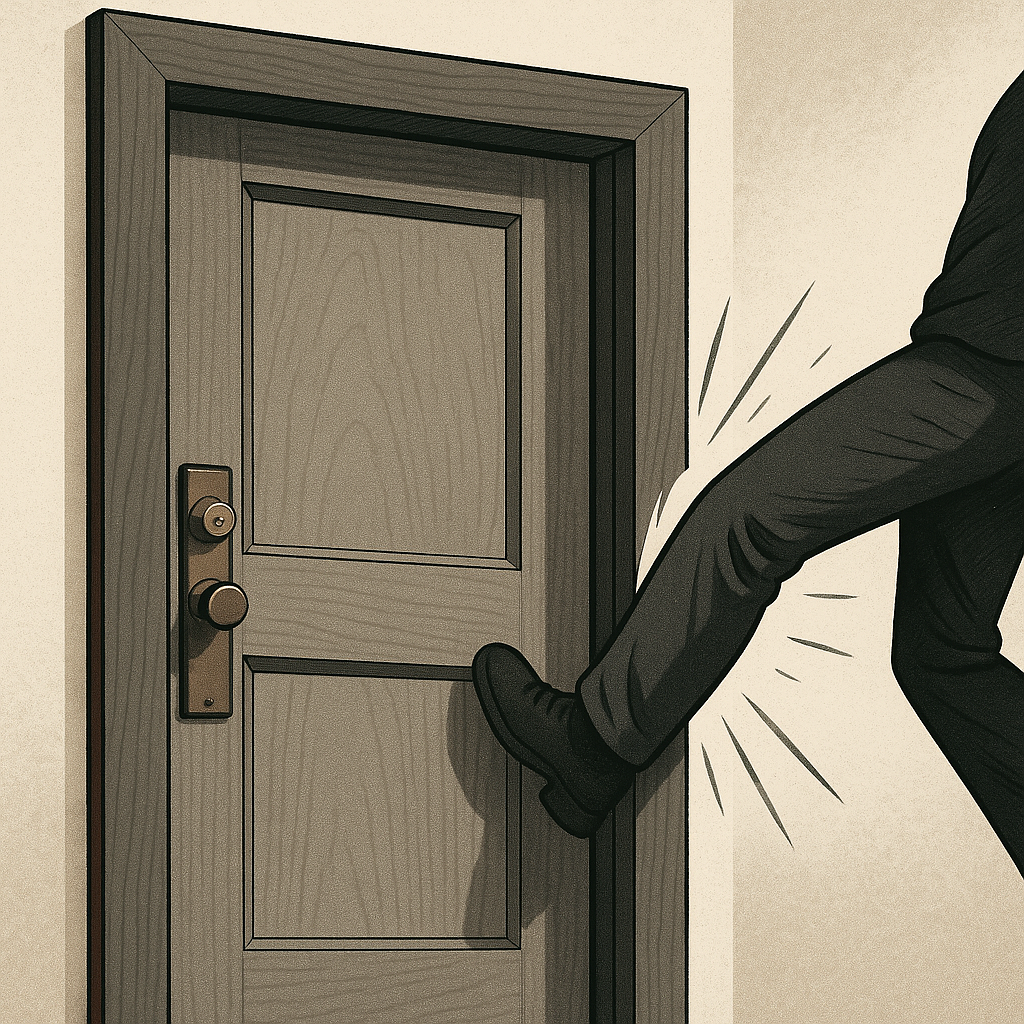
Here is what most landlords never find out until it is too late: a standard residential door frame folds under a single hard kick. The deadbolt holds. The frame splinters. That is where forced entries happen — not at the lock cylinder, at the wood surrounding it. And it is entirely preventable with the right door security rental property upgrades.
This guide covers what actually works, what to look for in a door reinforcement kit, and how to match the right solution to each door configuration across your portfolio. No fear-mongering. No filler. Just a clear framework for making your doors do what your tenants assume they already do.
Why Door Frame Failure Is the Real Problem in Rental Properties
Burglars are not picking locks. They are kicking doors. It works because standard residential frames are built with thin wood strike plates held by screws barely half an inch long — screws that never reach the structural stud behind the trim.
Your deadbolt does exactly what it is supposed to do. The wood around it does not. That is why anti kick-in door security focuses on the frame and strike plate — not the lock cylinder. The cylinder was never the weak point.
For landlords managing multiple units, this gap compounds fast. Tenants see a deadbolt and assume the door is secure. Your job is to make that assumption true — because right now, on most standard rental doors, it is not.
What a Quality Door Reinforcement Kit Actually Includes
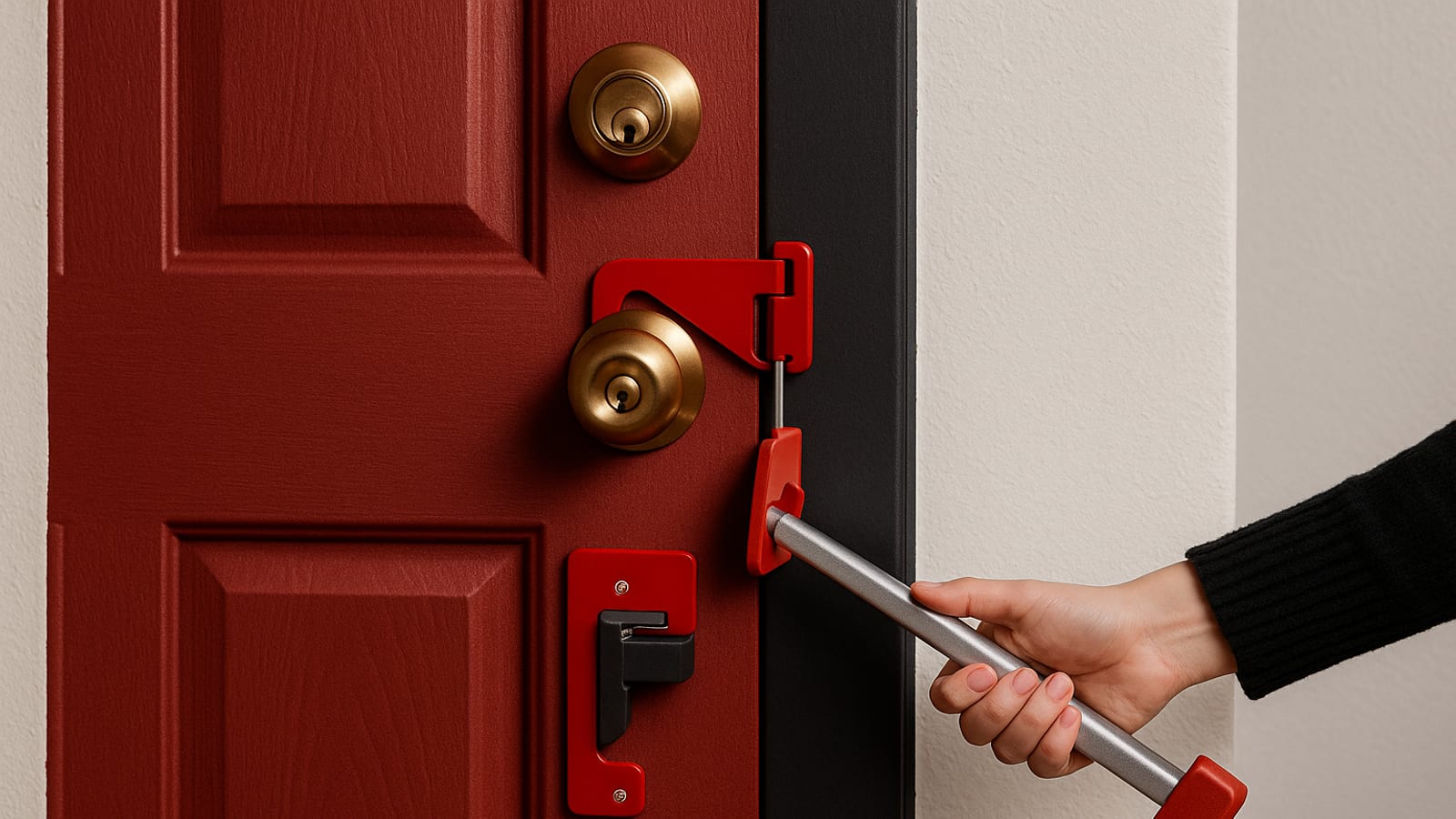
Not all door reinforcement kits are built to the same standard. A genuine door reinforcement kit addresses three specific failure points that occur during a forced entry attempt:
- ✅ The strike plate area — where the deadbolt and latch bolt meet the frame. This is the primary failure point in most kick-ins.
- ✅ The door edge and hinge side — long steel reinforcement plates that distribute kick force across a wider section of the frame stud.
- ✅ The door jamb itself — a steel wrap or channel that prevents the frame from splitting even under repeated impact.
Kits that only swap in a slightly larger strike plate offer marginal improvement at best. What you need is a system using 3-inch or longer screws driven into the structural stud behind the frame, paired with heavy-gauge steel plates that spread impact load across a much larger surface area.
When you are evaluating products for your units, look for kits explicitly tested to resist multiple kick attempts — not just one. A determined intruder does not stop at the first try.
Choosing the Right Kit for Each Door Configuration
Rental properties rarely have a single door type. Front doors, back doors, French doors, side-light entry doors — each has a different structural profile and a different set of vulnerabilities. The wrong kit for a given configuration leaves gaps. Know what you are working with before you order.
Standard Single Entry Doors
This is the most common configuration across rental portfolios — a single solid or hollow-core door with a standard deadbolt and latch. For these, a flagship single door security kit is your starting point. These kits reinforce the strike plate area, the door edge around the lock, and the hinge side of the frame.
At around $79 per door, a quality Single Door Security Kit is a straightforward installation a competent handyman can complete in under an hour. For a duplex or small multi-unit property, this is your default for every standard front and back door.
French Doors and Double Entry Doors
Double doors are a more complex problem. The meeting point between the two panels — where they close against each other — is a significant structural weakness. Standard reinforcement kits are not designed for this. You need a purpose-built double door security kit that addresses the center astragal as well as the outer frame on both sides.
For rental properties with French doors or double entry configurations, a Double Door Security Kit at around $149 is the right call. Higher upfront cost — but double doors without proper reinforcement are among the easiest forced entry points in any property. This is not optional for those configurations.
Side-Light Entry Doors
Many rental properties — particularly townhouses and newer single-family homes — have decorative glass panels flanking the front door. They look sharp. They also introduce a specific vulnerability: break the glass, reach in, turn the interior handle. Entry in seconds.
A Side Light Door Security Kit addresses this by reinforcing the narrow frame sections adjacent to the glass panels — structurally weaker than a standard door frame and almost always overlooked. At around $129, this is a specialized solution for a security gap most landlords never close.
The Multi-Unit Landlord Strategy: Buying Smart Across Properties
If you manage more than two or three units, buying individual kits door by door is not the most efficient approach. Quality manufacturers offer product bundles built for multi-door buyers — whole-home or multi-unit coverage at a better cost per door.
Before you order anything, audit every exterior door across your portfolio and categorize by type: standard single, double or French, or side-light configuration. That gives you a precise shopping list and eliminates the common mistake of ordering the wrong kit and having to reorder mid-project.
A practical approach for landlords with four or more units:
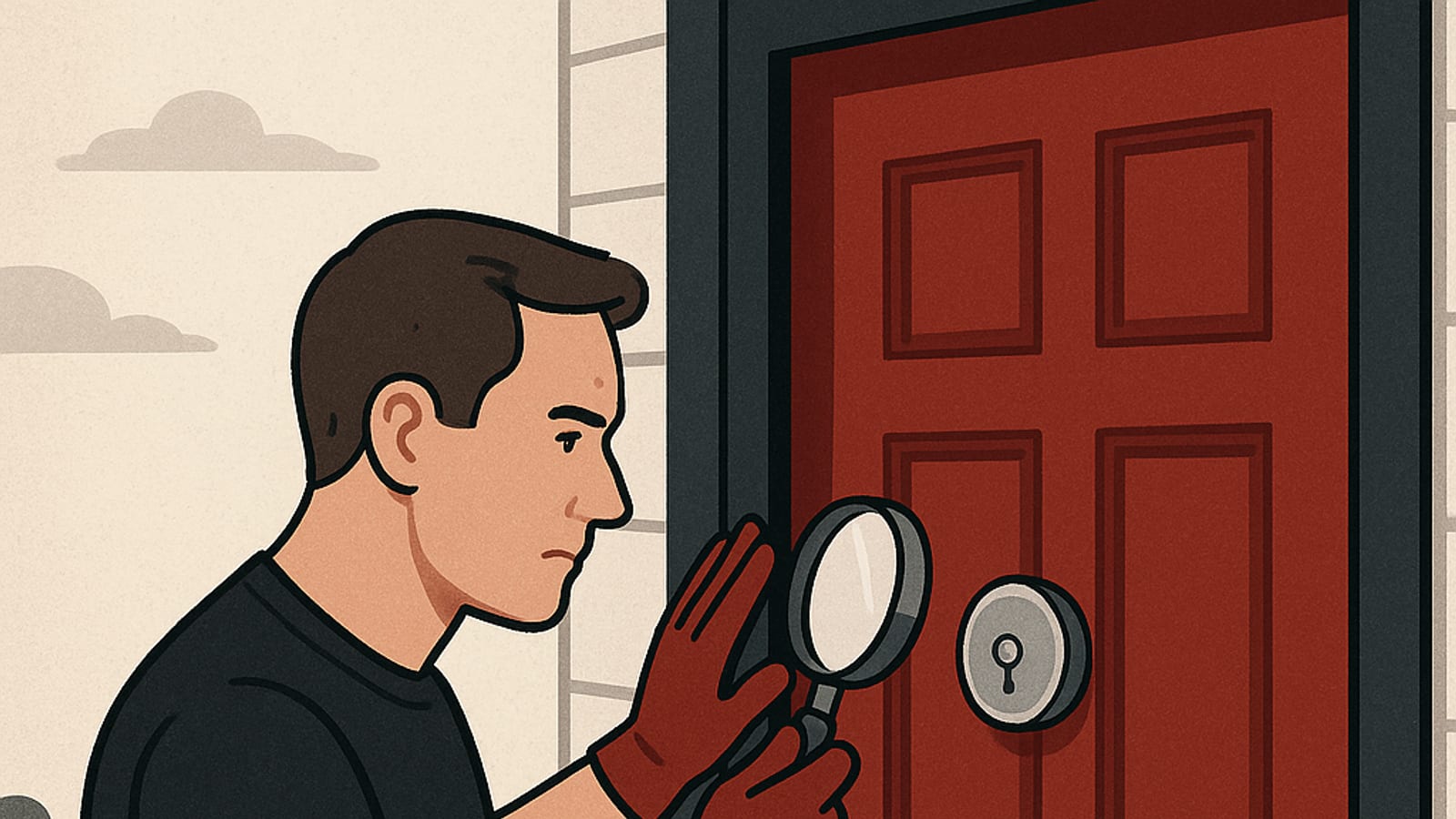
- Walk each property and photograph every exterior door, including frame condition and existing strike plate hardware.
- Note any frames showing damage, swelling, or prior repair — these may need replacement before reinforcement hardware can seat properly.
- Categorize doors by type and order accordingly, using bundle pricing where available.
- Schedule installations during tenant turnover periods to minimize disruption.
Installation Considerations for Rental Properties
One practical advantage of quality door reinforcement kits is that they are designed for straightforward installation. Most systems require only basic tools — a drill, a chisel, a screwdriver — and do not require modifications that would void a lease or trigger permit requirements in most jurisdictions.
A few landlord-specific considerations worth noting before you start:
- 🔹 Hollow-core doors are common in rental units and offer almost no resistance on their own. Reinforcing the frame around one is still worthwhile — but consider upgrading to a solid-core door on primary entry points when the unit turns over.
- 🔹 Older door frames with wood rot or prior kick-in damage may not hold reinforcement hardware properly. Inspect carefully before installing.
- 🔹 Tell your tenants what you are doing before you show up. Frame reinforcement is a visible upgrade, and security-conscious renters will recognize it as a genuine differentiator.
- 🔹 Document every installation with photos for your property records. Useful for insurance purposes and establishes a clear record of due diligence if a security incident ever occurs.
If you prefer to outsource the work, a general handyman with basic carpentry experience can install most door reinforcement kits without specialized training. The instructions included with quality kits are written for non-specialists.
Addressing the “They’ll Just Break a Window” Objection
It is a fair concern. It deserves a straight answer. Reinforcing your doors does not make a property impenetrable — nothing does. What it does is raise the effort required to force entry, and most opportunistic break-ins are abandoned the moment meaningful resistance is encountered.
If your rental has large windows adjacent to entry doors or accessible ground-floor windows, window security film is a practical complementary upgrade. It does not stop glass from breaking. It holds shattered glass together, dramatically slowing entry and making the attempt louder and more conspicuous.
Think of door reinforcement and window security as layers — each independently useful, and together meaningfully more effective than either alone. You can explore door security solutions for exterior doors and complementary products that address multiple entry points in a coordinated way.
What This Means for Your Rental Property’s Value and Liability
The safety case is obvious. The business case is just as clear. Tenants increasingly list security features as a priority when choosing between comparable units. A property with documented security upgrades — including reinforced door frames — is a more competitive listing. Build in silence on this one and let the lease renewals do the talking.
There is also a liability dimension. If a tenant experiences a break-in through a door you knew had inadequate frame reinforcement, the question of whether you took reasonable steps to provide a secure dwelling becomes relevant. Proactive upgrades create a clear record of due diligence.
The cost of reinforcing a standard entry door is modest relative to the cost of a single break-in — property damage, tenant displacement, potential liability, and the harder-to-quantify cost of a tenant who does not renew because they no longer feel safe in your unit.
Your Next Steps as a Landlord
Improving door security across your rental property portfolio does not require a large budget or a security consultant on retainer. It requires a methodical approach and the right hardware.
Start with your highest-risk doors — primary entry points on ground-floor units, properties in higher-crime areas, or any door with a frame already showing wear or prior damage. Install the appropriate reinforcement kit for each configuration, document the work, and communicate the upgrade to your tenants.
For a full overview of available solutions and to match the right kit to each door type across your portfolio, visit Home Door Security — a practical resource built specifically around stopping forced entry with straightforward, installable solutions.
A locked door should actually keep intruders out. With the right reinforcement in place, yours will.
Disclosure: this article may contain affiliate links. If you buy through them, we may earn a small commission at no extra cost to you.

Leave a Reply